

The Insolvency and Bankruptcy Code & its Creditworthiness
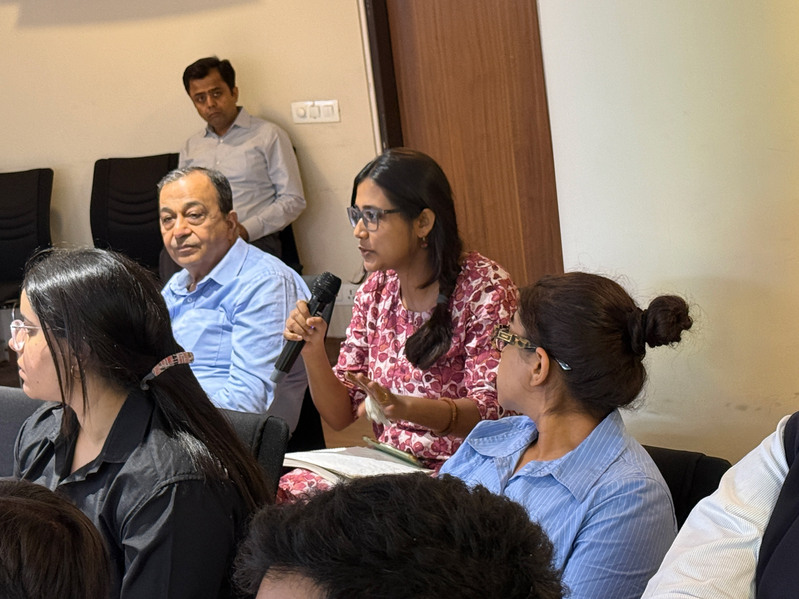
The Centre for Social and Economic Progress (CSEP) hosted a seminar titled “The Insolvency and Bankruptcy Code & its Creditworthiness” on Tuesday, April 8, 2025.
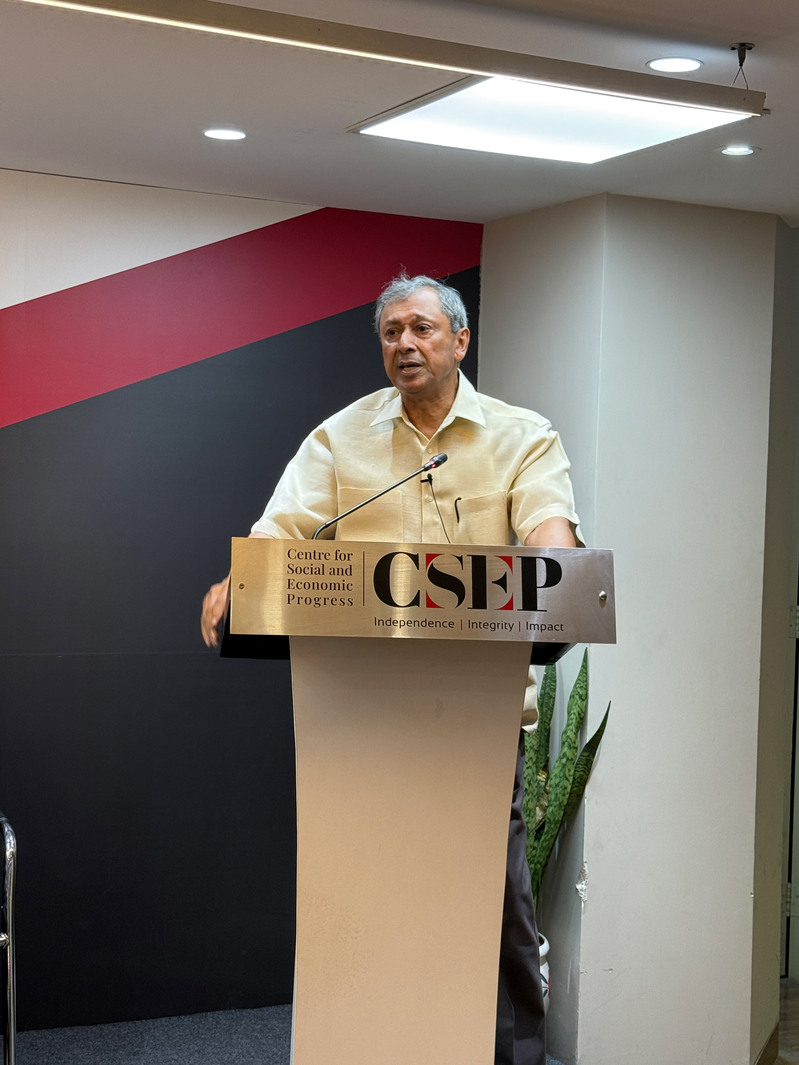
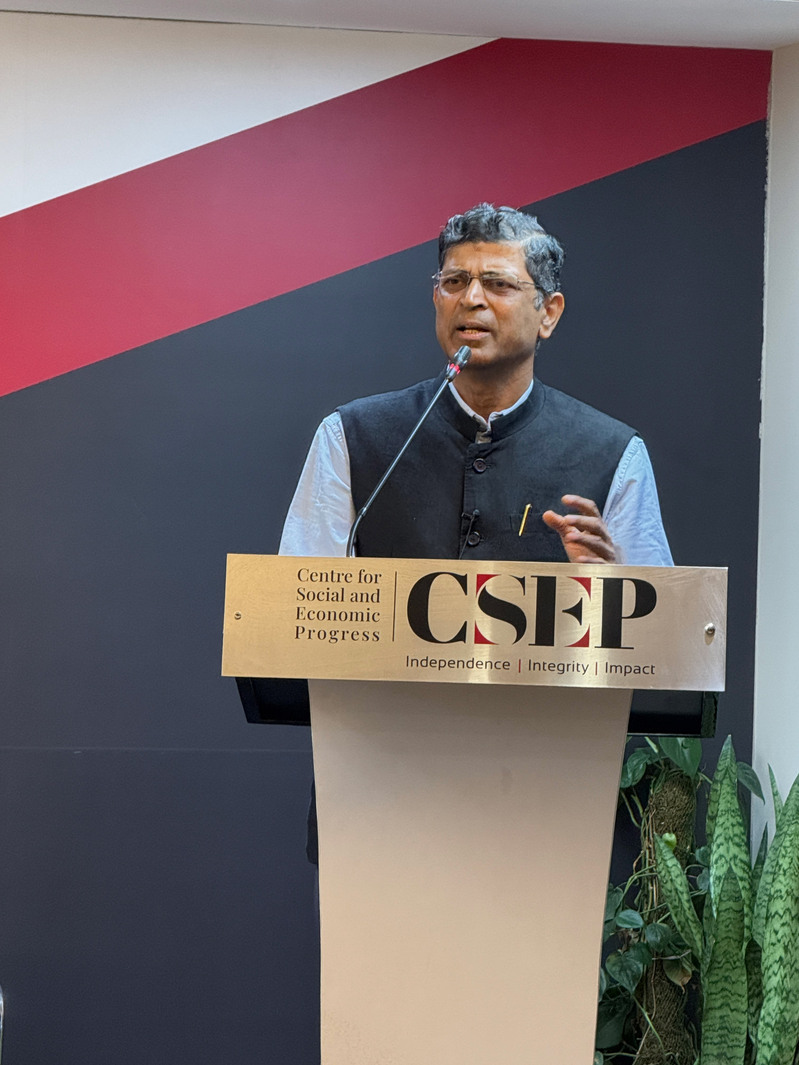
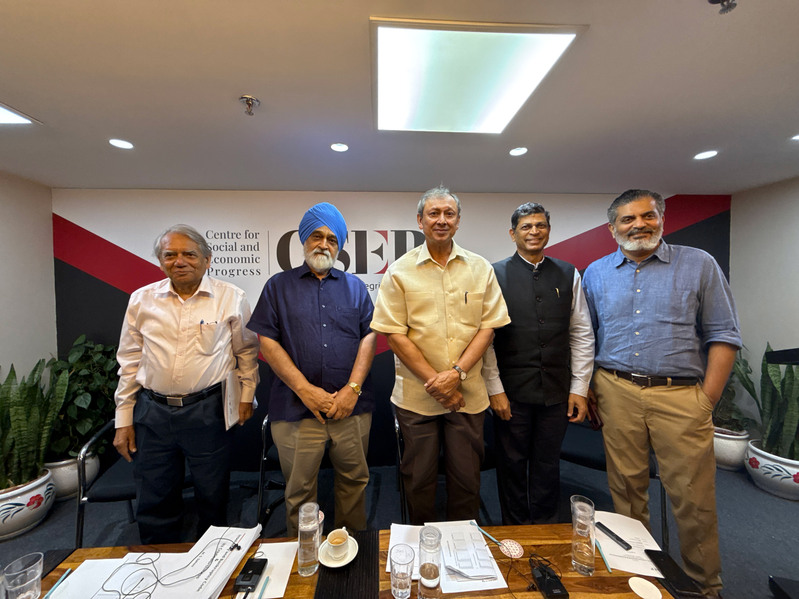
The seminar featured a presentation by Dr Madhu Sahoo, Founder, Dr. Sahoo Regulatory Chambers and Former Chairperson, Insolvency and Bankruptcy Board of India (IBBI). The presentation was followed by a conversation between Dr Sahoo, Dr Rakesh Mohan, President Emeritus and Distinguished Fellow, CSEP, and Amb. Dr Jaimini Bhagwati, Distinguished Fellow, CSEP. The discussion was chaired by Mr Montek Singh Ahluwalia, Distinguished Fellow, CSEP.
About the event
The Insolvency and Bankruptcy Code (IBC) legislation was passed by Parliament in 2016. At that time there was considerable optimism that this legislation would put a sharp brake on repayment delaying tactics. Unfortunately, despite improvements the overall sentiment in India’s financial sector continues to be overly cautious about long-term lending. The discussion on the IBC and IBBI focussed on analysing the legal and regulatory changes since 2016 and the continuing challenges in promoting bulk lending with maturities of ten years or more.
Key Facts and Figures: Insolvency and Bankruptcy Code & long term bulk-lending in India’
Chair
Montek Singh Ahluwalia
Montek Singh Ahluwalia, an economist, and civil servant, was former Deputy Chairman of Planning Commission, Government of India. He joined the Government in 1979 as Economic Adviser in the Ministry of Finance, after which he held a series of positions including Special Secretary to the Prime Minister; Commerce Secretary; Secretary in the Department of Economic Affairs; Finance Secretary in the Ministry of Finance; Member of the Planning Commission and Member of the Economic Advisory Council to the Prime Minister. In 2001, he was appointed as the first Director of the newly created Independent Evaluation Office of the International Monetary Fund. He resigned from that position in 2004 to take up the position of Deputy Chairman of the Planning Commission which he held from 2004 to 2014.
Mr Ahluwalia has been a key figure in Indian economic policy. He writes on various aspects of development economics and has been published in prominent Indian and international journals and books. He co-authored Re-distribution with Growth: An Approach to Policy, which, published in 1975, was a path-breaking book on income distribution. In February 2020, he published his book, Backstage: The Story Behind India’s High Growth Years, an insider’s account of policymaking from 1985 to 2014.
For his outstanding contribution to economic policy and public service, he was conferred the prestigious ‘Padma Vibhushan’ in 2011, India’s 2nd highest civilian award for exceptional and distinguished service.
Mr Ahluwalia graduated from Delhi University and holds an MA and an MPhil in Economics from Oxford University. He is an Honorary Fellow of Magdalen College Oxford.
Presenter
Madhu Sahoo
Madhu Sahoo practices regulatory laws at Dr. Sahoo Regulatory Chambers. He is a leading authority on markets and regulations, with four decades of experience in economic reforms, and policy and regulations relating to financial markets.
With a distinguished career, Dr Sahoo has played high-impact roles, including Distinguished Professor at National Law University Delhi; Chairperson of the Insolvency and Bankruptcy Board of India (IBBI); Member of the Competition Commission of India; Secretary of the Institute of Company Secretaries of India; Whole-time Member of SEBI; and Economic Adviser, National Stock Exchange. As part of the Indian Economic Service, he served key Ministries. He held board positions with the Oriental Bank of Commerce, Management Development Institute, and National Securities Depository Limited.
Dr Sahoo spearheaded insolvency reforms. He founded IBBI, the first-of-its-kind regulator globally, and the Insolvency and Valuation professions in India. His work earned India recognition as the ‘most improved jurisdiction’ by the Global Restructuring Review in 2018 and significantly improved its Ease of Doing Business ranking in resolving insolvency.
Dr Sahoo contributed to securities market reforms, including regulatory architecture, derivatives trading, and stock exchange demutualisation. He conceived and drafted the Depositories Ordinance, 1995, which enabled the dematerialisation of securities, positioning India as a leader in this field.
Dr Sahoo pioneered technology integration in professional examinations, including NSE’s Certification in Financial Markets, and examinations for Company Secretaries, Insolvency Professionals, and Valuation Professionals.
Dr Sahoo chaired several high-level committees on capital markets, external commercial borrowing, valuation, variable capital companies, international arbitration, insolvency, and competition, which influenced India’s regulatory and economic landscape. A prolific author, he conceptualised and edited several publications, including Indian Securities Market – A Review, SEBI Bulletin, and Insolvency and Bankruptcy News, and has authored over 500 articles.
Dr. Sahoo remains an influential voice in shaping policy discourse.
He holds a PhD in Economics, with advanced degrees in economics, law, and management, and Company Secretaryship.
Here are some latest articles by Dr Sahoo:
- https://www.business-standard.com/opinion/columns/when-will-india-celebrate-failure-124102201401_1.html
- https://www.business-standard.com/opinion/columns/questioning-priority-govt-dues-in-ibc-123082901377_1.html
- https://www.business-standard.com/opinion/columns/guaranteeing-personal-guarantees-123112901115_1.html
- https://www.financialexpress.com/opinion/what-ails-the-ibc-a-problem-of-timely-resolution/2537878/
- https://ibbi.gov.in/uploads/resources/c4a7232cc0b5b08ecafd9e416b677446.pdf
- https://indianexpress.com/article/opinion/columns/getting-the-perfect-haircut-from-the-ibc-7460418/
- https://ibbi.gov.in/uploads/resources/b0bd14e4e81f825f2134e9c3586c1b23.pdf
- https://www.linkedin.com/posts/m-s-sahoo-95994952_ibc-what-it-and-what-it-is-not-activity-7112725613945221121-XjCn/
- Freedom to Exit: The Insolvency and Bankruptcy Code, 2016 builds the third pillar of economic freedom
- https://ibbi.gov.in/uploads/resources/ab85b78f0ae05938cae4a7c6bae0c225.pdf
Discussants
Rakesh Mohan
Rakesh Mohan is President Emeritus and Distinguished Fellow at CSEP.
Prior to this, he was President and Distinguished Fellow, CSEP from October 2020 till May 2023. In March 2024, he was appointed to serve on the World Bank Group’s Economic Advisory Panel. He has been a part of the Prime Minister’s Economic Advisory Council (EAC-PM) since October 2021.
Prior to joining CSEP, Dr Mohan was Senior Fellow in the Jackson Institute for Global Affairs, Yale University and was also Professor in the Practice of International Economics and Finance at the School of Management at Yale University, 2010-12. He has also served as Distinguished Consulting Professor at Stanford University in 2009. Dr Mohan was also a Distinguished Fellow with Brookings India.
He has been closely associated with the Indian economic reforms process from the late 1980s. He was Executive Director on the Board of the International Monetary Fund; Deputy Governor of the Reserve Bank of India; Secretary, Economic Affairs; Chief Economic Adviser of the Indian Ministry of Finance; and Economic Adviser in the Ministry of Industry.
He was also Chairman of Government committees that produced the influential reports on infrastructure: The India Infrastructure Report (1996), The Indian Railways Report (2001) and The India Transport Report (2014).
After the North Atlantic Financial Crisis, he co-chaired the G20 Working Group “Enhancing Sound Regulation and Strengthening Transparency” (2009), and the CGFS/BIS Working Group on “Capital Flows and Emerging Market Economies” (2009).
He has authored three books on urban economics and urban development; two on monetary policy: ‘Monetary Policy in a Globalized Economy: A Practitioner’s View’ (2009), and “Growth with Financial Stability: Central Banking in an Emerging Market”. His most recent book (edited) is “India Transformed: 25 Years of Economic Reforms”.
He has a BSc (Eng) from Imperial College of Science and Technology, University of London (1969), a BA from Yale University (1971) and an MA and PhD in economics from Princeton University.
Here is his draft paper on Infrastructure NPAs and the Role of PPPs
Jaimini Bhagwati
Jaimini Bhagwati is a former Indian Foreign Service officer and a financial sector & derivatives specialist. He was appointed India’s High Commissioner to the United Kingdom in 2011. Immediately prior to this appointment, Bhagwati was India’s Ambassador to the European Union, Belgium, and Luxembourg. Earlier, he was Joint Secretary (Capital Markets, External Commercial Borrowings and Pension Reforms) in the Ministry of Finance and he served in the Department of Atomic Energy in the mid-1980s. He was employed for eleven years in the World Bank Treasury in Washington DC in two phases between 1991 and 2005 and his responsibilities included issuance of World Bank bonds and pricing of associated derivatives. After retiring from the Government of India, he was the Reserve Bank of India Chair Professor at ICRIER from 2014 until 2019.
Currently he is a Distinguished Fellow at CSEP and an independent Board Member of Apollo Tyres Ltd.
He has a Master’s in Physics from St Stephen’s college in Delhi, Master’s in Finance from Massachusetts Institute of Technology (MIT) and PhD from Tufts University.
In 2019, he authored The Promise of India: How Prime Ministers Nehru to Modi Shaped the Nation (1947–2019) published by Penguin.
Here is his CSEP Working Paper on the Insolvency and Bankruptcy Code (IBC)
All content reflects the individual views of the speakers. The Centre for Social and Economic Progress (CSEP) does not hold an institutional view on any subject.
Please contact Gurmeet Kaur at GKaur@csep.org for general queries and Ayesha Manocha at AManocha@csep.org for media queries.







The Centre for Social and Economic Progress (CSEP) is an independent, public policy think tank with a mandate to conduct research and analysis on critical issues facing India and the world and help shape policies that advance sustainable growth and development.