
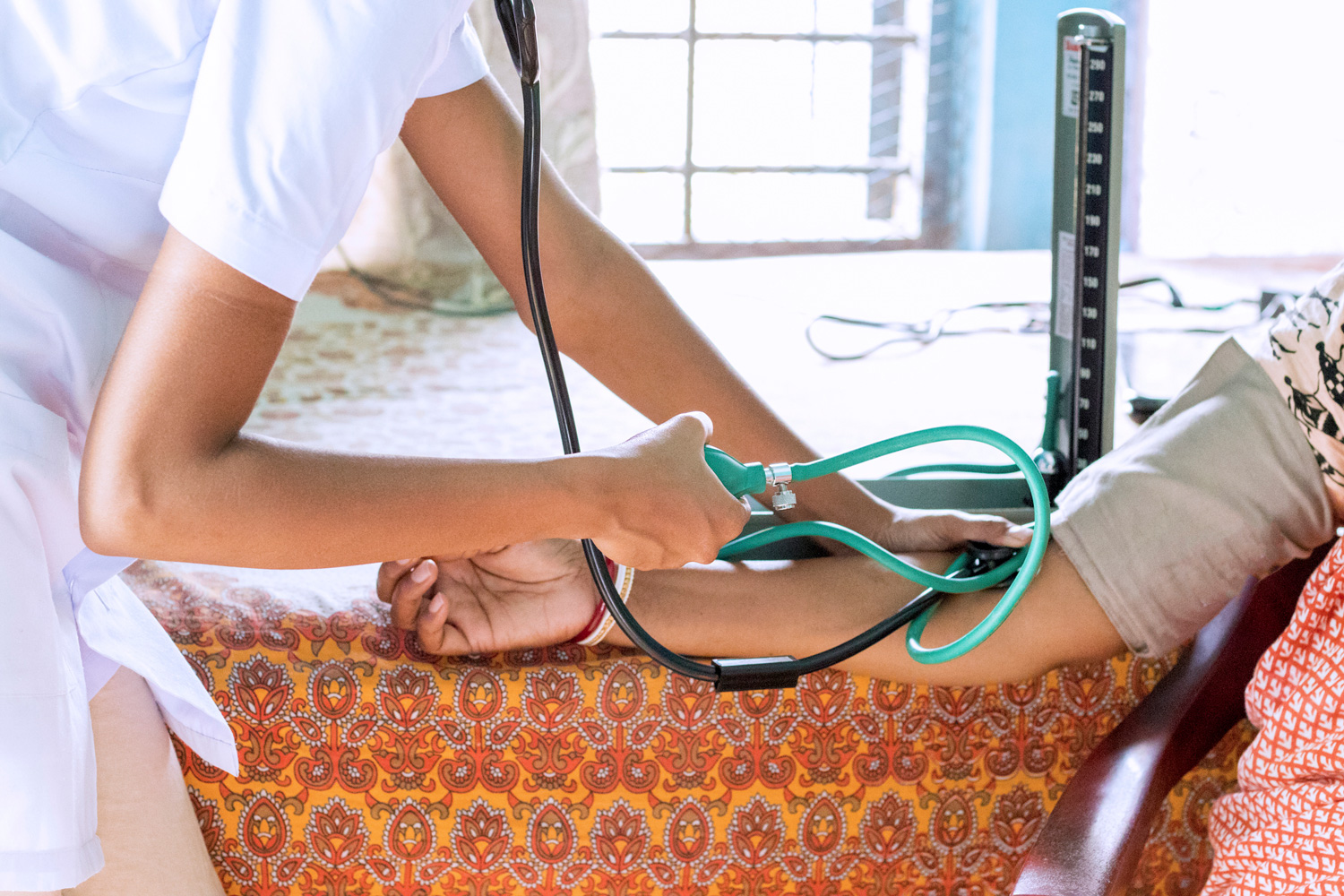
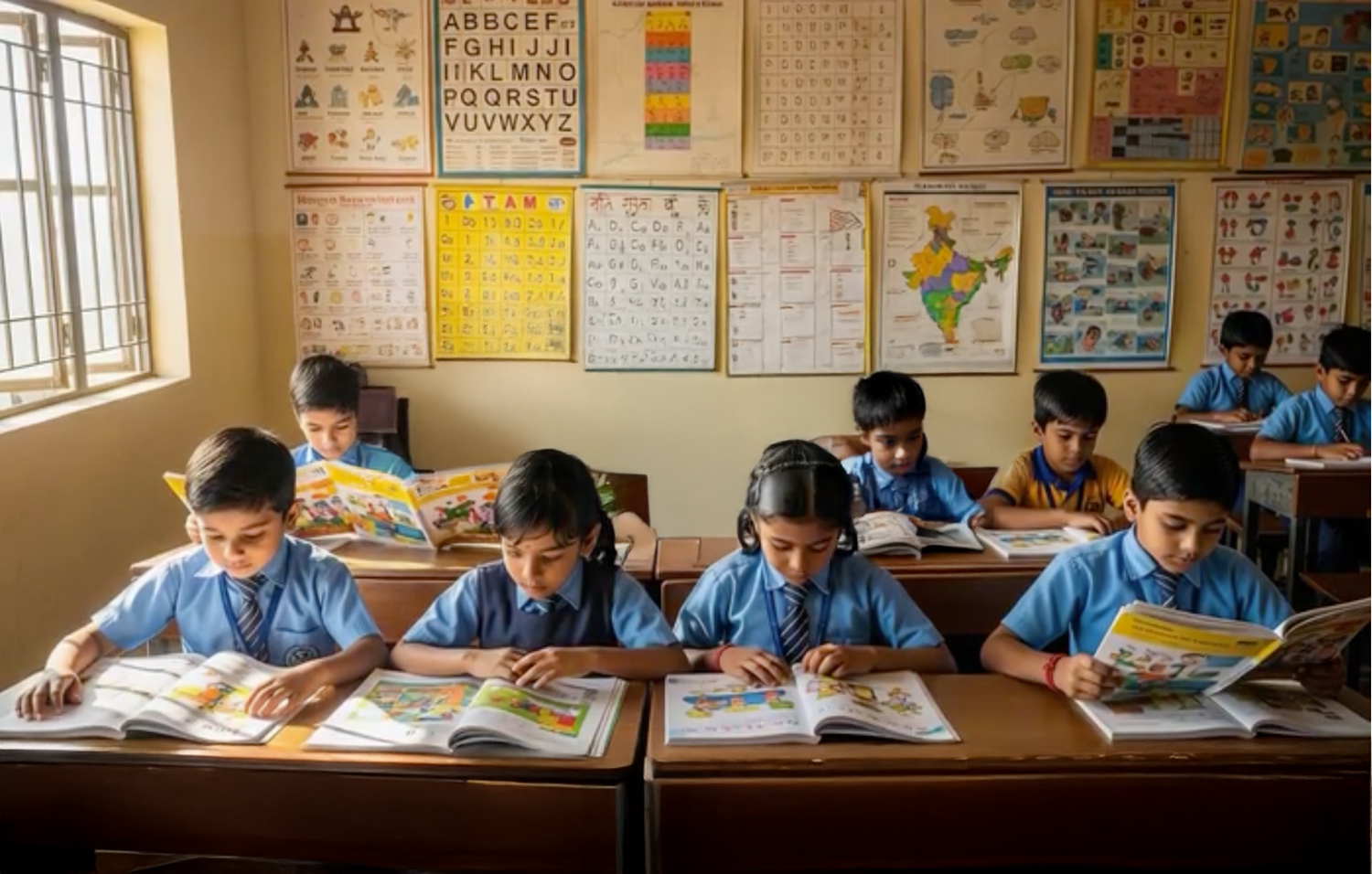
Policy Options for Urban Health and Education: Insights From Rajasthan (2014–2024)
The Centre for Social and Economic Progress (CSEP) hosted a webinar titled ‘Policy Options for Urban Health and Education: Insights From Rajasthan (2014–2024)’ on Friday, February 20, 2026.
The webinar discussed the CSEP Working Paper titled Drivers of Primary Healthcare and Elementary Education Initiatives in Rajasthan (2014–2024) by Priyadarshini Singh, Fellow, CSEP. This paper is part of a three-state study that examines the drivers of state-level initiatives in primary healthcare and elementary education, focusing specifically on urban areas in the decade of 2014-2024.
The presentation was followed by a conversation with C.K. Mathew, Former Chief Secretary, Rajasthan and Visiting Professor, Azim Premji University; Shobhita Rajagopal, Former Director in-charge and Professor, Institute of Development Studies, Jaipur; and Pavitra Mohan, Co-Founder of Basic Health Care Services.
About the event
The paper investigates three questions in the case of Rajasthan – a) What have been the key initiatives that focus on the overall primary health and elementary education system b) What kinds of ground-level issues in the working of UPHCs (Urban Primary Health Centres) and schools do they focus on? c) What drove the emergence of these initiatives? The study is based on extensive fieldwork in two districts – one in Central Rajasthan and another in South Rajasthan, each with a prominent urban centre under a municipal corporation. The study highlights that while Rajasthan’s primary health initiatives align with ground challenges, elementary education initiatives need better alignment with urban challenges on the ground. Across both sectors, senior-most bureaucrats and political leaders drive the development of new initiatives (policy initiation, ideation and prioritisation). The paper makes recommendations around defining a clear and implementable urban health and education agenda and additional pathways from which new state-level initiatives can emerge.
The event brought together an esteemed panel with deep expertise in Rajasthan’s health and education systems to discuss the implications of these findings for improving urban public services in health and education in Rajasthan and beyond.
Presenter
Priyadarshini Singh
Priyadarshini Singh is a Fellow with the Human Development research program at CSEP. Her research work focuses on political economy of policymaking with a focus on education, history of public institutions and grassroots political ideas and politics. At CSEP, she is leading a three-state study on the “Drivers of state-level initiatives for primary healthcare and urban elementary education (2014-2024)”. Her recent publication is ‘Ideas, Policies and Practices: Tracing the evolution of elementary education reform from 1975’ (2023 PE05- RISE program at University of Pennsylvania). Priyadarshini is currently a member of the Karnataka State Education Policy Commission (2024 onwards). She completed a PhD at the Department of Politics and International Relations at SOAS, University of London as a Felix Scholar.
Discussants
C.K. Mathew
Dr C. K. Mathew is a Visiting Faculty at Azim Premji University, Bangalore, and a retired Indian Administrative Service officer (1977 batch, Rajasthan cadre) who served as Chief Secretary of Rajasthan in 2012 and 2013. During his administrative career, he held several senior positions, including District Collector in two districts, Secretary in the Departments of Education, Irrigation, Mines, Energy, Information Technology and Disaster Management, Principal Secretary to the Chief Minister of Rajasthan, and Additional Chief Secretary in the Finance Department.
After retirement, he worked for about four years as Senior Fellow at the Public Affairs Centre, Bengaluru, where he developed the Public Affairs Index, a framework for measuring the quality of governance in Indian states. He also served for a short period as Special Rapporteur for the Southern States under the National Human Rights Commission. He is currently a member of the Managing Committee of a few Delhi Public Schools in Karnataka and Rajasthan, and a member of the Central Board of the Bharat Sevak Samaj. He holds a doctorate in English Literature and has authored several books published by Azim Premji University.
Shobhita Rajagopal
Professor Shobhita Rajagopal is a former Professor at the Institute of Development Studies, Jaipur, where she was part of the faculty for over three decades and served as Director-in-Charge from February 2018 to October 2020. She has worked extensively on women’s rights and empowerment in Rajasthan and across India, with a focus on how gender intersects with socio-economic inequalities and how gender concerns can be integrated into policy and practice.
Her research interests include gender and education, reproductive health and rights, gender-based violence, gender and WASH, and child rights. She has authored numerous research documents, technical reports, and academic publications for national and state governments, donors, and international agencies. Her recent publications include work on minority education in Rajasthan, gender and adolescent health, and women’s rights in post-independence India. She continues to engage with women’s movements, NGOs, and civil society organisations in Rajasthan and nationally.
Pavitra Mohan
Dr Pavitra Mohan is a community health physician, paediatrician, and public health practitioner, and co-founder of Basic Health Care Services, a not-for-profit organisation providing low-cost, high-quality primary healthcare services to marginalised populations in South Rajasthan. Earlier, as Health Specialist at UNICEF India Country Office, he designed and led large-scale maternal, newborn, and child health programmes, initially in Rajasthan and later across India.
He earned his MBBS and MD in Paediatrics from Delhi University and a Master’s in Public Health from the University of North Carolina at Chapel Hill. For his contribution to newborn health, he was inducted as a Fellow of the National Neonatology Forum of India in 2010. He is an Ashoka Fellow for social entrepreneurship and currently serves as Co-Chair of the Equitable Healthcare Access Consortium.
All content reflects the individual views of the speakers. The Centre for Social and Economic Progress (CSEP) does not hold an institutional view on any subject.
Please contact Gurmeet Kaur at GKaur@csep.org for general queries and Ayesha Manocha at AManocha@csep.org for media queries.






The Centre for Social and Economic Progress (CSEP) is an independent, public policy think tank with a mandate to conduct research and analysis on critical issues facing India and the world and help shape policies that advance sustainable growth and development.