
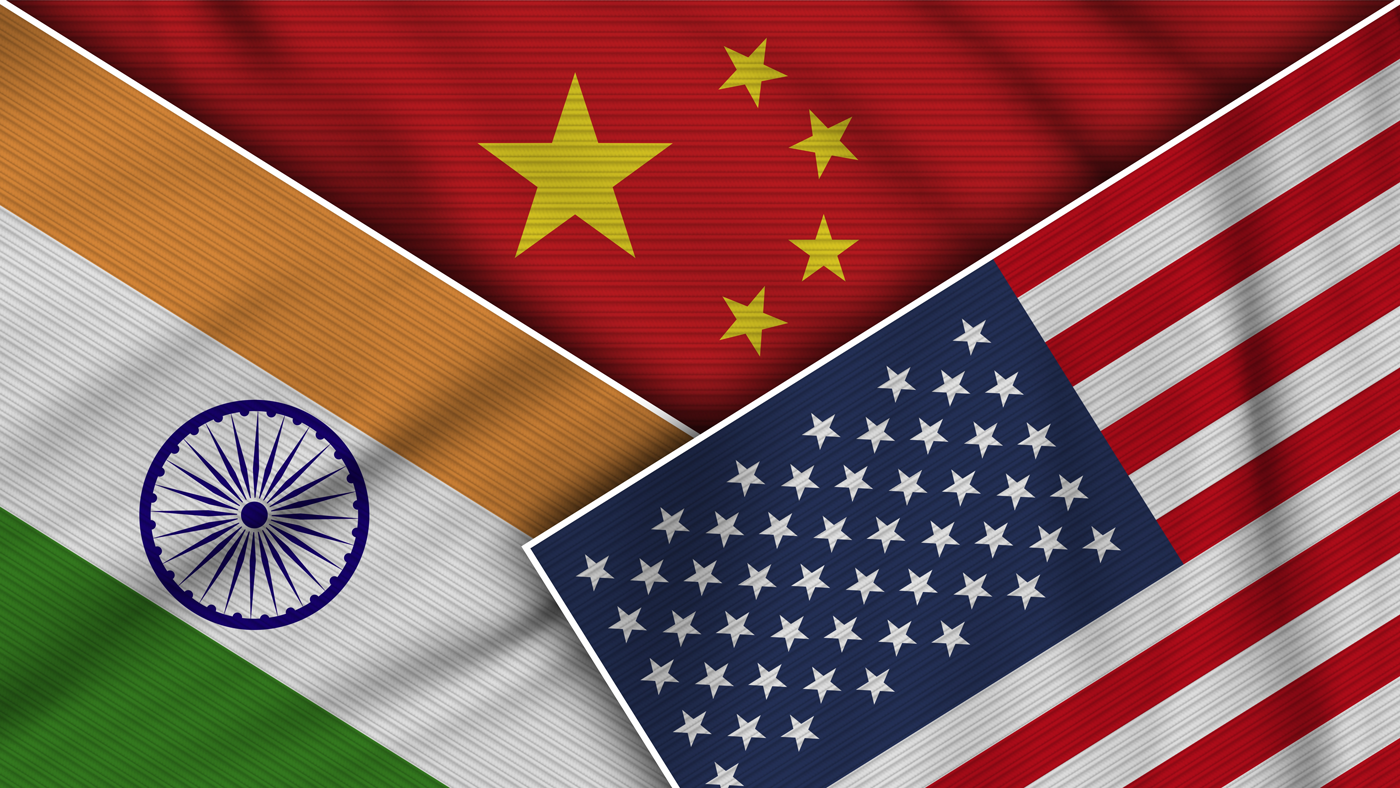
China-US Competition and India’s Security
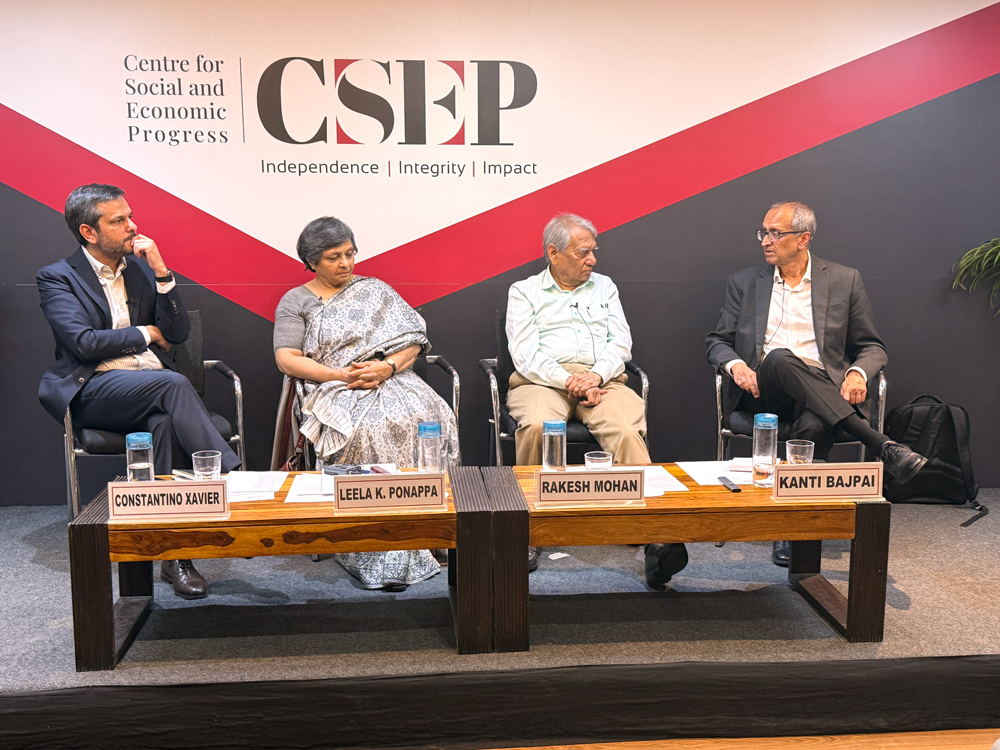
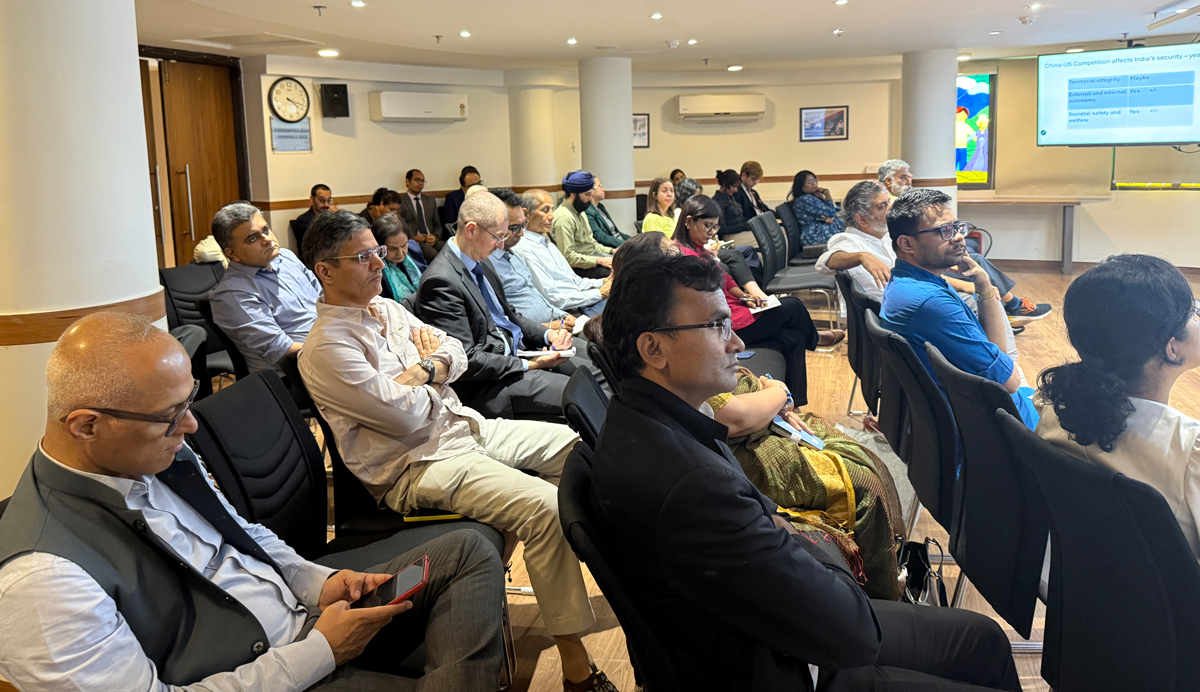
The Centre for Social and Economic Progress (CSEP) hosted a seminar titled “China-US Competition and India’s Security” on Thursday, March 19, 2026.
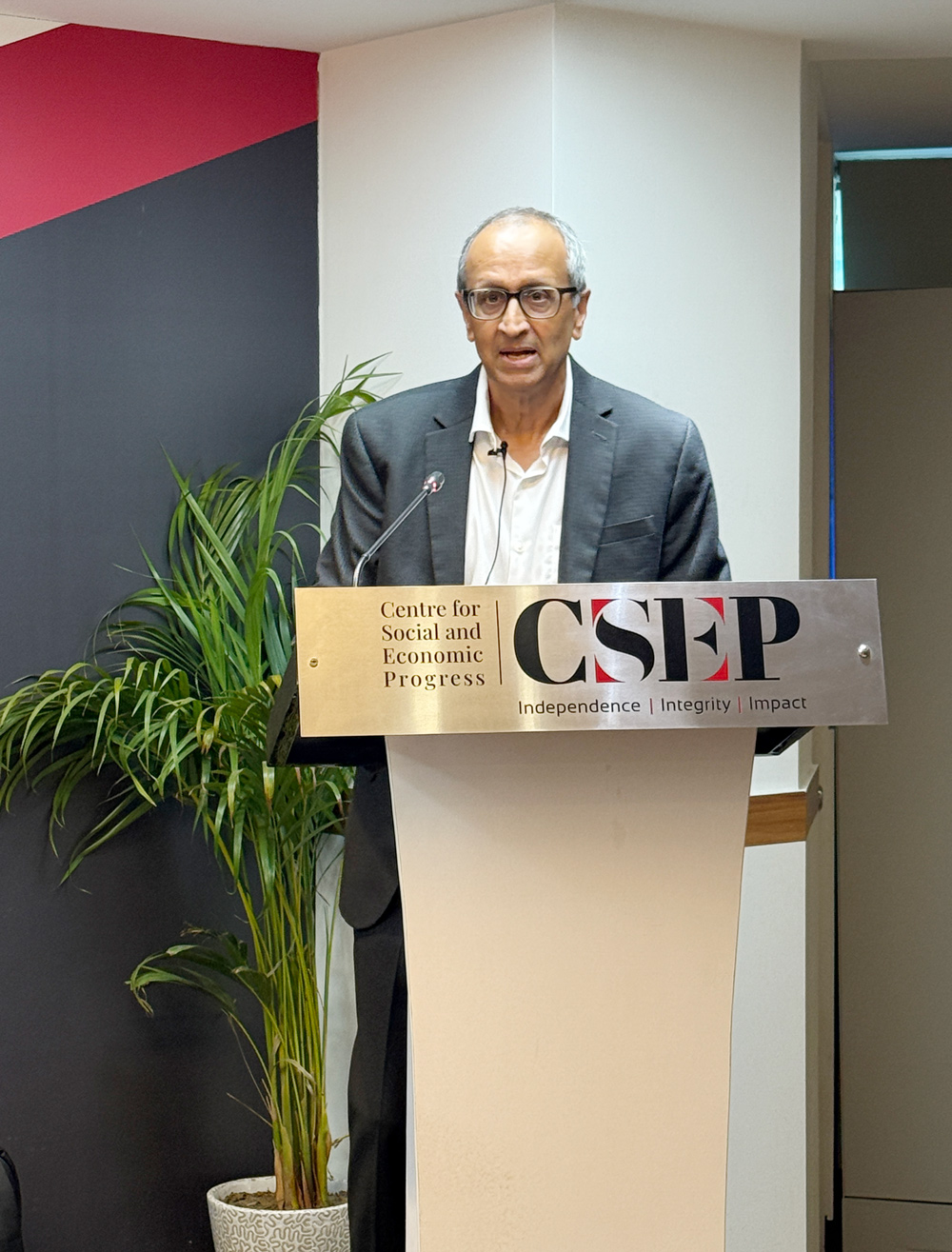
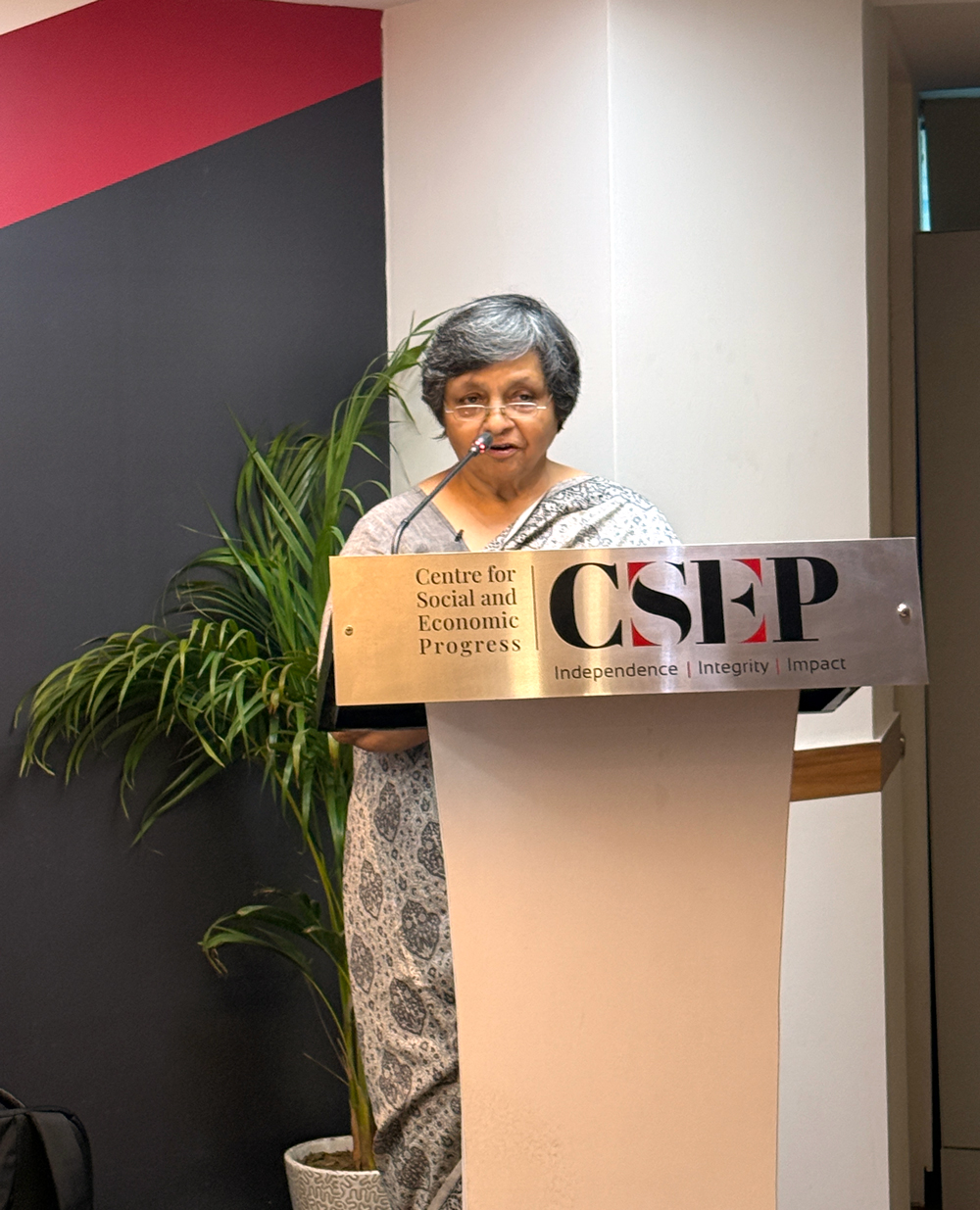
The seminar featured a presentation by Kanti Bajpai, Visiting Senior Fellow, CSEP. This was followed by a discussion with Ambassador Leela K. Ponappa (Retd.), Former Deputy National Security Advisor, and Constantino Xavier, Senior Fellow, CSEP. The session was chaired and moderated by Rakesh Mohan, President Emeritus and Distinguished Fellow, CSEP, and Former Deputy Governor, RBI.
About the event
The rivalry between China and the US is consequential globally. In what way exactly, and specifically, how does it impinge on India’s security? China-US competition has two potential consequences, positive and negative, which present India with contradictory policy incentives. On the positive side, the rivalry may prevent either or both powers from forcing their preferences on India. It may also encourage either or both powers to try to win India over. On the negative side, the consequences of the rivalry include the planetary and economic consequences of a China-US nuclear and/or conventional war, the decline of international institutions and the decay of international order, and the pressure on India to take sides between China and the US.
What are India’s choices in dealing with the potential effects of the rivalry? Broadly, India will need to do two contradictory things: drive a “wedge” between China and the US to prevent collusion and a possible condominium (G-2); and, at the same time, attempt to “bridge” between the two powers to prevent a dangerous polarisation and drift to war. Beyond this, India will need to construct various contingency plans to deal with the consequences of a possible China-US war, engage a broad coalition of middle powers in a G-10 to help shape and stabilize international order, and adopt a diplomatic posture between China and the US that draws on ideas of non-alignment, strategic autonomy, and soft balancing. In summary, India will need a policy of what might be called “ugly balancing”.
Chair & Moderator
Rakesh Mohan
Rakesh Mohan is President Emeritus and Distinguished Fellow at the Centre for Social and Economic Progress (CSEP).
He served as President and Distinguished Fellow at CSEP from October 2020 to May 2023. Since October 2021, he has been a member of the Prime Minister’s Economic Advisory Council (EAC-PM), and in March 2024, he was appointed to the World Bank Group’s Economic Advisory Panel.
Dr Mohan was part of the team that was instrumental in formulating India’s economic reforms from the late 1980s onwards. His distinguished public service includes positions as Executive Director on the Board of the International Monetary Fund, Deputy Governor of the Reserve Bank of India, Secretary of Economic Affairs, and Chief Economic Adviser at the Ministry of Finance, as well as Economic Adviser in the Ministry of Industry.
He has chaired several government committees that produced landmark reports on infrastructure, including The India Infrastructure Report (1996), The Indian Railways Report (2001), and The India Transport Report (2014). Following the North Atlantic Financial Crisis, he co-chaired the G20 Working Group on Enhancing Sound Regulation and Strengthening Transparency (2009), and the CGFS/BIS Working Group on Capital Flows and Emerging Market Economies (2009).
Before joining CSEP, Dr Mohan was Senior Fellow at the Jackson Institute for Global Affairs (2010-11; 2016-20), Yale University and Professor in the Practice of International Economics and Finance at Yale School of Management (2010–12). He has also been Distinguished Consulting Professor at Stanford University (2009) and Distinguished Fellow at Brookings India.
He is the author of three books on urban economics and development, two on monetary policy—Monetary Policy in a Globalized Economy: A Practitioner’s View (2009), and Growth with Financial Stability: Central Banking in an Emerging Market—and the edited volume India Transformed: 25 Years of Economic Reforms.
Dr Mohan holds a BSc (Eng) from Imperial College of Science and Technology, University of London (1969); a BA from Yale University (1971); and an MA (1974) and PhD (1977) in Economics from Princeton University.
Presenter
Kanti Bajpai
Kanti Bajpai is Visiting Senior Fellow, CSEP, Visiting Professor, Department of International Relations, Ashoka University and Emeritus Professor, Lee Kuan Yew School of Public Policy, National University of Singapore.
Before this, he held academic positions at the Lee Kuan Yew School of Public Policy, National University of Singapore (2011-25), Department of Politics and International Relations, Oxford University (2009-2010), the School of International Studies, Jawaharlal Nehru University (1994-2003), and the Maharajah Sayajirao University of Baroda (1989-1991). He was Headmaster, The Doon School, India (2003-2009).
Dr Bajpai has also held various visiting positions – at Wesleyan University, the University of Illinois at Urbana-Champaign, the Rajiv Gandhi Institute for Contemporary Studies in New Delhi, the Joan B. Kroc Institute for Peace at Notre Dame University, the Brookings Institution in Washington, D.C., and the Australian Defence Force Academy (ADFA) in Canberra. In 2010, he was Distinguished Fellow, Institute for Defence Studies and Analyses (IDSA) in New Delhi.
His main areas of research are Indian foreign policy and national security, South Asia, Asian international and strategic thought, and international security.
Most recently, Dr Bajpai published How Realist is India’s National Security Policy (Routledge, 2023), India Versus China: Why They Are Not Friends (Juggernaut, 2021), The Routledge Handbook of China-India Relations (2020, with Manjari Chatterjee Miller and Selina Ho), and India, the West, and International Order (2019, with Siddharth Mallavarapu). He is currently working on a book on India’s security.
Discussants
Leela K. Ponappa
Ambassador Leela K. Ponappa (retd.) served in the Indian Foreign Service from 1970 to 2006. She has been Deputy National Security Advisor, Ambassador to the Netherlands, PR to the OPCW, Ambassador to Thailand and PR to UNESCAP.
She has headed several divisions at MEA, dealing with Bangladesh, Sri Lanka, Myanmar and the Maldives; Consular, Passport, Visa & Overseas Indians; Establishment and SAARC, with intermittent charge of the East Asia, Northern and Pakistan/Afghanistan/Iran territorial divisions. She handled the Pakistan-Afghanistan desk as Under Secretary and has remained engaged with the region.
She has served on the faculty of the National Defence College; as Deputy Consul General in San Francisco and was a Research Associate at the Centre for South & Southeast Asian Studies, University of California, Berkeley.
Post retirement, she has worked with several think tanks, was an Independent Member, News Broadcasting Standards Authority; and Chairperson, CSCAP-India (Council for Security Cooperation in the Asia Pacific) during which time she was the non-ASEAN CSCAP Co-Chair for two years.
She was an Independent Director on the Board of Tejas Networks, a hitech manufacturing company.
Constantino Xavier
Constantino Xavier is a Senior Fellow at the Centre for Social and Economic Progress (CSEP), New Delhi, where he directs the program in Foreign Policy and Security Studies. He is also a non-resident fellow in the Foreign Policy program at the Brookings Institution, in Washington DC, and visiting professor at Ashoka University’s Department of International Relations.
His research expertise is on India’s role as a regional power in South Asia, the Bay of Bengal and Indian Ocean regions, especially relations with Nepal, Bangladesh, Sri Lanka and Myanmar. His studies under the CSEP Sambandh Initiative on Regional Connectivity have had wide impact with governments, industry and other stakeholders invested in enhancing India’s geoeconomic integration with neighbouring countries and regions, from the Gulf to Southeast Asia.
Dr Xavier’s broader work explores how India navigates the geopolitics of a changing regional and global order by balancing national security interests and growing economic interdependence. He also focuses on India’s relations with the European Union and other Indo-Pacific powers across the Global South. At CSEP he is currently leading research projects on India’s regional connectivity partnerships, climate cooperation, critical minerals security and China’s role in South Asia.
All content reflects the individual views of the speakers. The Centre for Social and Economic Progress (CSEP) does not hold an institutional view on any subject.
Please contact Gurmeet Kaur at GKaur@csep.org for general queries and Ayesha Manocha at AManocha@csep.org for media queries.


The Centre for Social and Economic Progress (CSEP) is an independent, public policy think tank with a mandate to conduct research and analysis on critical issues facing India and the world and help shape policies that advance sustainable growth and development.