Key Insights | Battery Circularity in India— A Billion-Dollar Long-Term Opportunity : The Case Of EV Batteries
Reading Time: < 1 minuteDOWNLOADS
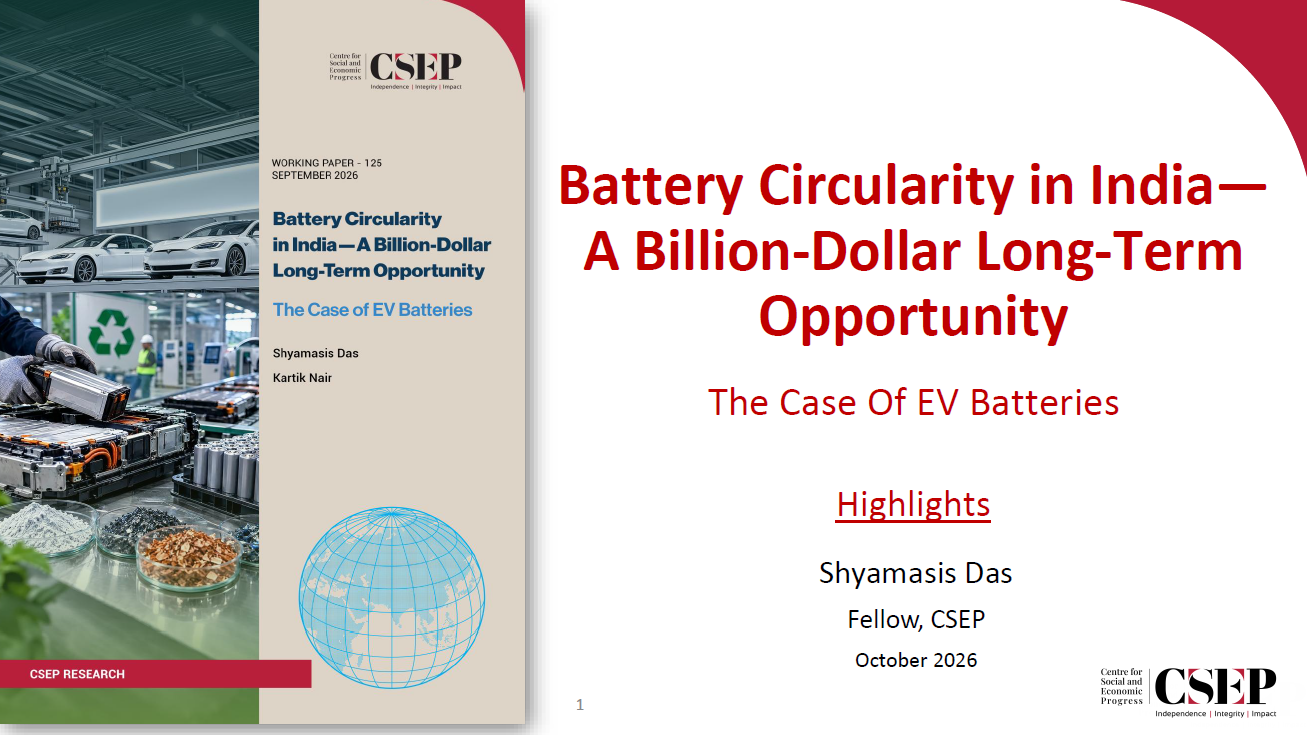
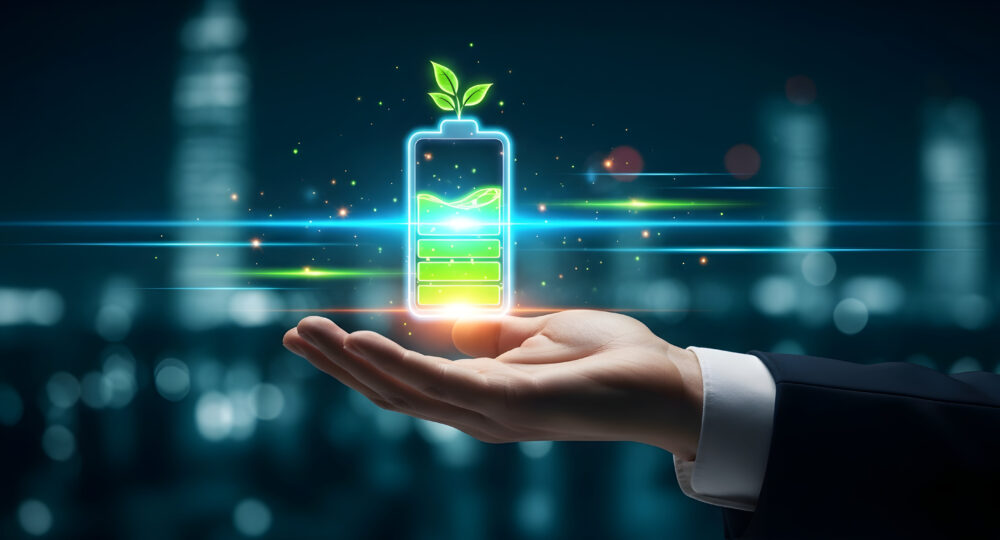
India’s electric vehicle (EV) transition is accelerating rapidly, with nearly 8 million EVs added between financial year (FY) 2016–17 and FY 2025–26, the majority of which are electric two-wheeled (2W) and electric three-wheeled (3W) vehicles. Considering that the EV share of total vehicle sales is still in the single digits (estimated at 8.25% in FY 2025–26), there is considerable headroom for the EV market to grow further in the country. This transition is significantly increasing the deployment of lithium-ion batteries (LiBs), creating both an environmental challenge and an economic opportunity. As EV batteries reach end-of-life (EoL), they can either become a hazardous waste stream or serve as a valuable secondary source of critical minerals, such as lithium, nickel, cobalt, copper, and manganese.
India currently depends heavily on imports for battery minerals and advanced battery cells. Lithium, nickel, cobalt, copper, and graphite have been identified by the Ministry of Mines as critical and strategic minerals. For three of these—lithium, nickel, and cobalt—the country is 100% import-dependent. Developing a domestic EV battery recycling ecosystem can therefore strengthen supply-chain security, reduce import dependence, support industrial growth, and contribute to climate and sustainability goals.
This study assesses India’s EV battery circular economy opportunity through FY 2040–41 by analysing EV sales trajectories, battery chemistry trends, recoverable mineral volumes, recycling capacity requirements, and associated investment needs. It reviews the country’s policy landscape relevant to used EV battery recycling, examines the key recycling methods, projects the potential volume of EoL EV batteries available for recycling, and estimates the capital expenditure (CapEx) required to set up recycling facilities.

Shyamasis Das

Kartik Nair

Find on this page

The Centre for Social and Economic Progress (CSEP) is an independent, public policy think tank with a mandate to conduct research and analysis on critical issues facing India and the world and help shape policies that advance sustainable growth and development.