

Adaptation vs. Mitigation for Viksit Bharat 2047
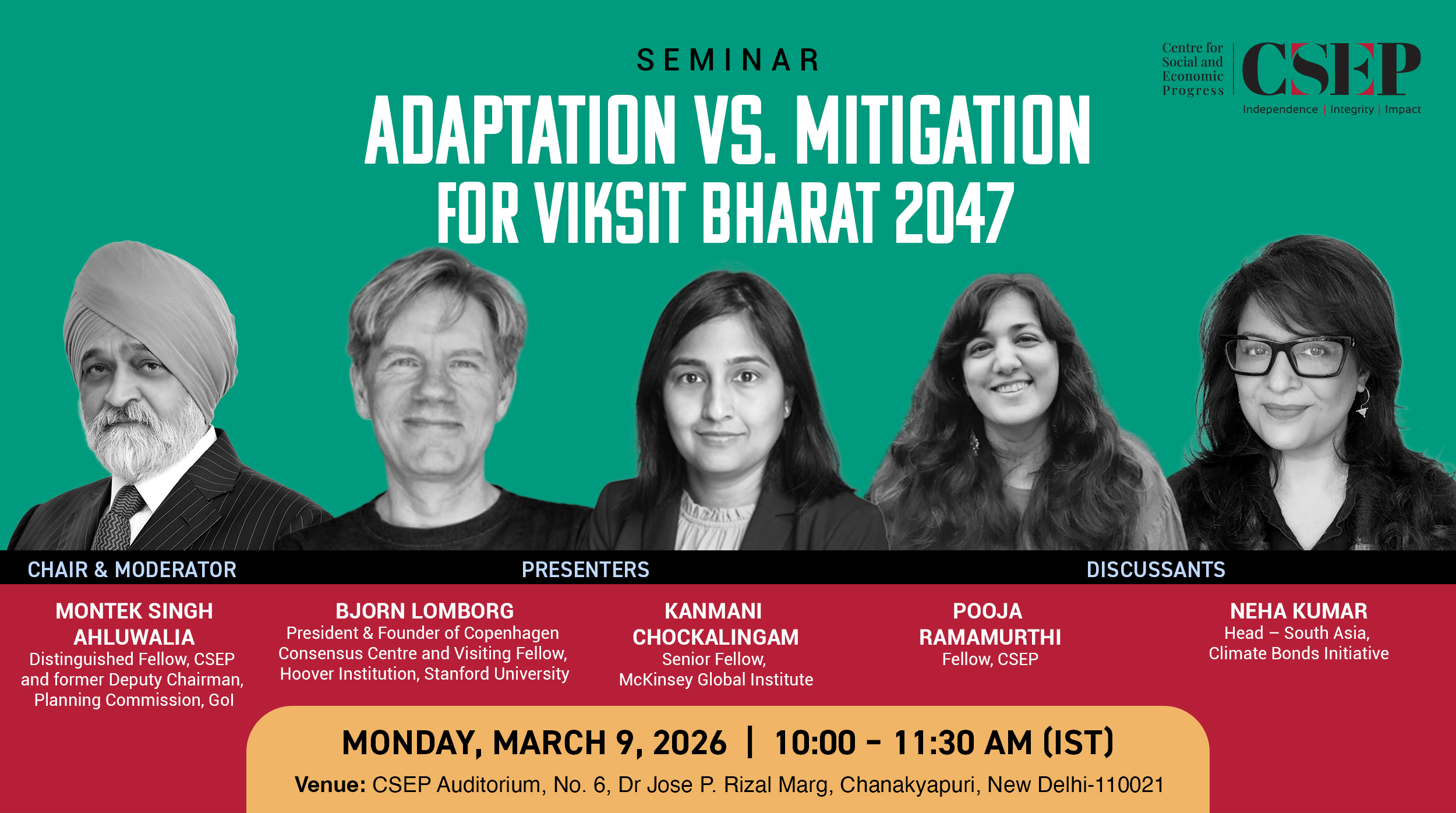
The Centre for Social and Economic Progress (CSEP) is delighted to invite you to a seminar titled “Adaptation vs. Mitigation for Viksit Bharat 2047” on Monday, March 9, 2026, from 10:00 to 11:30 am (IST) at the CSEP Auditorium, 6, Dr Jose P Rizal Marg, Chanakyapuri, New Delhi – 110021.
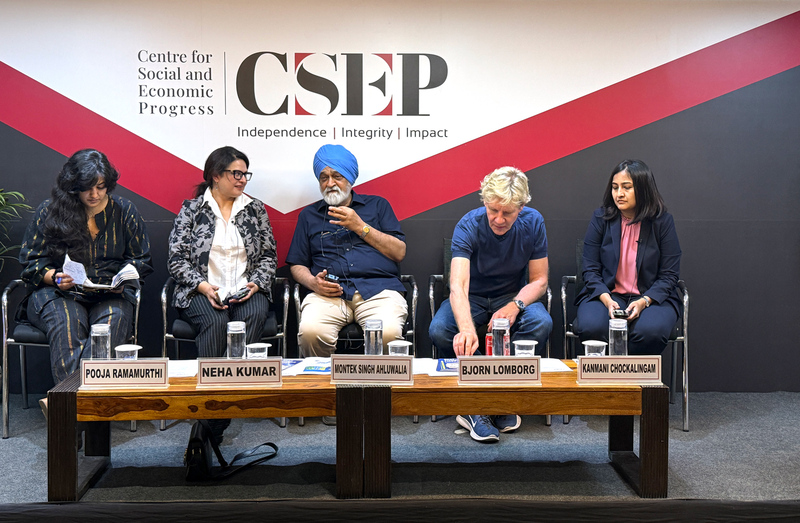
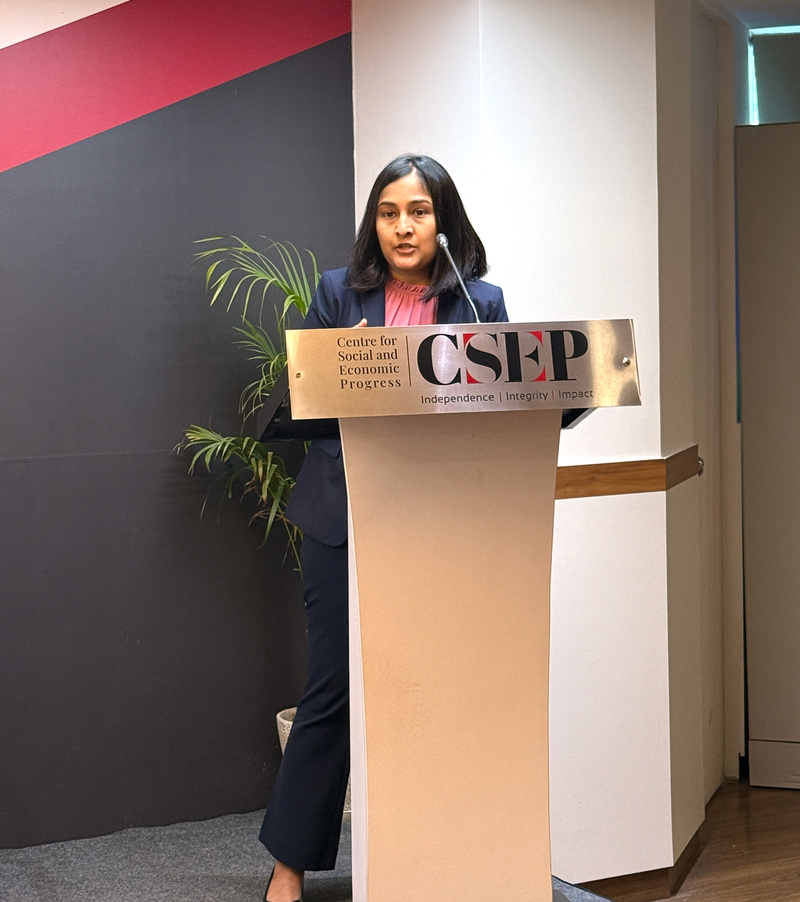
The seminar will feature presentations by Bjørn Lomborg, President and Founder, Copenhagen Consensus Centre and Visiting Fellow, Hoover Institution, Stanford University and Kanmani Chockalingam, Senior Fellow, McKinsey Global Institute (MGI). This will be followed by a discussion with Neha Kumar, Head – South Asia, Climate Bonds Initiative and Pooja Ramamurthi, Fellow, CSEP. The session will be chaired and moderated by Montek Singh Ahluwalia, Distinguished Fellow, CSEP and Former Deputy Chairman, Planning Commission, Government of India.
Please note that this is an in-person event only. If you are in Delhi on the day, please join us for the seminar. The event will be available on the CSEP website and YouTube channel upon completion.
About the event
Climate change is a real challenge, that will have a significant impact on people and planet, and more so for India than for the global average. While climate change is definitely a problem, the average Indian will still be much better off by the end of the century. The cost of climate policy is also likely to be significant, and will globally significantly outweigh its benefits in the 21st century. This both puts a question mark to the economic rationale of rapid decarbonization and it certainly makes net-zero plans by 2050 or before likely to be dramatically missed. Instead, we need to mostly focus on more efficient climate policies, especially in adaptation, economic growth and enhanced investments in green energy R&D.
Yet despite the benefits of adaptation far outweighing its costs, it represents only one-third of the amount needed to protect everyone exposed to hazards today at standards established in developed economies. And as the world warms, hazards patterns will shift, changing adaptation needs. Today many proven, cost-effective solutions exist to address extreme weather that affects roughly 40 percent of the Earth’s land mass. Research by the McKinsey Global Institute finds that the world spends $190 billion to deploy 20 tried-and-true adaptation measures, from fans and air conditioners to irrigation systems and sea dikes, protecting about one billion people exposed to heat, wildfire, drought, and flooding.
This seminar will explore the cost and benefits of climate mitigation policy compared to other national priorities to meeting Viksit Bharat goals. At the same time, it will explore how adaptation has been underfunded, and how individuals, businesses, and policymakers can make informed resilience decisions today and over the long term.
Chair & Moderator
Montek Singh Ahluwalia
Montek Singh Ahluwalia is a Distinguished Fellow at CSEP. An economist and civil servant, he was former Deputy Chairman of Planning Commission, Government of India. He joined the Government in 1979 as Economic Adviser in the Ministry of Finance, after which he held a series of positions including Special Secretary to the Prime Minister; Commerce Secretary; Secretary in the Department of Economic Affairs; Finance Secretary in the Ministry of Finance; Member of the Planning Commission and Member of the Economic Advisory Council to the Prime Minister. In 2001, he was appointed as the first Director of the newly created Independent Evaluation Office of the International Monetary Fund. He resigned from that position in 2004 to take up the position of Deputy Chairman of the Planning Commission which he held from 2004 to 2014.
Mr Ahluwalia has been a key figure in Indian economic policy. He writes on various aspects of development economics and has been published in prominent Indian and international journals and books. He co-authored Re-distribution with Growth: An Approach to Policy, which, published in 1975, was a path-breaking book on income distribution. In February 2020, he published his book, Backstage: The Story Behind India’s High Growth Years, an insider’s account of policymaking from 1985 to 2014.
For his outstanding contribution to economic policy and public service, he was conferred the prestigious ‘Padma Vibhushan’ in 2011, India’s 2nd highest civilian award for exceptional and distinguished service.
Mr Ahluwalia graduated from Delhi University and holds an MA and an MPhil in Economics from Oxford University. He is an Honorary Fellow of Magdalen College Oxford.
Presenters
Bjorn Lomborg
Bjorn Lomborg is a renowned author, academic, and thought leader, focused on a data-driven approach to global challenges. President and founder of Copenhagen Consensus Center where he has worked with hundreds of the world’s top economists and seven Nobel Laureates to identify the most cost-effective solutions for the planet’s greatest problems. He is also a Visiting Fellow at Stanford University’s Hoover Institution. A bestselling author whose most recent books include False Alarm and Best Things First, Lomborg’s focus on smart policies to problems from climate to development is regularly featured across the world, including in The Wall Street Journal, Washington Post, Sunday Telegraph and The Financial Times. He has been named one of TIME magazine’s 100 most influential people in the world, one of Foreign Policy’s top 100 global thinkers, and “one of the 50 people who could save the planet” by The Guardian. A sought-after speaker and commentator, Lomborg has appeared on the biggest media platforms worldwide, including Joe Rogan and Lex Friedman. Lomborg’s mission is to move beyond alarmism and focus on smart, efficient investments that deliver the greatest benefits for people and the planet.
Kanmani Chockalingam
Kanmani Chockalingam is a Senior Fellow at the McKinsey Global Institute (MGI), McKinsey’s business and economics research arm. Her research focuses on climate resilience—the impact of climate hazards on people today, how it can evolve in a warming world and what it will take to protect them; human potential and skills, including how individuals build human capital, how career pathways diverge for men and women, and how companies can enhance human capital development for their employees; and small businesses, including their performance, potential, and challenges. She is a frequent speaker on these topics at leading conferences and industry forums. Her research is widely cited in the media, and she contributes to articles and op-eds in major publications such as Mint, Financial Times, Project Syndicate, and The Harvard Business Review.
Discussants
Neha Kumar
Neha Kumar is the Head, South Asia, Climate Bonds Initiative and is based in Delhi. She drives policy, strategy and partner programmes on climate risks and sustainable financial ecosystem. Her efforts are targeted at building policy mechanisms, market infrastructure and capacities needed to accelerate financing for green, just and resilient transition in the region. Her current areas of focus include transition and resilience finance, the role of financial policy and regulation, and DFI and MDBs. She serves on the committees of IFSCA and Niti Aayog on climate finance, is a member of the committee constituted by the Ministry of Finance on the Climate Finance Taxonomy development and has contributed to international ESG standard setting bodies. Avidly interested in the political economy of flow of sustainable finance, she has been working on the topics of equity and climate justice. She has two decades of experience in responsible financing, environmental and political risks. She is trained in science, international environmental negotiations and politics.
Pooja Vijay Ramamurthi
Pooja Vijay Ramamurthi is a Fellow in CSEP. She has a PhD in Science, Technology and Environmental Policy at the School of Public and international Affairs (STEP) at Princeton University. She studies climate and energy transition policy, particularly focusing on the role that India can play in accelerating domestic and international action towards decarbonisation.
Her work has always been multidisciplinary, where she looks at techno-economic, social and political dimensions of sustainability. She has worked at premier think tanks in India, including the Energy Policy Institute at the University of Chicago and the Center for Study of Science, Technology and Policy. She has also worked on projects in Ghana and Cambodia. Her work has resulted in her being invited to international level conferences and publications in peer reviewed journals and leading newspapers.
She is recipient of the Prize Fellowship for Social Sciences at Princeton University. She has also received her double Master’s degree in Sustainable Energy from the Royal institute of Technology, Sweden and Instituto Superior Tecnico, Portugal via the Innoenergy scholarship granted by the European Union.
All content reflects the individual views of the speakers. The Centre for Social and Economic Progress (CSEP) does not hold an institutional view on any subject.
Please contact Gurmeet Kaur at GKaur@csep.org for general queries and Ayesha Manocha at AManocha@csep.org for media queries.






The Centre for Social and Economic Progress (CSEP) is an independent, public policy think tank with a mandate to conduct research and analysis on critical issues facing India and the world and help shape policies that advance sustainable growth and development.