

Women’s Health Needs and Access to Healthcare: Emerging Issues and Policy Opportunities
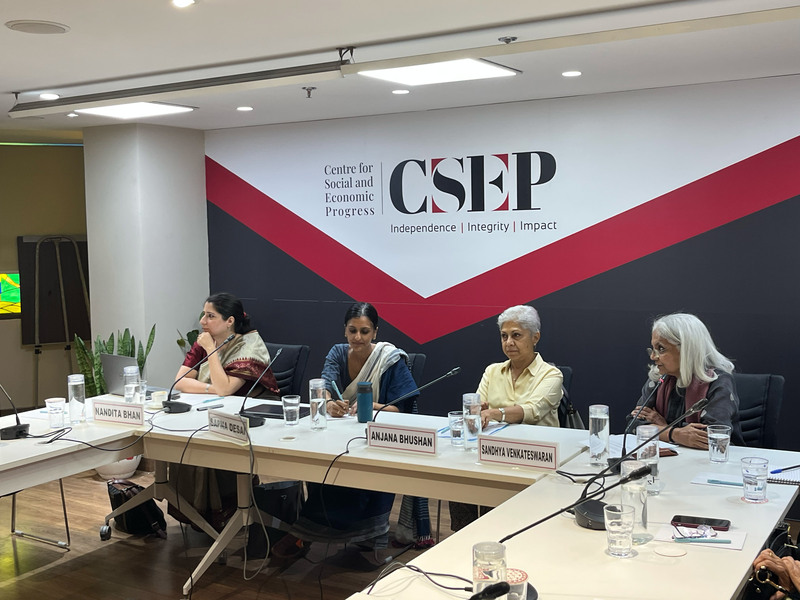
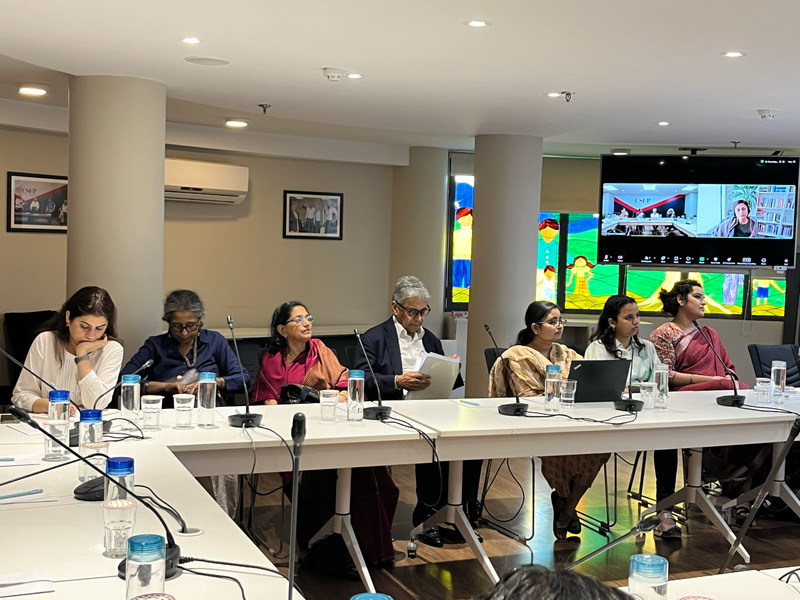
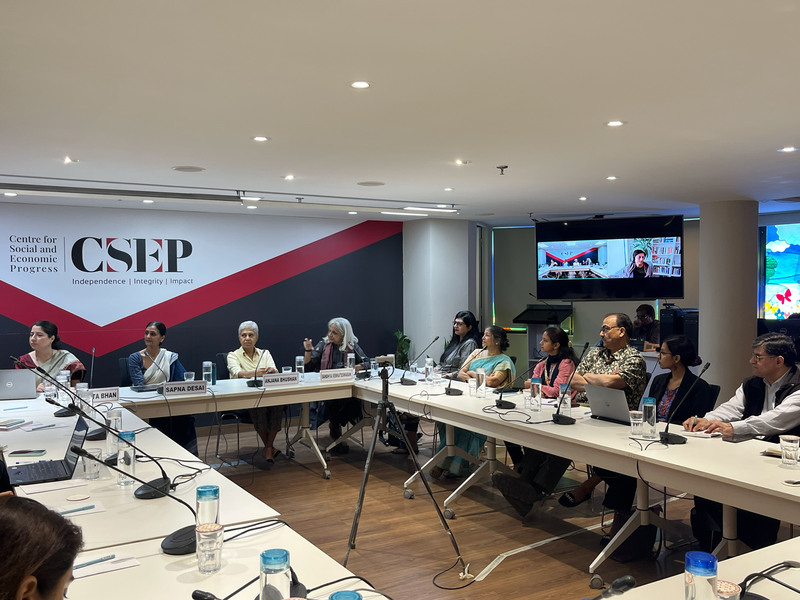
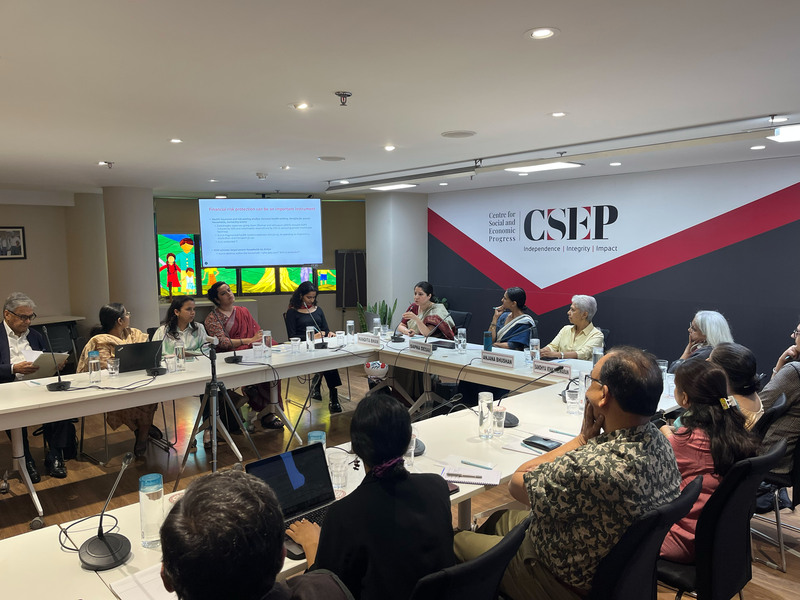
The Centre for Social and Economic Progress (CSEP) hosted a seminar titled “Women’s Health Needs and Access to Healthcare: Emerging Issues and Policy Opportunities” on Tuesday, March 25, 2025.
The seminar featured presentations by Nandita Bhan, Professor, Jindal School of Public Health (JSPH), O.P. Jindal Global University; Sapna Desai, Senior Fellow, Population Council Institute; and Radhika Jain, Assistant Professor, Health Economics, University College London. This was followed by a discussion with Anjana Bhushan, Former Technical Officer (Gender, Equity and Human Rights), World Health Organization. The session was moderated by Sandhya Venkateswaran, Senior Fellow, CSEP.
About the event
The policy seminar examined the evolving landscape of women’s health needs and disease burdens, in the context of rapid demographic and epidemiological transitions, and maps them against women’s access to healthcare and health insurance. How are women’s health burdens changing, especially beyond the reproductive years, and are women able to access the healthcare they need and desire? How are women financing their healthcare, and what barriers do they face at home and in their interaction with health systems? This policy dialogue sought to unpack key gendered questions related to women’s health and human development and identify key policy gaps and opportunities for action.
Presenters
Nandita Bhan
Nandita Bhan currently works as Professor at the Jindal School of Public Health (JSPH) at O.P. Jindal Global University (JGU). She is a social epidemiologist by training with degrees in Public Health and Social & Behavioral Sciences from Harvard University, University College London and Delhi University. She has previously worked with the Center on Gender Equity and Health (GEH) at UC San Diego and the Public Health Foundation of India (PHFI). Nandita’s work focuses on social inequalities, particularly the role of gender equality and the social, behavioural and structural determinants of health and well-being. Her work uses a life course perspective in engaging with development, health and well-being of women and girls, and examining gender and social inequalities in health service access and use. She has worked on research and capacity building on gender and sexual and reproductive health for field-based program monitoring and evaluation, with particular interest in issues of adolescent agency and in addressing measurement and data gaps in gender empowerment.
Sapna Desai
Sapna Desai is an epidemiologist and public health specialist whose work focuses on women’s health through the life course, sexual and reproductive health and rights and community participation in health systems. She is Senior Fellow at the Population Council Institute and Co-Chair of the global journal Sexual and Reproductive Health Matters. She currently leads a DBT-Wellcome India Alliance Team Science study on the causes and consequences of hysterectomy in three states, as well as research on pathways from PHC to UHC and women’s work and childcare. Previously, she co-led the global Evidence Consortium on Women’s Groups and spent several years as national lead for health with the Self-Employed Women’s Association (SEWA), where she continues to serve as Advisor. She is Adjunct Faculty at JPG BRAC School of Public Health in Dhaka. Sapna holds a PhD in epidemiology and population health from the London School of Hygiene and Tropical Medicine and a Master’s degree from the Harvard School of Public Health.
Radhika Jain
Radhika Jain is a health and development economist studying healthcare markets, government health policy, and socioeconomic inequality, with a regional focus on India. She is an Assistant Professor of Health Economics at University College London, an affiliate of the UCL Centre for Global Health Economics, and an invited researcher at J-PAL South Asia. She completed a doctorate in Global Health and Economics at Harvard University, a Master of Public Policy at the Harvard Kennedy School of Government, and the Asia Health Policy Postdoctoral Research Fellowship at Stanford University. Prior to this, she worked on impact evaluations of health programs in India and on the implementation of HIV programs across several countries in sub-Saharan Africa.
Discussant
Anjana Bhushan
Anjana Bhushan was until recently with the World Health Organization (WHO), in the Department of Family Health/UHC at the WHO Regional Office for South-East Asia. She provided technical leadership to Member States on integrating gender-responsive, equity-enhancing, and human rights-based approaches into health policies and tackling gender-based violence. Previously, she was Regional Advisor (Service Delivery Systems) at WHO South-East Asia and Coordinator (Integrated Service Delivery) at WHO Western Pacific, working on strengthening health systems and universal health coverage. Earlier, she coordinated WHO’s work on equity, gender, social determinants, and aging. Before WHO, she worked on poverty and gender in health at the World Bank, UNDP, and ILO. She began her career in India’s senior civil service, managing development programs for a decade. Anjana holds a master’s degree in Sociology from Johns Hopkins University.
Moderator
Sandhya Venkateswaran
Sandhya Venkateswaran is a Senior Fellow at CSEP and leads the Human Development work at CSEP, with a specific focus on Health Policy. Spanning a career over three decades, she has worked on a wide range of issues in the social sector spanning health, nutrition, gender, natural resources, urban development and others, and has authored books, multiple articles and other publications on varied social sector issues. Over the last 15 years, her focus has been on policy issues, developing and leading the policy and advocacy portfolio in organisations such as the Bill and Melinda Gates Foundation, Global Alliance for Improved Nutrition and CARE. She has worked with grassroots campaigns and civil society organisations, as well as with government and international organisations. She is currently a member of the Lancet Citizens Commission on Reimagining India’s Health System.
All content reflects the individual views of the speakers. The Centre for Social and Economic Progress (CSEP) does not hold an institutional view on any subject.
Please contact Gurmeet Kaur at GKaur@csep.org for general queries and Ayesha Manocha at AManocha@csep.org for media queries.





The Centre for Social and Economic Progress (CSEP) is an independent, public policy think tank with a mandate to conduct research and analysis on critical issues facing India and the world and help shape policies that advance sustainable growth and development.