
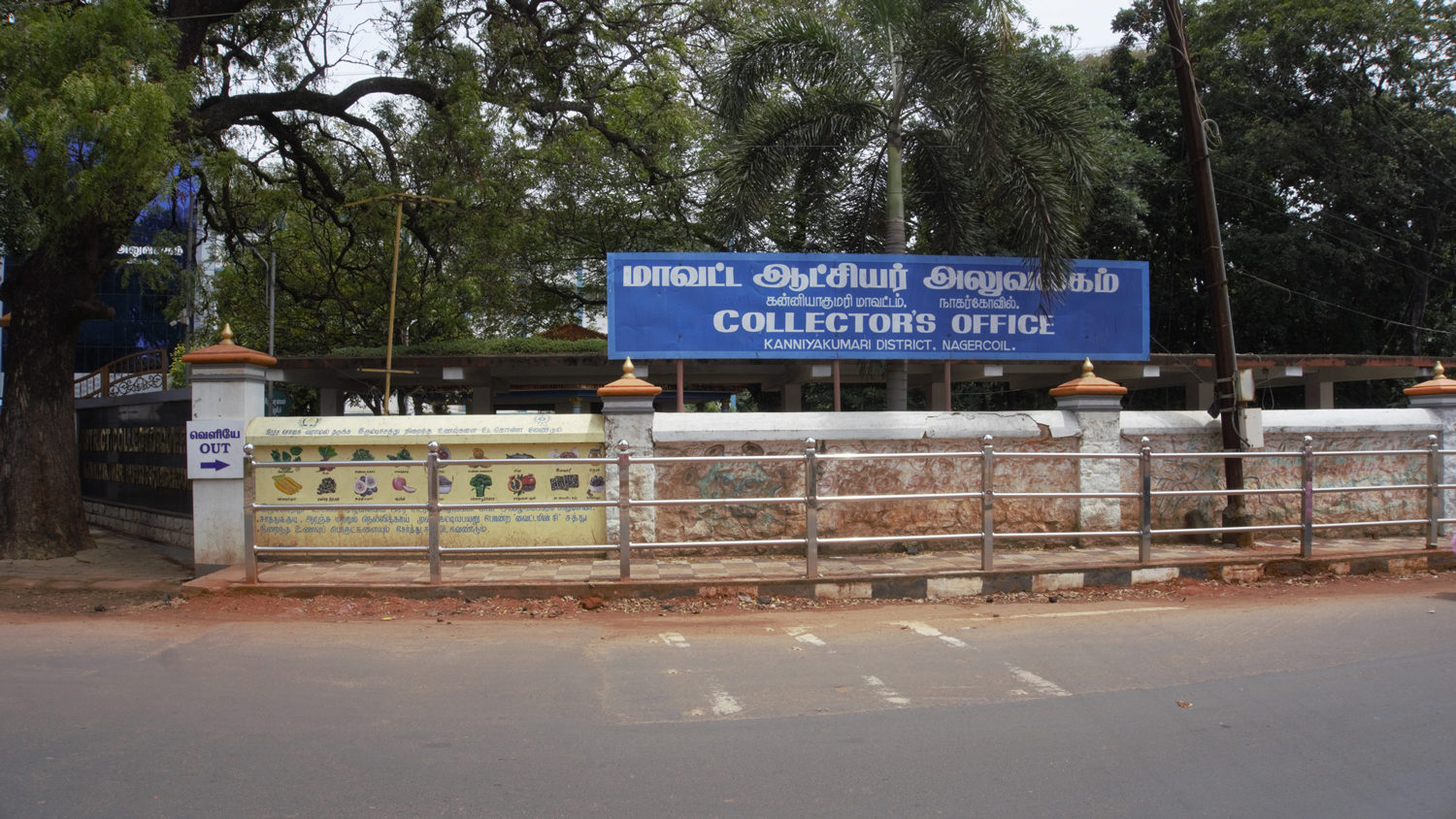
The Historical Evolution of the District Officer and its Continuing Relevance
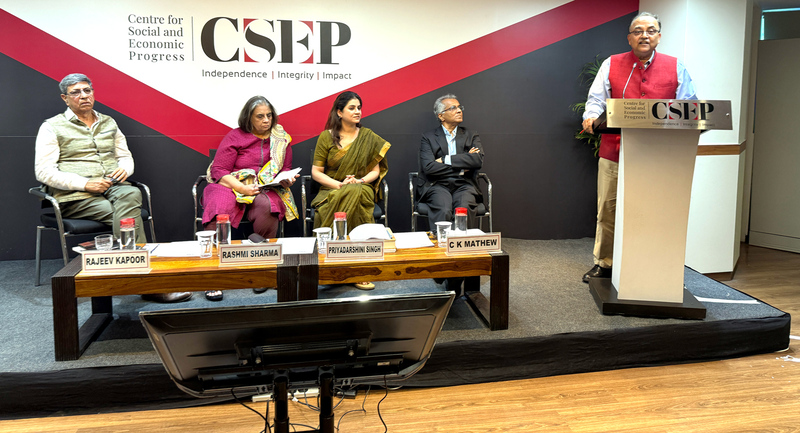
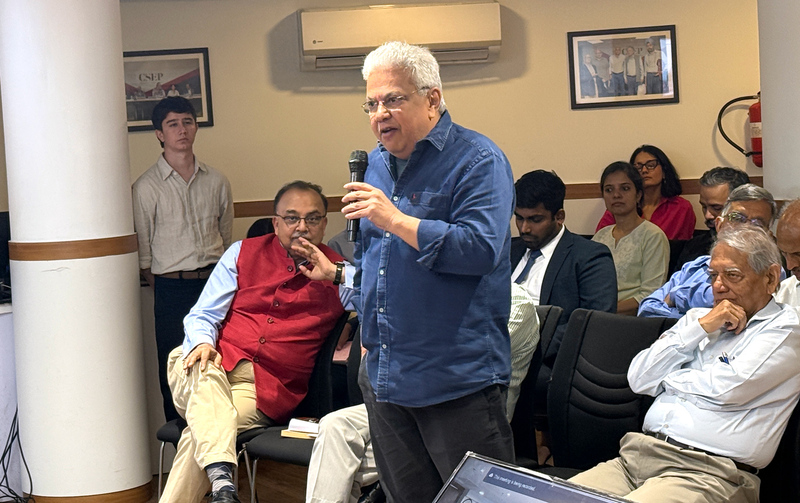
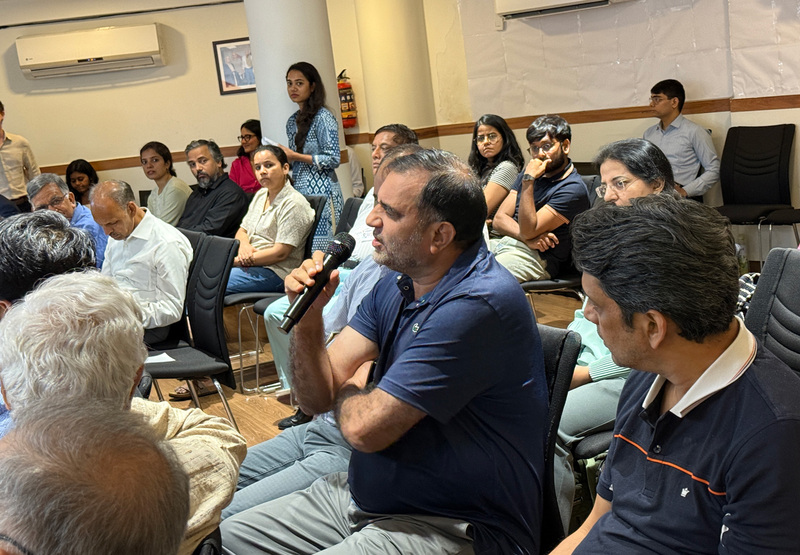
The Centre for Social and Economic Progress (CSEP) hosted seminar titled “The Historical Evolution of the District Officer and its Continuing Relevance” on Friday, April 10, 2026.
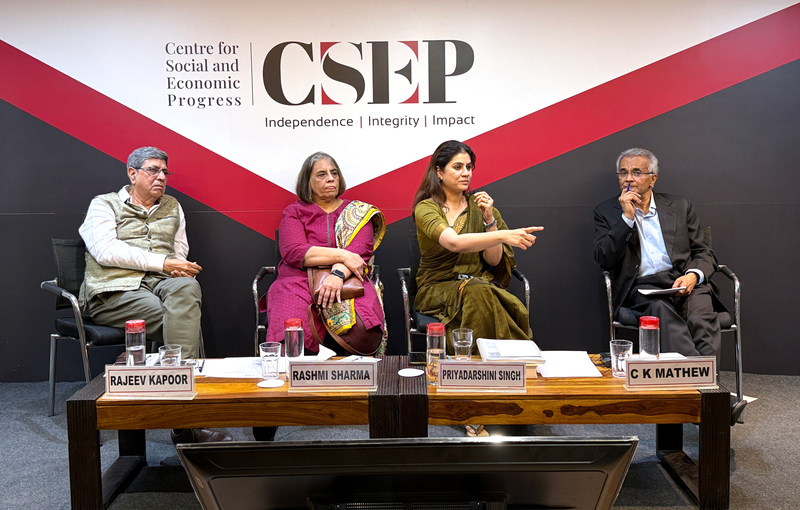
At a time when the demands on governance are rapidly evolving, this seminar revisited one of India’s most enduring administrative institutions—the District Officer. The session featured a presentation by C.K. Mathew, Former Chief Secretary, Rajasthan and Visiting Professor, Azim Premji University, followed by a discussion with Rashmi Sharma, Senior Visiting Fellow, ICRIER; Rajeev Kapoor, Senior Fellow, CSEP and former Secretary, Ministry of New and Renewable Energy; and Priyadarshini Singh, Fellow, CSEP.
The session opened with remarks by Amarjeet Sinha, Senior Fellow, CSEP and former Advisor to the Prime Minister (till July 2021), and was moderated by Priyadarshini Singh. Closing remarks were delivered by Anoushka Gupta, Research Associate, CSEP.
Drawing on his book, “The Historical Evolution of the District Officer: from early times to 1947,” C.K. Mathew traced the history of the office of the District Officer, who oversees the basic unit of administration – the district. The office exists in every district in the country, numbering over 800. Dr Mathew also described the multifarious activities that they perform today. The presentation described the challenges that they face in the country where opposing political thought and aspirations have to be managed, even as developmental programmes are implemented and monitored.
About the event
This talk is based on the book that Dr Mathew has written, “The Historical Evolution of the District Officer: from early times to 1947”. The District Officer is the key administrator at the district-level. It is well-known that our country owes much of its legal and administrative structure to the legacy left behind by the British when they left the country in 1947. The most visible and effective element of administration, still extant continuously in the country over the last 250 years in an unbroken line of historical evolution, is the institution of the District Collector.
At present there are almost 800 districts in the country, each district led by a District Officer. The District Officer is not merely the representative of the State Government; in many ways, s/he personifies the Government itself. Among the various, law and order, administrative, revenue and social welfare roles that the District officer performs, s/he also plays the sensitive role of balancing conflicting political aspirations in the best interests of the district. As the eyes and ears of the Government, it is also the district officer’s function to ensure that critical information about all manner of developments in his jurisdiction are promptly brought to the attention of the State Government. In times of crisis, such as the management of a natural disaster or civil disturbance, the authority of the District Officer is vast and unquestioned. The presentation situated the continuing relevance of the District Officer and was followed by reflections and a discussion with an esteemed panel.
Presenter
C.K. Mathew
C.K. Mathew is a Visiting Faculty at Azim Premji University, Bangalore, and a retired Indian Administrative Service officer (1977 batch, Rajasthan cadre) who served as Chief Secretary of Rajasthan in 2012 and 2013. During his administrative career, he held several senior positions including District Collector in two districts, Secretary in the Departments of Education, Irrigation, Mines, Energy, Information Technology and Disaster Management, Principal Secretary to the Chief Minister of Rajasthan, and Additional Chief Secretary in the Finance Department.
After retirement, he worked for about four years as Senior Fellow at the Public Affairs Centre, Bengaluru, where he developed the Public Affairs Index, a framework for measuring the quality of governance in Indian states. He also served for a short period as Special Rapporteur for the Southern States under the National Human Rights Commission. He is currently a member of the Managing Committee of a few Delhi Public Schools in Karnataka and Rajasthan, and a member of the Central Board of the Bharat Sevak Samaj. He holds a doctorate in English Literature and has authored several books published by Azim Premji University.
Opening Remarks
Amarjeet Sinha
Amarjeet Sinha is a Senior Fellow at the Centre for Social and Economic Progress. From 2022-24, Amarjeet served as Member Public Enterprises Selection Board. He was earlier posted as Advisor to the Prime Minister till 31 July 2021. An Indian Administrative Service (IAS) Officer of Bihar Cadre of 1983 batch, he retired in December 2019 as Secretary, Department of Rural Development, Government of India. He has 41 years of experience in Government, largely in the rural and social sector. He has had the unique distinction of having played a major role in designing Sarva Siksha Abhiyan (India’s main programme for universal education), the National Rural Health Mission, in bringing about governance reforms in programmes for rural areas covering livelihoods (NRLM), employment (MGNREGS), housing (PMAY Gramin), social security (NSAP), skills (DDUGKY), urban development, and road construction (PMGSY).
Amarjeet has taught and lectured in many Public Policy Schools in India. He teaches two courses at the Advanced Management Programme for Public Policy (AMPPP), the flagship public policy course of the Indian School of Business. He also runs a Public Policy in Practice Course for the Institute of Rural Management, Anand. He teaches a course on Devolution, Development and Democracy at Ashoka University. He delivered the ICSSR Annual Lecture 2022 on Bridging the Last Mile in Pro-Poor Public Welfare. He is also an Advisor to Sampark Foundation for frugal innovations on scale in education, on Health and Human Development with the Centre for Social and Economic Progress. He is a Member of the Jury for The Indian Express Governance Awards. He Chaired a committee for suggesting reforms in the MGNREGS, which submitted its report on 4th June 2023. Amarjeet Chairs the Gender Expert Committee of the Reserve Bank Innovation Hub. He is also on the Board of the Indian Institute of Health Management and Research, New Delhi, HelpAge India, PRADAN, and the Centre for Studying Developing Societies (CSDS).
A student at St. Stephen’s College, he topped the Delhi University and is a recipient of the National Talent Scholarship, the Rhodes Scholarship and the Oxford Cambridge Society of India Scholarship. He has also been the President of the St. Stephen’s College Students’ Union Society.
Discussants
Rashmi Sharma
Rashmi Sharma is a senior visiting fellow at the Indian Council for Research on International Economic Relations (ICRIER) and chairperson, Transforming Rural India (TRI) Foundation. She is a former Indian Administrative Service (IAS) officer of the 1984 batch, and as worked in several capacities in the central and state government in India, especially in the areas of school education and local government. She had also published several academic articles and two books. At present, she is engaged in researching and writing about the structure and working of government, with a focus on the grassroots.
Rajeev Kapoor
Rajeev Kapoor is Senior Fellow, CSEP and a former Indian Administrative Service (IAS) officer (Uttar Pradesh cadre) who retired as Secretary, Ministry of Chemicals and Petrochemicals, Government of India. He also served as Secretary in the Ministry of New and Renewable Energy, where he contributed to policy development and institutional strengthening in India’s clean energy transition.
During his career in public service, he held senior positions in the Government of India, including Director of the Lal Bahadur Shastri National Academy of Administration and Joint Secretary in the Department of Personnel and Training. He also served in the Department of Fertilizers. In the Government of Uttar Pradesh, he worked across a wide range of sectors, including energy, finance, public works, development banking, health, and agriculture, gaining extensive experience in public administration and development policy.
After retiring from the IAS, he served as State Information Commissioner and continues to contribute to policy and academic discourse. He is currently Vice-Chairman of the Board of the Giri Institute of Development Studies and a Visiting Professor at the Indian School of Public Policy, where he teaches public policy.
Rajeev holds a degree in Electrical Engineering from IIT Kanpur, a Postgraduate Diploma in Management from IIM Ahmedabad, and a Master’s degree in Public Policy from Princeton University. His research and policy interests include public policy, governance, economic development, energy transition, and institutional reform.
Moderator
Priyadarshini Singh
Priyadarshini Singh is a Fellow with the Human Development research program at CSEP. Her research work focuses on political economy of policymaking with a focus on education, history of public institutions and grassroots political ideas and politics. At CSEP she works on the intersections of politics and health at the global and country levels. Among the current research projects which she is leading is a study on the making of the WHO-Pandemic Agreement and its implications for Regional Cooperation. She completed a PhD at the Department of Politics and International Relations at SOAS, University of London as a Felix Scholar.
Closing Remarks
Anoushka Gupta
Anoushka Gupta is a researcher working at the intersection of public policy and social welfare, with a particular focus on health and education in South and Southeast Asia. Anoushka works as Research Associate within the Health and Human Development team at the Centre for Social and Economic Progress (CSEP). With a BA (Honours) in History from St. Stephen’s College, University of Delhi, and an MA in Development Studies (Distinction) specializing in Social Policy from the International Institute of Social Studies of Erasmus University Rotterdam (EUR), she has a distinguished academic record, including winning the Best Research Paper in her MA batch. Her professional experience spans roles at Project DEFY, EUR, and Pratham’s ASER Centre across monitoring, evaluation, research, and advocacy. She has published widely across platforms like the Indian Express, Asian Age, ISDM’s Development Management in Practice Volume 1, Graduate Institute Geneva’s NORRAG Centre, presented at international conferences, and contributed to social policy dialogues.
All content reflects the individual views of the speakers. The Centre for Social and Economic Progress (CSEP) does not hold an institutional view on any subject.
Please contact Gurmeet Kaur at GKaur@csep.org for general queries and Ayesha Manocha at AManocha@csep.org for media queries.





The Centre for Social and Economic Progress (CSEP) is an independent, public policy think tank with a mandate to conduct research and analysis on critical issues facing India and the world and help shape policies that advance sustainable growth and development.