Pandemic Agreement and the New World of Global Health Governance
Reading Time: 2 minutesDOWNLOADS
The WHO Pandemic Agreement (PA), adopted in May 2025, comes at a critical moment in Global Health Governance (GHG). While negotiations to finalise its most contentious provisions, Article 12—the Pathogen Access and Benefit Sharing (PABS) annex—are ongoing, the four-year negotiation process is a foundational moment for GHG. On the one hand, the final agreement has been described as a ‘weak’ document. Civil society practitioners, academics, and researchers have highlighted that the adopted version of the agreement will not provide the enforceable, binding systems needed to ensure that preparedness and response to the next pandemic do not penalise countries of the Global South. On the other hand, several practitioners within health diplomacy and geopolitics argue that it is a practical roadmap that reflects the realities of balancing national sovereignty and strategic country interests with the demands of creating a first-of-its-kind global legal regime governing pandemics.
This brief sheds light on the distinctive contribution of the making of the PA towards a more inclusive and equitable GHG system. The PA brings forth a set of new norms around equity, accountability, and transparency. As a ‘Treaty’ document, it was negotiated at the government level and highlighted entrenched challenges in the remaking of the global system at large. At the same time, it provided an opportunity for countries to address these challenges in a deliberative manner. The role of first time-ever informal groups based on global health principles, such as the Group for Equity, is an important instance that demonstrates, even if in a limited way, South–South solidarity.
Negotiations for the PABS system have been extended until 2027 and include some of the most contentious issues within the PA. These remained unresolved in the Intergovernmental Working Group (IGWG) meetings on the PABS held between April and July 2026 and include the extent of benefit-sharing obligations for private manufacturers, liability and compensation in cases of vaccine injuries, and the tracking of pathogen materials and data. Resolving these contentions will determine whether there will be a PA at all: Article 31 of the Agreement states that the treaty will only be opened for signatures once the PABS is adopted.
We explore how evolving geopolitical dynamics, financing constraints, and equity concerns have shaped the PA and what this means for strengthening Pandemic Preparedness, Prevention and Response (PPPR), particularly for Low-Income Countries (LICs) and Lower-Middle-Income Countries (LMICs). The analysis draws insights from a CSEP webinar, Power Shifts and Pandemic Preparedness: What Has the Pandemic Agreement Meant in a Multipolar World? [1], secondary literature, and successive drafts of the PA. We argue that the PA represents an important normative step forward, but that its capacity to fully address underlying asymmetries in power, capacity, and access for PPPR has certainly been diluted. However, these contested dynamics are very much part of the reshaping of foundational architectures of global health systems. We therefore offer recommendations and pathways for strengthening PPPR both within and outside the PA.
FOOTNOTES
[1] This closed-door, high-level webinar, held in September 2025, brought together Rachel Glennerster (President, Center for Global Development), Reuben Samuel (Program Area Manager, Country Preparedness & IHR, WHO South-East Asia Regional Office), K. Srinath Reddy (Founder & President, Public Health Foundation of India), and Boniface Hlabano (Lead, Africa Global Health Security Program, Amref Health).

Priyadarshini Singh

Anoushka Gupta
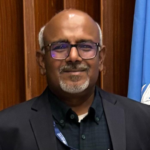
Reuben Samuel

K Srinath Reddy

Boniface Hlabano


Find on this page

The Centre for Social and Economic Progress (CSEP) is an independent, public policy think tank with a mandate to conduct research and analysis on critical issues facing India and the world and help shape policies that advance sustainable growth and development.