
An African Future for the Quad: Assembly Lining a Critical Minerals Supply Chain
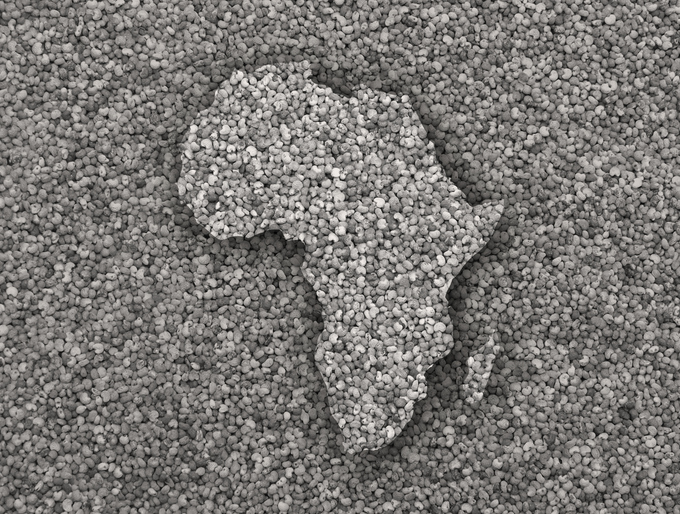
Reading Time: 5 minutesAfrica’s critical minerals now sit at the centre of the global energy transition. Holding nearly 30% of the world’s reserves, including 55% of cobalt, 47% of manganese, and 21% of graphite, producer countries aim not only to supply the minerals that power the future, but to drive mineral-led industrialisation at home. The question is no longer whether Africa matters to critical-mineral supply chains, but whether external partners’ growing engagement supports value addition, infrastructure, and industrial capability, or simply another round of raw-material extraction.
On May 26, 2026, the foreign ministers of Australia, India, Japan, and the United States unveiled the Quad Critical Minerals Initiative Framework, pledging up to $20 billion in public and private capital across mining, processing, and recycling.
On May 26, 2026, the foreign ministers of Australia, India, Japan, and the United States unveiled the Quad Critical Minerals Initiative Framework, pledging up to $20 billion in public and private capital across mining, processing, and recycling. Their joint statement carried the grouping’s bluntest language yet toward Beijing, citing “grave concerns” over “economic coercion” and “arbitrary export restrictions,” a clear response to China’s 2025 controls on heavy rare earths, gallium, germanium, and antimony.
The Framework does not mention Africa, but it cannot succeed without it.
Assembly-Line Model: The Implicit Doorway into Africa
The Quad Framework rests on three pillars: investment and project development, regulatory alignment, and recycling. It defines a “Quad nexus” project as one either located in a Quad country, operated by a Quad-headquartered company, or simply supplying Quad markets—the last two conditions are the implicit Africa doorway.
Walking through it requires sequencing rather than a centralised authority. This is why an assembly-line model is the right fit: it maps where each member’s comparative edge can be brought to bear at each stage.
- Australia, active in 400-plus projects across 35 African countries, can push forward exploration and early-stage mine development.
- India, having extended 196 concessional lines of credit worth $12 billion, can accelerate the enabling backbone of power, rail, ports, and logistics corridors.
- Japan, working through JOGMEC partnerships in Namibia, the DRC, and Zambia, can scale midstream conversion through advanced processing.
- The United States, underwriting connective projects like the $553 million Lobito Corridor, can anchor bankability through financing, risk insurance, and demand-side pull.
The purpose is to line up these capabilities around African government-led projects so that mines, corridors, and refineries reinforce each other instead of remaining disconnected national bets.
The African Union’s Africa Green Minerals Strategy explicitly states that green minerals should support value addition at source, regional industrialisation, job creation, and climate resilience.
Why the Timing Works
Even as the US administration has frayed traditional partnerships—tariffs and suspension of USAID and AGOA benefits—critical minerals remain one of the few lanes where US interest and coordination keep moving. The 2025 US National Security Strategy explicitly calls for enlisting allies, including India, “with regard to critical minerals, in Africa.” The February 2026 Critical Minerals Ministerial convened more than fifty countries, many of them African producers, and India’s accession to Pax Silica that same month linked critical minerals to the wider stack of semiconductors, AI infrastructure, and advanced manufacturing. For partners weighing whether collaboration with Washington is worth the volatility, the machinery on this issue is being built, and the alternatives are narrower than they look.
This aligns with a more assertive Africa. The African Union’s Africa Green Minerals Strategy explicitly states that green minerals should support value addition at source, regional industrialisation, job creation, and climate resilience. UNCTAD’s mapping work with Japan has identified more than 400 products across 25 sectors into which Zambia alone could diversify, including 73 linked to energy-transition mineral value chains. The development upside lies not only in the mineral itself, but in the work around it.
A Quad strategy that ignores this wider ecosystem will struggle in Africa. For African states, one that helps build it offers something long requested: a path beyond raw-ore exports into local value-added production. For the Quad, it provides something equally essential: resilience. Distributed processing across multiple African countries, co-funded and co-designed by Quad partners, would create redundancy: if one facility or country faces political turbulence, infrastructure failure, or coercive export restrictions, others keep supplies flowing.
Africa Footprint: Quad vs. China
Seen country by country, the Quad’s Africa footprint is impressive but structurally incomplete. Most effort is upstream, finding and extracting ore; downstream conversion into battery-grade chemicals remains thin. The US backs corridors and catalytic deals like the US–DRC–Zambia EV-battery MoU, but its investments largely stop at the mine gate. India’s geological surveys and export credit make mines bankable but build limited local processing. Japan locks in supply through offtake deals, including with Namibia’s Lofdal heavy rare earths, yet its biggest separation plant is in France, not Africa. Australia remains the upstream powerhouse, but value creation has historically occurred offshore; Syrah’s Balama graphite, for example, has long fed anode demand in China. The result is a familiar pattern: everyone is helping ore move, but too few are helping value stay.
In contrast, China has pursued a full-chain approach. According to the International Energy Agency (IEA), China is the leading refiner for 19 of 20 strategic minerals, controlling 91% of global refined rare earth output and 94% of sintered permanent magnet production, and around 80% of cobalt refining, most of it mined in the DRC and routed through Chinese smelters. Between 2000 and 2021, Chinese firms invested roughly $57 billion in critical mineral sectors in emerging economies, with more than 80% of it directed to copper, cobalt, and nickel projects concentrated in Africa. Without a coordinated push to site conversion and component capacity in Africa, upstream momentum will keep routing value through the same chokepoints, only with more Quad flags planted at the mine gate.
What’s Already in Motion for the Assembly Line
A coordinated Quad “assembly line” would not require new institutions or a formal secretariat; the grouping’s informality already facilitates bilateral and trilateral scaling. The new Framework can act as a spine, sitting on top of existing pacts, including the Australia–US Critical Minerals and Clean Energy Compact and the US–India, Japan–Australia, and Japan–India minerals partnerships. The task is to focus this lattice of agreements on a small number of African projects where sequencing can be demonstrated in practice.
No single Quad member can build an Africa-anchored, end-to-end mineral supply chain without a multi-billion-dollar bill and a generation of timelines. Collectively, the Quad already has the essential elements in play. The binding constraint is coordination. If it can finally orchestrate its members’ strengths as a single assembly line, the Quad will not just diversify where minerals come from but treat African industrialisation as the condition for building a durable and legitimate critical-minerals partnership in a multipolar world.
Pieces of the model already exist. The Lobito Corridor, having shipped its first batch of 99.7% pure copper anodes from a new DRC smelter, could anchor industrial zones, warehousing, and processing nodes across the corridor. Mozambique’s Nacala Corridor, the Tanzania–Zambia rail rehabilitation, and the proposed Zambia–DRC battery precursor pilot offer parallel platforms where Australian upstream, Japanese midstream, Indian project delivery, and US finance could be sequenced together. Well-designed corridors can also support agriculture, manufacturing, logistics services, and regional trade. What remains lacking is the intent to treat these initiatives as interdependent elements of a shared supply chain.
Coordination is the Way Forward
A Quad strategy that ignores this wider ecosystem will struggle in Africa. For African states, one that helps build it offers something long requested: a path beyond raw-ore exports into local value-added production. For the Quad, it provides something equally essential: resilience. Distributed processing across multiple African countries, co-funded and co-designed by Quad partners, would create redundancy: if one facility or country faces political turbulence, infrastructure failure, or coercive export restrictions, others keep supplies flowing.
No single Quad member can build an Africa-anchored, end-to-end mineral supply chain without a multi-billion-dollar bill and a generation of timelines. Collectively, the Quad already has the essential elements in play. The binding constraint is coordination. If it can finally orchestrate its members’ strengths as a single assembly line, the Quad will not just diversify where minerals come from but treat African industrialisation as the condition for building a durable and legitimate critical-minerals partnership in a multipolar world.

Veda Vaidyanathan



Find on this page

The Centre for Social and Economic Progress (CSEP) is an independent, public policy think tank with a mandate to conduct research and analysis on critical issues facing India and the world and help shape policies that advance sustainable growth and development.