
Expanding Energy Transmission and Distribution Infrastructure Resilience Across Major Indian Cities
Reading Time: 7 minutesA large share of the nation’s energy generation infrastructure is located far from major demand hubs, making a modern, resilient, and expanded T&D backbone essential for transmitting electricity efficiently, integrating renewables generation, and maintaining system reliability.
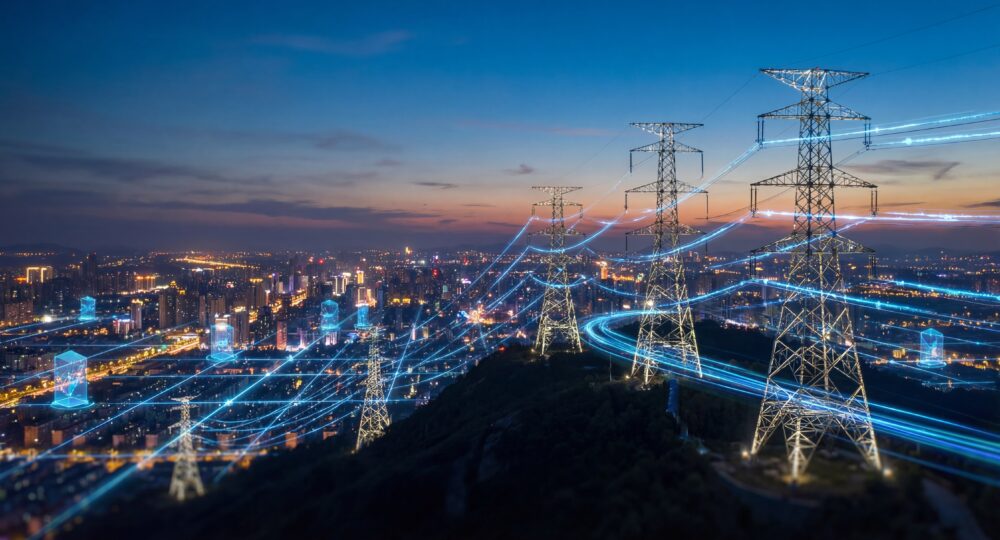
As India advances toward a future run by renewable energy, electric vehicles (EVs), and advanced manufacturing, its electric power transmission and distribution (T&D) infrastructure has emerged as a strategic enabler of energy security, economic competitiveness, and climate resilience. A large share of the nation’s energy generation infrastructure is located far from major demand hubs, making a modern, resilient, and expanded T&D backbone essential for transmitting electricity efficiently, integrating renewable generation, and maintaining system reliability.
India is one of the world’s most vulnerable nations to climate change. Recent years have seen record-breaking temperatures, extreme rainfall, flooding, and water scarcity events across the country. These stressors are already affecting T&D infrastructure and are expected to intensify.
India’s Power Grid Under Climate Stress
While India is investing heavily to expand its T&D grid to accommodate rising energy demands, comparatively less attention has been paid to protecting T&D infrastructure from increasing climate change risks. India is one of the world’s most vulnerable nations to climate change (Rutledge et al., 2024). Recent years have seen record-breaking temperatures, extreme rainfall, flooding, and water scarcity events across the country. Urban areas, in particular, face challenges due to their population density, rapid settlement growth, and increasing resource consumption. Between 1983 and 2016, heat stress in urban areas more than doubled, driven by the urban heat island effect, particularly affecting Chennai and Delhi (The Times of India, 2025). Flooding in cities already costs India approximately US$4 billion in infrastructure damages annually (Afreen et al., 2025).
These stressors are already affecting T&D infrastructure and are expected to intensify. A 2024 study covering 300 Indian localities found that heatwaves increased outage durations by 15–60%, torrential rain by 80–220%, and wind gust strength by 20–70% (Balakrishnan et al., 2024). Heat degrades electrical equipment, overheats transformers and cables, and increases operational stress as demand for cooling surges. This reduces transmission efficiency, accelerates wear and tear, and increases maintenance requirements. For example, in May 2026, a heat-induced technical fault caused a substation explosion in Gurgaon, leading to prolonged power outages (The Times of India, 2026).
Flooding presents equally serious risks. Substations can be submerged, while underground cables and other distribution assets suffer water damage. During Bengaluru’s 2022 floods, damaged transformers, poles, etc., and flooded power stations contributed to widespread localised outages (Kaggere N., 2022). Rising sea levels in coastal cities compound these risks. The 2015 Chennai floods submerged substations near waterways and cut supply for a week (Sivakumar B., 2021).
Water scarcity also places additional strain on the T&D grid by limiting plant cooling and hydropower generation. Cyclones or erratic monsoons further threaten transmission corridors and substations. Cyclone Nisarga in Mumbai and Cyclone Amphan in Kolkata damaged distribution lines and utility assets, while flooding disrupted substations and distribution networks, causing power outages (Mumbai Live, 2020).
Table 1 distinguishes between current climate impacts and those projected to intensify in the coming years.
Table 1: Climate Vulnerabilities in Five Major Indian Cities
| City | Current Climate Vulnerabilities | Projected Vulnerabilities | Impact on T&D |
| Delhi | -Severe urban heat island effects due to dense urbanisation and loss of green cover. Notable examples include Delhi’s 2024 heatwave
-Increasing frequency of extreme heatwaves -Monsoon flooding and drainage stress from rapid urban expansion |
-Doubling of heatwave days by 2030
-Intensifying heat stress and cooling demand -Increased compound risks (heat+flooding) |
-High temperatures reduce transformer efficiency and increase line losses
-Dust storms cause insulator flashovers and outages -Heat stress raises peak demand straining distribution networks |
| Mumbai | -Coastal flooding and sea-level rise exposure
-Frequent urban flooding from monsoons and drainage constraints -High vulnerability in low-lying informal settlements |
-Among most vulnerable globally to coastal flooding
-Chronic inundation risk in low-lying areas -Rising economic losses from extreme weather |
-Substations and underground cables at risk from waterlogging and saltwater intrustion
-Cyclones damage overhead lines and poles -Flooding disrupts access for repair crews, prolonging outages |
| Kolkata | -High exposure to river and coastal flooding
-Large informal population in flood-prone areas -Increasing heat stress |
-Among top global cities at flood risk
-Intensifying storm and precipitation risks -Increased heat stress exposure |
-Waterlogging leads to electrocution risks and substation failures
-Cyclones damage overhead lines and disrupt power supply |
| Chennai | -Urban flooding due to monsoon variability
-Urban heat island effects in dense zones -Water stress and variability (flood-drought cycles) |
-Rising heatwave intensity and frequency
-Increased coastal flood risk -Greater hydrological variability |
-Cyclones affect transmission infrastructure and damage distribution lines
-Flooding inundates substations leading to prolonged |
| Bangalore | -Urban flooding linked to loss to lakes and drainage systems
-Growing heat stress and pollution sensitivity |
-Increased water stress and supply risks
-Monsoon flood risks intensifying -Rising heat stress and climate variability |
-Flooding damages low-lying substations and distribution transformers
-Heat stress reduces transformer lifespan and increases blackout risk -Rapid urbanisation increases demand, stressing already vulnerable networks |
Source: Rangwala et al., 2024.
How Can India Build a Climate-Resilient Electricity Grid
A set of comprehensive actions can be used to fortify infrastructure vulnerabilities. Grid modernisation should be accelerated through digital monitoring systems and advanced sensors to detect faults early, reduce line losses, and optimise load management during high-demand periods. Utilities should also expand the use of heat-resilient T&D equipment (e.g., transformers with advanced cooling systems and conductors operating at higher temperatures) to counter heat stress. Although High-Temperature Low-Sag (HTLS) conductors are increasingly deployed on critical corridors, their adoption remains limited relative to the size of the overall transmission network, leaving significant potential for upgrades (Subba Reddy et al., 2016).
Expanding underground cabling—sealed against water flooding—in dense areas can reduce exposure to direct heat and lower transmission losses, and help protect cables from extreme weather events. Flood resilience measures should include elevating substations, waterproofing critical systems, and installing effective water pumping systems in flood-prone areas. Coastal cities will additionally need barriers and drainage infrastructure to reduce risks from rising sea levels.
Investing in and scaling decentralised energy systems and energy storage, including microgrids, rooftop solar, and battery storage, can help reduce the scale of blackouts during major weather events, while reducing dependence on water-intensive thermal power generation.
Table 2 lays out city-focused priority items.
Table 2: Initiatives for and Gaps in T&D Infrastructure Resilience
| City | Current Initiatives for T&D Resilience | Proposed Solutions | Priority Action Items & Gaps |
| Delhi | -« Grid Sense » pilot with UNEP and BSES Rajdhani to monitor stress and reduce outages
-New transmission schemes planned by CEA to integrate renewables -Delhi Power Master Plan 2030 plans to strengthen distribution network, reduce power outage times per customer, minimise transformer breakdowns |
-Expand smart grid technologies citywide
-Strengthen substations against head and flood risks -Integrate Rajasthan RE zones -Minimise transformer infrastructure issues |
-Rapid demand growth (project 13+ GW by 2031) outpaces infrastructure upgrades and resilience measures
-Scaling of undergound cabling -Hardening equipment for substations |
| Mumbai | -Mumbai Climate Action Plan (MCAP) with focus on flooding prevention and coastal resilience measures
-Tata Power building grid resilience, expanding undergrounding, scaling decentralised energy systems, providing smart monitoring, and expanding on emergency preparedness |
-Expand migrogrids and decentralised solar and battery systems
-Elevate substations to prevent flooding -Predictive monitoring with IoT sensors and emergency preparedness |
-Coastal flooding and cyclone risks remain high
-Ageing distribution assets need urgent replacement -Limited underground cabling coverage leaves area vulnerable |
| Kolkata | -Kolkata Climate Action Plan (K-CAP) launched 2025
-Smart Cities Mission in New Town with integrated command centers, smart lighting, and EV charging -WBSEDCL modernising distribution |
-Expand smart grid and command centers citywide
-Flood-proof substations |
-High vulnerability to cyclones and riverine flooding
-Inequity in expanding resilience across city zones -Need inclusive planning beyond New Town enclaves |
| Chennai | -Chennai Climate Action Plan (2023) with C40 Cities
-Focus on flood and cyclone resilience -Restoration of wetlands and mangroves to buffer infrastructure |
-Harden coastal substations
-Expand underground cabling in cyclone-prone zones -Integrate natural infrastructure with grid planning |
-Sea level rise and storm surges threaten coastal corridors
-Gaps in integrating natural buffers with T&D planning -Accelerate investment in resilient substations |
| Bangalore | -Bangalore Climate Action Plan (BCAP)
-Climate action cell established -Focus on stormwater management, energy efficiency, and climate budgeting |
-Integrate climate budgeting with T&D upgrades
-Expand resilient substations -Promote decentralised to reduce grid stress during floods |
-Urban flooding and water scarcity strain infrastructure
-Need stronger coordination between BBPM, BESCOM, and state agencies -Limited investment in underground cabling |
Source: Gandihok J., 2026.
City-Level Priorities for Climate-Resilient Power Infrastructure
Delhi’s 2030 Power Master Plan prioritises grid modernisation and distribution network strengthening, but the city must ensure that these investments keep pace with its rapidly growing power demand. Mumbai has made strides in expanding underground cabling and decentralised energy systems, but faces urgent challenges in protecting ageing flood-prone coastal infrastructure.
Bangalore has developed a comprehensive resilience framework but now requires rapid investment in infrastructure hardening. Chennai’s climate plan has ambitious renewable energy goals, reaching 2.85 million kWh of generation in 2024, but its coastal T&D corridors remain highly exposed to extreme weather events (Greater Chennai Corporation, 2026). Kolkata is modernising through smart city initiatives, but needs broader coverage while addressing equity gaps.
Upgrading, modernising, and hardening T&D infrastructure requires a large upfront investment. Currently, only 0.7% of the country’s GDP is spent on urban infrastructure, lagging behind countries with similar growth profiles. India is entering a defining phase of its urban development, where major cities have a window of opportunity to grow with resilience, provided the pressing infrastructure upgrades are made.
Financing India’s Climate-Resilient Power Infrastructure
Upgrading, modernising, and hardening T&D infrastructure requires a large upfront investment. However, India has major gaps in infrastructure investment. Currently, only 0.7% of the country’s GDP is spent on urban infrastructure, lagging behind countries with similar growth profiles (World Bank Group, 2025). A total of US$2.4 trillion is required across India by 2050 to adequately protect cities from climate vulnerabilities (World Bank Group, 2025). From 2025 to 2050, this amounts to US$96 billion annually—nine times the approximate US$10.6 billion invested each year from 2011 to 2018. Such investment could remain more cost-effective than long-term maintenance costs and economic losses associated with unreliable grids.
The private sector—currently contributing just 5% of urban infrastructure financing—can play a much larger role in filling this gap and bringing the efficiency needed to scale resilient infrastructure (World Bank Group, 2025). Green bonds, blended finance, and public–private partnerships could help accelerate the build-out of underground cabling, smart grids, and renewable integration. International funding organisations can also supplement these initiatives.
To attract investment, city bodies need stronger planning policy frameworks. For instance, city-level climate action plans could explicitly incorporate T&D infrastructure resilience as a core pillar for growth. While existing plans address flood management, green infrastructure, and water conservation, explicitly integrating T&D resilience would help cities identify vulnerable assets, prioritise investments, quantify resilience benefits, and provide investors with greater confidence in the long-term value of proposed projects. Stakeholder engagement is also essential to effective solution-making. This includes stronger coordination between utilities and city authorities, alongside community-level engagement, particularly as low-income neighbourhoods are disproportionately affected by outages and weather events.
Nearly 70% of new employment over the next five years will be in cities, making them the magnets of India’s future economic growth (India News Desk, 2025). India is entering a defining phase of its urban development, where major cities have a window of opportunity to grow with resilience, provided the pressing infrastructure upgrades are made. Without such measures, climate change could severely compromise energy security and economic productivity in India’s largest cities, where demand is rising rapidly, and infrastructure is already under pressure.
FOOTNOTES
References
Afreen et al., (2025, September 3). From floods to drought: The 2025 climate story of India. CEED India. https://ceedindia.org/from-floods-to-drought-the-2025-climate-story-of-india/
Verschuur J., Balakrishnan. (2024). Brief communication: Evidence of the impacts of climate extremes on power system outages in India. EGUsphere. https://doi.org/10.5194/egusphere-2024-3176
Gandhiok, J. (2026, May 22). Delhi’s unveils Mission 2030: A ₹17,000 crore plan to upgrade power infra. Hindustan Times. https://www.hindustantimes.com/cities/delhi-news/delhis-unveils-mission-2030-a-17-000-crore-plan-to-upgrade-power-infra-101779388379252.html
Greater Chennai Corporation. (2026). Climate budget report 2025-26. https://chennaicorporation.gov.in/gcc/pdf/ClimateBudget2025-2026.pdf
Greater Chennai Corporation. (2022). Chennai Climate Action Plan (CCAP). https://chennaicorporation.gov.in/gcc/CCAP/
India News Desk. (2025, July 23). ‘Indian cities to create 70% jobs by 2030, but face $5 billion loss…’: World Bank report sounds climate change alarm. Financial Express. https://www.financialexpress.com/india-news/indian-cities-to-create-70-jobs-by-2030-but-face-5-billion-loss-world-bank-report-sounds-climate-change-alarm/3923285/
Kaggere N., (2022, September 8). Bengaluru: BESCOM helpline flooded with 32,000 power-cut complaints. The Times of India. https://timesofindia.indiatimes.com/city/bengaluru/bengaluru-bescom-helpline-flooded-with-32000-power-cut-plaints/articleshow/94037769.cms
Kolkata Municipal Corporation. (n.d.). Kolkata Climate Action Plan (K-CAP). https://www.kolkataclimateactionplan.in/
Mumbai Live. (2020). MSEDCL restores 70% electricity in Raigad and Ratnagiri post Cyclone Nisarga. https://www.mumbailive.com/en/infrastructure/msedl-restores-in-70-per-cent-electricity-in-raigad-and-ratnagiri-post-cyclone-nisarga-51148
Rangwala, L., Chatterjee, S., Agarwal, A., Khanna, B., Shetty, B., Bhagat Palanichamy, R., Uri, I., & Ramesh, A. (2024). Climate resilient cities: Assessing differential vulnerability to climate hazards in urban India. World Resources Institute India. https://doi.org/10.46830/wrirpt.22.00055
Rutledge K., McDaniel M., Teng S., Hall H., Ramroop T., Sprout E., Hunt J., Boudreau D., Costa H. (2024, November 15). Urban heat island. National Geographic. https://education.nationalgeographic.org/resource/urban-heat-island/
Sivakumar B. (2021, November 8). How flooded Chennai managed to keep power supply almost uninterrupted. The Federal. https://thefederal.com/states/south/tamil-nadu/how-flooded-chennai-managed-to-keep-power-supply-almost-uninterrupted
Subba Reddy B., Chatterjee D., (2016, December). Analysis of high temperature low sag conductors used for high voltage transmission. Energy Procedia. https://doi.org/10.1016/j.egypro.2016.11.183
The Times of India. (2025, July 22). Urban climate funding: Indian cities need $2.4 trillion by 2050 to withstand floods, heatwaves: World Bank. https://timesofindia.indiatimes.com/india/urban-climate-funding-indian-cities-need-2-4-trillion-by-2050-to-withstand-floods-heatwaves-world-bank/articleshow/122841319.cms
The Times of India. (2026, May 23). Transformer blast, metro halt and sleepless night: What caused Gurgaon's massive blackout. https://timesofindia.indiatimes.com/city/gurgaon/transformer-blast-metro-halt-and-sleepless-night-what-caused-gurgaons-massive-blackout/articleshow/131271060.cms
World Bank Group. (2025). Towards resilient and prosperous cities in India. https://thedocs.worldbank.org/en/doc/d67ef885fc1c5b4ca43cf4465b3e7241-0310012025/towards-resilient-and-prosperous-cities-in-india
World Resources Institute India. (2025, April 17). Mumbai Climate Action Plan (MCAP). https://wri-india.org/initiatives/mumbai-climate-action-plan-mcap


Find on this page

The Centre for Social and Economic Progress (CSEP) is an independent, public policy think tank with a mandate to conduct research and analysis on critical issues facing India and the world and help shape policies that advance sustainable growth and development.