
Assessing India’s Trade Performance: Pathways to Strategic and Deeper Integration With Global Value Chains
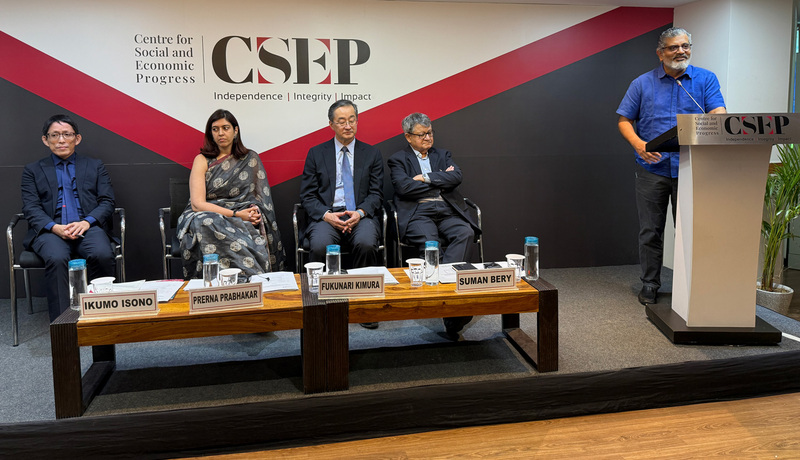
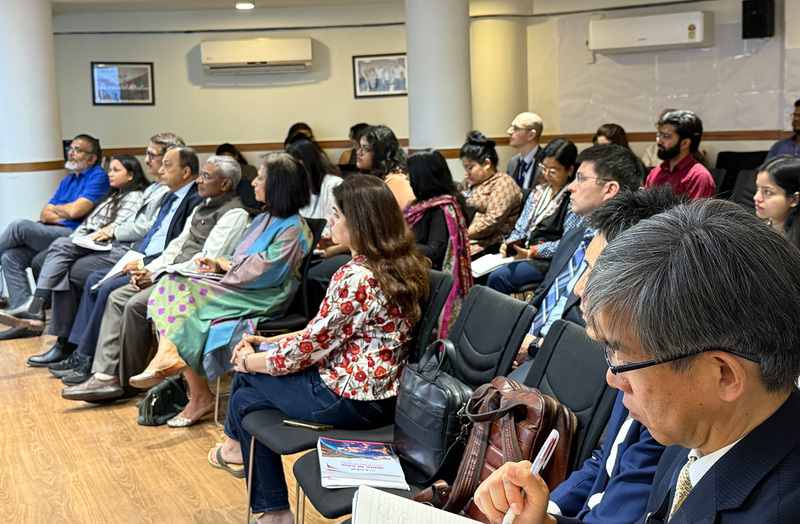
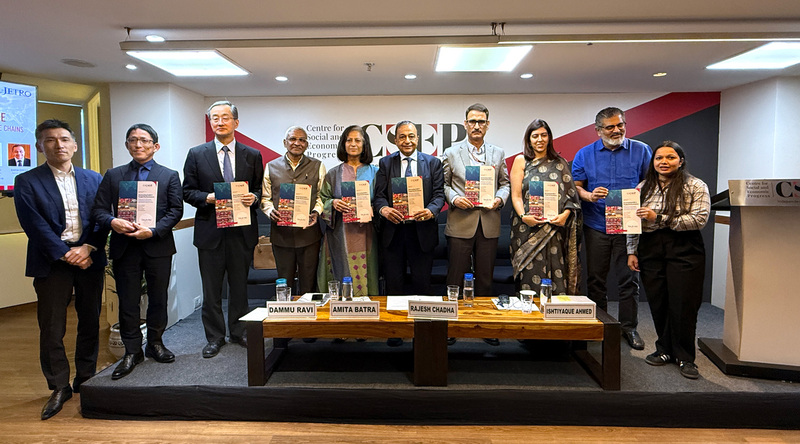
The Centre for Social and Economic Progress (CSEP), in collaboration with the Institute of Developing Economies–Japan External Trade Organization (IDE-JETRO), hosted a seminar titled “Assessing India’s Trade Performance: Pathways to Strategic and Deeper Integration With Global Value Chains”. The event was held on Tuesday, March 17, 2026.
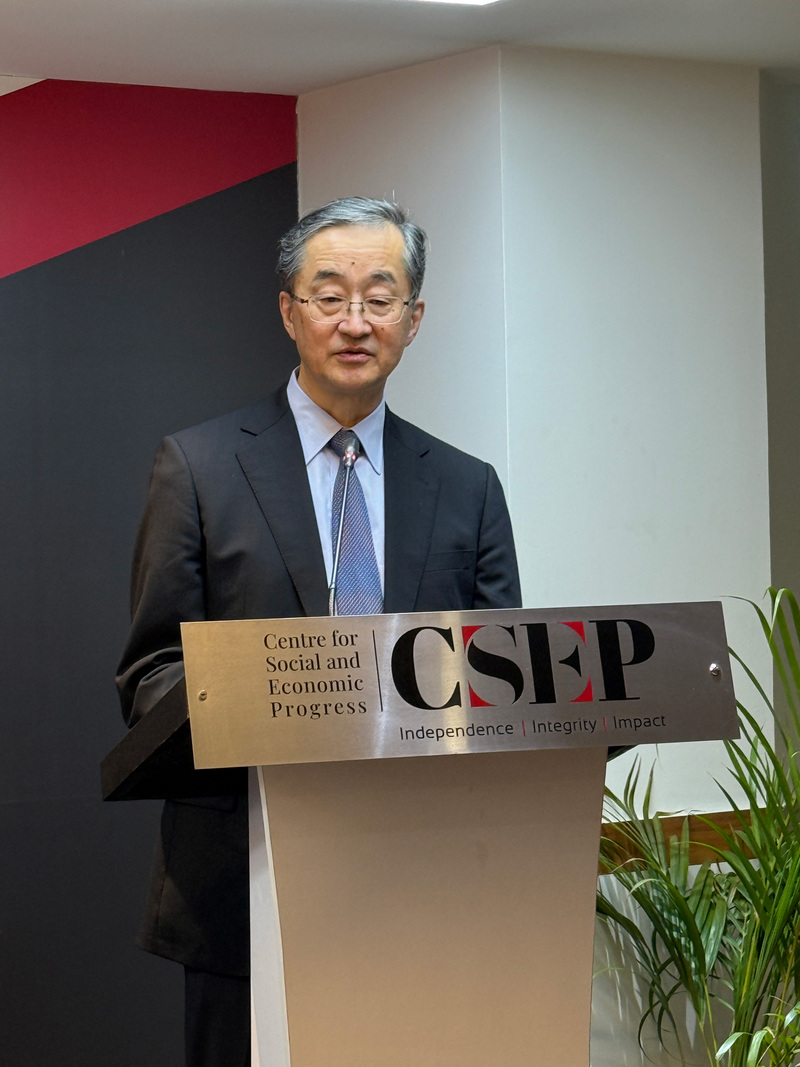
The seminar featured a keynote address by Suman Bery, Vice Chairperson, NITI Aayog, and a paper presentation by Prerna Prabhakar, Fellow, CSEP; Fukunari Kimura, President, IDE-JETRO; and Ikumo Isono, Director, Economic Integration Studies Group, Development Studies Center, IDE-JETRO. The presentation was followed by a discussion with Amita Batra, Professor of Economics, Centre for South Asian Studies, School of International Studies, Jawahar Lal Nehru University; Dammu Ravi, Former Secretary, Ministry of External Affairs; and Ishtiyaque Ahmed, Programme Director, Industry & Foreign Investment, NITI Aayog. The session was moderated by Rajesh Chadha, Senior Fellow, CSEP.
About the event
Recent global economic developments have triggered significant policy shifts across major economies, presenting India with both challenges and a critical opportunity. At this juncture, strengthening India’s manufacturing base and deepening its integration into global value chains (GVCs) is essential for sustaining long-term growth and attracting quality foreign investment. In this context, the paper examines the key challenges facing the Indian manufacturing sector, with particular emphasis on import protection policies and their implications for competitiveness and GVC integration.
Keynote Address
Suman Bery
Suman Bery is currently Vice Chairperson, NITI Aayog, in the rank and status of a Cabinet Minister. An experienced policy economist and research administrator, Mr Bery took over as NITI Aayog Vice Chairperson from 1 May 2022. At the time of his appointment, Mr Bery was a Global Fellow in the Asia Programme of the Woodrow Wilson International Centre for Scholars in Washington D.C., and a non-resident fellow at Bruegel, an economic policy research institution in Brussels. He was also a member of the Board of the Shakti Sustainable Energy Foundation, New Delhi.
From early 2012 till mid-2016, Mr Bery was Royal Dutch Shell’s global Chief Economist based in The Hague. In this capacity, he advised the board and management on global economic and political developments. He was also part of the senior leadership of Shell’s global scenarios group. During his time at Shell, he led a collaborative project with Indian think tanks (later published) to apply scenario modelling to India’s energy sector
Before his appointment at Shell, Mr Bery served as Director-General (Chief Executive) of the National Council of Applied Economic Research (NCAER) in New Delhi, one of India’s most respected institutions of empirical socioeconomic research. During his tenure, NCAER greatly extended its global links and was recognised as one of India’s leading think tanks by the independent Global Think Tank Initiative. In his decade leading NCAER, Mr Bery was at various times a member of the Prime Minister’s Economic Advisory Council; of India’s Statistical Commission; and of the Reserve Bank of India’s Technical Advisory Committee on Monetary Policy. He commented extensively in the media on economic issues and contributed a monthly column to an Indian business newspaper.
Prior to NCAER, Mr Bery was with the World Bank in Washington, D.C., which he joined through the Young Professional Programme. His career at the World Bank spanned research on financial sector development and country policy and strategy, notably in Latin America and the Caribbean. His country experience included Argentina, Brazil, Chile, Ecuador, Paraguay and Peru. His experience on financial sector reform in Latin America led to an appointment as Special Consultant to the Governor of the Reserve Bank of India between 1992 and 1994.
His professional writing includes contributions on the political economy of reform, the financial sector and banking reform, and energy trends and policy. He has a master’s degree in public affairs from Princeton University’s School of Public and International Affairs, and an undergraduate degree in philosophy, politics and economics from Magdalen College, University of Oxford.
Presenters
Fukunari Kimura
Fukunari Kimura received his Bachelor of Laws from the Faculty of Law, University of Tokyo in 1982 and M.S. and PhD from the Department of Economics, University of Wisconsin-Madison in 1990 and 1991. He worked for the Department of Economics, State University of New York at Albany as Assistant Professor from 1991-1994, the Faculty of Economics, Keio University as Associate Professor from 1994-2000 and Professor from 2000-2024, and Chief Economist, ERIA located in Jakarta, Indonesia from 2008-2024. He also served as President, Japan Society of International Economics in 2010-2012, Representative Director, Tokyo Center for Economic Research in 2012-2014, and Dean, Graduate School of Economics, Keio University in 2015-2017. Since April 2024, he has been Professor Emeritus and Senior Professor, Keio University and President, IDE-JETRO. He majors in international trade and development economics. His research topics include international production networks, economic integration, and the digital economy in East Asia.
Ikumo Isono
Ikumo Isono is Director, Economic Integration Studies Group, Development Studies Center, IDE-JETRO. He completed all requirements for the doctoral programme at the Graduate School of Economics, The University of Tokyo, before leaving without a degree. After serving as a research fellow at The University of Tokyo, joined the Institute of Developing Economies in 2005. Previous positions include assignments at the Bangkok Research Center, visiting researcher at the Joint Research Centre of the European Commission, and Senior Economist at the Economic Research Institute for ASEAN and East Asia (ERIA). Assumed current post in 2025. His areas of expertise are spatial economics and economic integration in East Asia and ASEAN, with a particular focus on connectivity. Recent research topics include improving digital connectivity in ASEAN and assessing the impact of Trump-era tariffs on the Global South.
Prerna Prabhakar
Prerna Prabhakar is a Fellow at the Centre for Social and Economic Progress (CSEP). Prerna’s research primarily focuses on trade and industrial policies and competitiveness. Prior to joining CSEP, she worked with the Council on Energy, Environment and Water (CEEW) where she focused on understanding the linkages between sustainability and international trade. Prerna has also worked with the National Council of Applied Economic Research (NCAER) on external sector issues, investment potential for Indian States/Union Territories, as well as land policy matters. She has also worked on research projects with the University of Delhi, South Asian Network for Development and Environmental Economics (SANDEE), Research and Information System for Developing Countries (RIS) and Centre for WTO Studies at the Indian Institute of Foreign Trade (IIFT).
She has completed her PhD from the Department of Business Economics, University of Delhi. She has a postgraduate degree in Economics from TERI School of Advanced Studies (TSAS). She has published her research in Indian and international journals, including Environmental Economics and Policy Studies. She regularly contributes opinion pieces to leading newspapers.
Discussants
Amita Batra
Amita Batra is Professor and former Chairperson, Centre for South Asian Studies, School of International Studies, Jawaharlal Nehru University (JNU). She has over three decades experience in teaching and policy-oriented research. Prof. Batra served as member, Advisory Group for the Finance Track Agenda, Ministry of Finance, Govt. of India and the B20 India Task force for “Inclusive GVCs and resilient global trade and investment” during India’s G20 Presidency in 2022-2023. Professor Batra has held several senior research and teaching positions in national/ international Think Tanks and Universities including as the first ICCR Chair Professor in University of Edinburgh and Senior Visiting Fellow, University of Sydney. Most recently in May-June 2024, she was awarded the Rockefeller Foundation, Bellagio Centre Residency Fellowship. Professor Batra has published extensively on international trade, global value chains and related policy issues. Her most recent books are A World in Flux: India’s Economic Priorities (co-edited, Rupa publications, 2025) and India’s Trade Policy in the 21st Century, published by Routledge: London in 2022. Professor Batra writes a monthly column, “Straight Talk”, for Business Standard, a leading economic daily in India.
Professor Batra holds an M.A., M.Phil., PhD in Economics from the Delhi School of Economics, University of Delhi, India.
Dammu Ravi
Dammu Ravi retired as Secretary (Economic Relations) in the Ministry of External Affairs in August 2025.
He joined the Indian Foreign Service in 1989 and did postings in Indian missions in Mexico, Cuba and Brussels in the 1990s. At Headquarters, in his capacity as Director (2002-2005), he handled India’s relations with West European countries, the EU and UN multilateral issues such as Development, Environment and Climate Change. As Joint Secretary for Latin America and Caribbean countries (2009-2013), he worked to deepen India’s engagement with the region.
During his deputation to the Department of Commerce (2014-2020), Mr Ravi handled India’s trade policy and World Trade Organization (WTO) issues and was a lead negotiator for the Regional Comprehensive Economic Partnership (RCEP).
As Chief Coordinator for COVID during lockdown, he coordinated the disbursement of medicines and equipment and the evacuation of Indians abroad through Vande Bharat flights.
As Secretary (Economic Relations) in the Ministry of External Affairs from August 2021 to August 2025, Mr Ravi handled mostly geo-economic issues related to India’s strategic objectives through Development Assistance to countries in the Global South; partnership with Africa; Multilateral Economic relations; and New and Emerging Strategic Technologies. He was India’s Sherpa for BRICS, IBSA, I2U2 and G7.
Mr Ravi has published several research papers on trade, investment, economic cooperation and integration. He regularly does book reviews for various dailies/magazines.
Mr Ravi holds a Master’s degree in Political Science from Jawaharlal Nehru University, Delhi.
Ishtiyaque Ahmed
Ishtiyaque Ahmed is a senior Indian civil servant from the 1992 batch of the Indian Revenue Service (Income Tax). He has over two decades of experience in direct tax administration, with expertise spanning investigations, international taxation, and corporate taxation.
During his career in the Government of India, he has held several key assignments, including in the Ministry of Commerce and Industry, where he worked extensively on matters related to Foreign Direct Investment (FDI) and foreign collaboration. In this role, he contributed to a number of important reforms in India’s FDI policy framework, aimed at enhancing investment flows and improving the business environment.
Mr Ahmed later joined NITI Aayog as Adviser, where he was responsible for the Industry, Mining and Minerals vertical. His work at NITI Aayog has included policy initiatives relating to mining sector reforms, conceptualisation of the Production Linked Incentive (PLI) Scheme, and assessment of state-level competitiveness in exports.
He is currently serving as Programme Director (Industry & Foreign Investment) at NITI Aayog, Government of India, New Delhi. In this capacity, he works on policy and analytical issues related to India’s participation in Global Value Chains (GVCs), particularly in high-value sectors such as electronics, automobiles, chemicals, and pharmaceuticals. His portfolio also covers manufacturing sector development, labour-intensive industries, MSME empowerment, industrial infrastructure, mining, the blue economy, and foreign direct investment policy.
Known for his analytical approach and policy-oriented work, Mr Ahmed has contributed to several initiatives aimed at strengthening India’s manufacturing ecosystem, improving the investment climate, and promoting industrial growth and competitiveness.
Moderator
Rajesh Chadha
Rajesh Chadha is a Senior Fellow at CSEP. He was formerly a Professor and Research Director at the National Council of Applied Economic Research (NCAER) and, prior to that, an Associate Professor of Economics at Hindu College, University of Delhi. Dr Chadha has worked extensively on the issues of international trade, FDI, and non-fuel minerals and mining in India. He has been a visiting scholar at the Universities of Michigan, Melbourne, and Monash and a visiting faculty member at many prestigious academic and research institutes in India. Dr Chadha was nominated as GTAP Research Fellow (2004-2007) by the Global Trade Analysis Project (GTAP), Purdue University. His recent work encompasses assessing the criticality of minerals and projecting their needs for green technologies. Dr Chadha received his PhD in Economics from the Indian Institute of Technology, New Delhi.
All content reflects the individual views of the speakers. The Centre for Social and Economic Progress (CSEP) does not hold an institutional view on any subject.
Please contact Gurmeet Kaur at GKaur@csep.org for general queries and Ayesha Manocha at AManocha@csep.org for media queries.




The Centre for Social and Economic Progress (CSEP) is an independent, public policy think tank with a mandate to conduct research and analysis on critical issues facing India and the world and help shape policies that advance sustainable growth and development.