

India and Europe: Bridging Continents Through IMEC
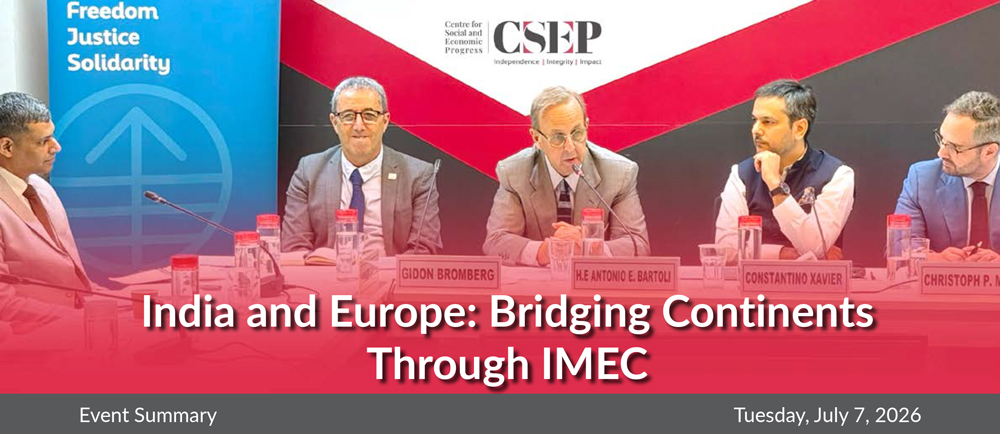
The Centre for Social and Economic Progress (CSEP), in partnership with Friedrich-Ebert-Stiftung (FES), convened a closed-door expert workshop to test preliminary research and clarify the policy architecture needed to realise the India-Middle East-Europe Economic Corridor (IMEC).
The Track 1.5 consultation brought together senior diplomats, government officials, development finance representatives, industry stakeholders, and technology policy experts to move the IMEC discussion from high-level political framing toward practical policy priorities. Its insights will inform a forthcoming CSEP policy compendium.
Key Takeaways
- Treat IMEC as a flexible network, not a fixed corridor
- Commercial viability depends on predictability, interoperability, and risk mitigation
- Digital and regulatory alignment are central to operations
- Energy and climate planning should be built in from the start
- Near-term progress should prioritise pilots, mapping, and Track 1.5 technical dialogue
Navigating an Era of Geopolitical Volatility
The workshop situated IMEC within a volatile geopolitical and geoeconomic environment, where disruptions to supply chains, energy markets, and maritime chokepoints have strengthened the case for diversified, resilient trade routes. For European stakeholders, it reinforces a geoeconomic focus on de-risking, supply-chain diversification, and trusted connectivity; for India, IMEC marks an institutional moment linking national security, foreign and economic policy, trade, logistics, and industrial priorities. Participants noted that regional uncertainty does not diminish IMEC’s relevance but underscores the need for alternatives that are resilient, commercially credible, and politically sustainable.
From a Singular Corridor to a Flexible Network
A recurring theme was that IMEC should be viewed not as a rigid point-to-point transit line but as a flexible network of ports, inland logistics hubs, and multimodal routes. Supplementary maritime and land links, including alternative Gulf, North African, and Eastern Mediterranean ports, could distribute flows, reduce dependence on chokepoints, and help countries develop complementary domestic and regional assets.
This pivot raised questions of sequencing and political economy. Private-sector participants stressed cargo predictability and risk mitigation when comparing multimodal routes with established maritime lanes, while others debated whether stability must precede infrastructure or whether connectivity can create incentives for stability. An inclusive “IMEC+” approach was seen as important for building local buy-in by sharing benefits across the Levant, North Africa, and the wider region.
Economic Engines and Operational Realities
Preliminary modelling suggested that better transit efficiency could generate meaningful gains for time-sensitive and high-value sectors, including electronics, automotive components, engineering goods, and perishables. Participants noted that IMEC’s economic case would be strongest where these gains align with wider trade, investment, and regulatory arrangements between India, the Gulf, and Europe.
However, logistics specialists cautioned that multimodal transit brings cargo-handling friction and demands coordination across ports, rail systems, customs, and inland logistics. Containerised cargo may adapt more easily than bulk commodities, while India’s external gains will depend on continued improvements in port-linked hinterland connectivity, intermodal facilities, and reliable trade facilitation.
Beyond Transport: Energy and Climate Alignment
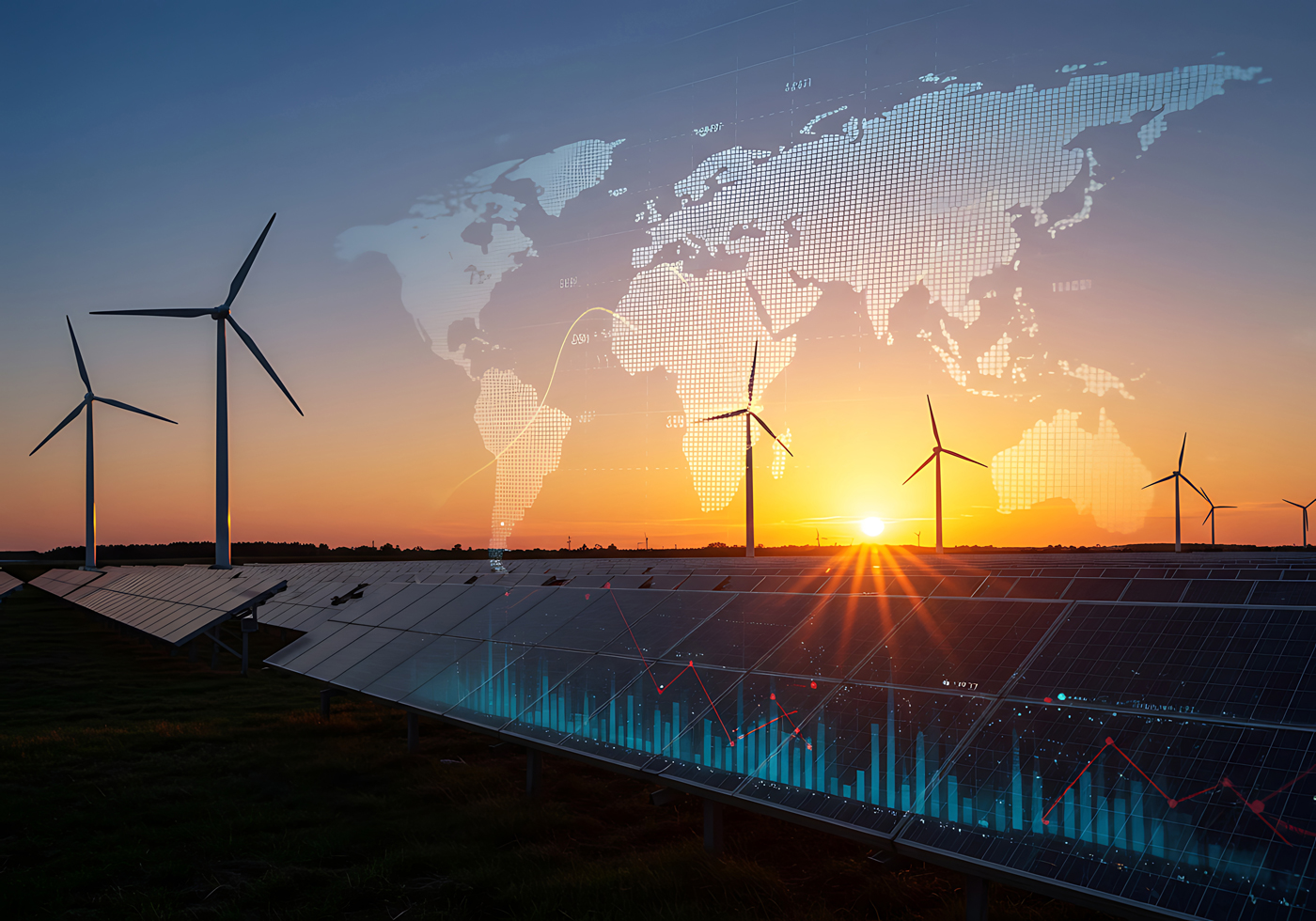
Participants emphasised that IMEC’s long-term value may extend beyond container movement to energy connectivity, green hydrogen, electricity interconnections, green industrial supply chains, and climate-aligned trade systems. Realising this broader value will require early coordination on standards, certification, monitoring, reporting, verification, and investment models so corridor linked trade remains compatible with evolving sustainability rules, including European carboncompliance frameworks, and energy is treated as part of IMEC’s core proposition rather than a secondary add-on.
The Digital Spine and Regulatory Friction
A significant portion of the consultation focused on the “soft infrastructure” needed to make IMEC operational. Participants noted that digital interoperability, customs data exchange, payments architecture, legal compatibility, and data governance may matter as much as physical assets, and that end-to-end continuity across multiple customs jurisdictions will require common standards, interfaces, and protocols.
Participants also flagged frictions between European and Indian data protection frameworks, especially where supply-chain data crosses jurisdictions and intermediaries. They highlighted the need to clarify consent, contractual processing, third-party logistics obligations, secure crossborder data-hosting options, and protocols for protecting, repairing, and maintaining continuity of subsea cables and other digital infrastructure in disrupted maritime spaces.
Layered Finance and Institutional Governance
Participants called for pragmatic governance and investment architecture to manage IMEC’s diverse political, legal, and financial contexts. Since public funding alone will not suffice, the corridor will require blended finance drawing on development finance, Gulf sovereign capital, private institutional investment, and risk-mitigation instruments, with international financial institutions helping reduce regulatory, political, and security risks. Clearer stakeholder mapping, projectisation, empowered national points of contact, technical working groups, and a standing multilateral coordination process could help align standards and translate political intent into bankable, sequenced projects.
Immediate Next Steps
The workshop concluded by prioritising modular execution over broad diplomatic announcements.
Immediate actions include:
- Map the network: Build a data-backed asset blueprint of existing routes, capacities, and chokepoints across the Indo-Mediterranean space.
- Execute proof-of-concepts: Launch industry-led pilots, such as trusted container lanes or instant payment linkages, to build commercial confidence.
- Sustain Track 1.5 dialogues: Use structured, off-the-record consultations to resolve technical frictions and align standards early.
Overall, IMEC’s credibility will depend less on a single route and more on an interoperable ecosystem of resilient infrastructure, trusted data flows, viable financing models, and political coordination that can withstand regional volatility.
The insights and policy solutions debated during this expert consultation will be published in an comprehensive upcoming CSEP research compendium.


The Centre for Social and Economic Progress (CSEP) is an independent, public policy think tank with a mandate to conduct research and analysis on critical issues facing India and the world and help shape policies that advance sustainable growth and development.