
An Indian Perspective: Bridging Continents Through IMEC
Reading Time: 7 minutesEditor's Note
This blog is part of a CSEP series that aims to provide a comprehensive, multi-angled analysis of the India–Middle East–Europe Economic Corridor (IMEC). Beginning with an Indian perspective, it extends to Indo-Italian, Indo-French, Indo-German, Indo-EU, Indo-US, and Indo-Middle East/West Asian dimensions. As the first in the series, this blog examines IMEC’s strategic rationale, sectoral foundations, stakeholder dynamics, and the implications for India’s foreign policy as it navigates emerging risks and opportunities.
The India–Middle East–Europe Economic Corridor (IMEC) was unveiled at the G20 Summit in September 2023 by a coalition including India, the European Union, the United States, Saudi Arabia, and the United Arab Emirates. Two years hence, 2025 exemplified geopolitical tensions, shifting alliances, protectionist trade realignments, supply chain shocks, and Red Sea disruptions that spiked Asia–Europe shipping costs by five times early in the year. The current Iran war poses a further challenge, with energy and transportation connectivity facing its worst disruption in decades.
Yet, amid ongoing conflicts, IMEC continues to be at the heart of current debates on robust alternatives to traditional economic corridors and strategic partnerships. The 11th Raisina Dialogue in March 2026 included an IMEC-focused session on alternative logistics spines and supply-chain resilience, while the Asia Economic Dialogue featured an IMEC session titled ‘A New Spice Route?’ bringing together policymakers and industry to discuss corridor-based de-risking.
Despite geopolitical turbulence, the economic logic of India–Middle East–Europe convergence remains. The 16th India-EU Summit in January 2026, held alongside the Republic Day visit of EU leaders, concluded FTA negotiations and endorsed a new strategic agenda, while the EU connectivity policy under Global Gateway aligns with IMEC’s broader goals of resilient trade and supply-chain diversification.
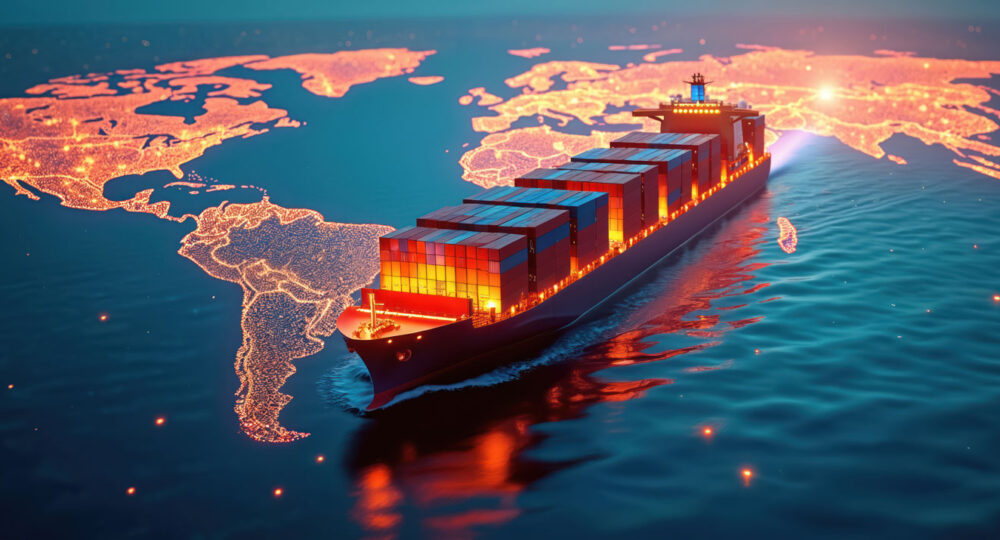
IMEC has the potential to redefine transcontinental connectivity across Asia, the Middle East, and Europe. Spanning about 6,400 km, this ambitious multimodal initiative was conceived to diversify global supply chains and enhance resilience against critical maritime chokepoints such as the Red Sea and Gulf of Aden. Initially perceived as a strategic counter to China’s Belt and Road Initiative (BRI), at its core, IMEC aims to link India’s vital western ports (Mundra, Kandla, JNPA, and Vadhavan) to the Arabian Gulf (the East Corridor), with onward overland connections (via UAE, Saudi Arabia, Jordan, Israel) before crossing by sea to Europe’s gateways in Marseille (France) and Italy’s Trieste and potentially Genoa.
Yet, Middle East instabilities have cast doubts on IMEC’s viability. Furthermore, while President Trump initially emphasised IMEC’s importance as a partnership against unfair practices in trade and export control in February 2025, his America First Trade Policy, and subsequent tariff strategies through broad unilateral instruments suggest diverging priorities. Meanwhile, India and Europe seem to have reaffirmed their commitment, with European leaders highlighting IMEC’s role in boosting trade and connectivity. IMEC is increasingly seen as a test case of Europe’s ability to be a global player, especially in the Indo-Pacific.
Despite strong support, IMEC is challenged by conceptual ambiguity, varied stakeholder perspectives, and ongoing geopolitical tensions. IMEC is a “Regional Initiative”, envisaged as a collaboration among various countries. The concept itself demands a high level of consensus-building, convergence of policies, balancing interests, intricate governance structures, and flexible, principle-driven diplomacy to navigate socio-economic and geo-strategic priorities of its constituents.
Sectoral Foundations and Strategic Objectives
IMEC’s blueprint encompasses a broad spectrum of sectors integral to its vision of seamless regional integration. The infrastructure component is anchored in advanced transport networks consisting of ports, railways, roads, and logistics hubs, offering flexible combinations of sea, land, and rail corridors within each subregion. Digital and technological ambitions are equally robust, envisaging undersea optical cables linking data centres, while artificial intelligence-driven logistics and pilots for interoperable digital ID, tracking and payment systems hold promise to revolutionise cross-border operations.
Sustainability forms another pillar, as plans for green hydrogen pipelines and submarine power interconnections from the Gulf to Europe take shape, complemented by renewable energy hubs in both Europe and the Middle East.
In economic terms, IMEC is expected to reduce freight time and costs on India–Europe routes by up to 40% and 30%, respectively, and facilitate new free trade agreements between its stakeholders
IMEC can also encourage participation from Small and Medium Enterprises (SMEs), expand higher education exchanges and cross-border training initiatives, and develop technical education hubs, alongside frameworks supporting workforce mobility between India, the Gulf countries and the EU, all while nurturing deeper cultural ties and diaspora engagement.
On the international stage, the Memorandum of Understanding (MoU) underpinning IMEC has brought together a formidable coalition: India, the EU, the US, Saudi Arabia, UAE, France, Germany, and Italy. Considering their strategic interest and geographical locations, Egypt, Greece, Jordan, Israel and Oman are anticipated to be future signatories.
Indo-Mediterranean Vision: Strategy and Stakeholders
The rollout of IMEC is shaped by the absence of a unified Indo–Mediterranean strategy and the diverse priorities of its stakeholders. While IMEC marks a significant step toward deeper India–Mediterranean linkages, both New Delhi and Brussels are yet to elevate it into a fully codified regional vision. For Europe, IMEC is woven into broader Indo-Pacific and connectivity strategies, translating high-level commitments into concrete projects. For India, IMEC sits within its wider push on global corridors under the Partnership for Global Infrastructure and Investment (PGII), reflecting a preference for flexible, principle-driven diplomacy.
Strategic alignment and coordination on IMEC are expected to occur primarily on a project-by-project basis, through mechanisms such as the IMEC Sherpa track and joint declarations, rather than through an overarching Indo – Mediterranean strategy. This parallel approach means that while stakeholders may share broad objectives, their priorities across sectors often remain distinct.
India’s diplomatic style favours flexibility, leveraging bilateral, regional, and multilateral instruments as needed, rather than binding itself to a single, rigid framework. As a result, IMEC strategies are likely to remain embedded within broader foreign policy tools (such as G20 declarations and summit communiqués) rather than being formalised in a dedicated strategy document soon.
Successfully leveraging IMEC will require India to clearly define its own priorities and understand those of each stakeholder at the bilateral, trade bloc (EU), and multilateral levels. EU funding and regulatory alignment are essential, with Italy serving as a main gateway due to its strategic location and port infrastructure. Germany prioritises energy security and technical standards, collaborating on grid and rail interoperability. France drives governance and promotes a networked corridor. Saudi Arabia and the UAE focus on green energy and logistics integration, encouraging joint ventures in hydrogen, digital platforms, and unified customs. The US likely views IMEC as an alternative to China’s Belt and Road Initiative, emphasising security, investment, and resilient alternative supply chains through trilateral cooperation.
IMEC’s multilateral structure offers India access to funding, markets, and influence, but also limits its autonomy due to the need for alignment with multiple partners. Shared governance may slow decisions and potentially weaken national priorities. While bilateral engagement gives India more control, it risks fragmenting the corridor and reducing its effectiveness. Without more frequent engagements and institutionalised mechanisms for cooperation, IMEC could become a disconnected set of projects rather than an integrated network.
To optimise the benefits of IMEC, India should consider pursuing a country-wise and sector-wise vision, supported by robust stakeholder engagement plans. This approach can balance the need for flexibility with the imperative for coordination, ensuring that India’s interests are advanced while contributing to the corridor’s overall coherence and effectiveness. Clear definition of priorities, alignment with key partners, and strategic use of bilateral, regional, and multilateral instruments will be essential for strengthening Indo–Mediterranean linkages through IMEC.
National Priorities: India’s Perspective
A recent report by the Atlantic Council estimates that efficient utilisation of the transportation corridor could cut transhipment times to ~12 days (down from 20 days on maritime routes), saving about USD 5.4 billion yearly on Asia–Europe trade compared to maritime routes. The corridor would boost market access and export competitiveness for countries en route. For India, IMEC alone may raise exports by 5–8% (primarily to Europe and the Middle East), adding about USD 21.85 billion annually.
India’s present involvement in IMEC is being shaped by three primary priorities. First, the drive for energy security and a leadership role in the emerging green hydrogen economy. India is expanding its National Green Hydrogen Mission (an outlay of INR 19,744 crores/USD 2.24 bn) and has forged a green-hydrogen partnership with the EU (under the India-EU Clean Energy and Climate Partnership), covering technology cooperation on electrolysers, regulatory frameworks, supply-chain integration and port-to-port logistics.
Second, digital connectivity is high on the agenda, with the deployment of the Raman Blue submarine cable linking Mumbai and Genoa designed specifically to bypass the Suez Canal. Concepts like digital bridges linking EU data-centre hubs to Indian Tier-II cities, harmonised data governance rules, cross-border edge-cloud nodes, and potential PoPs (points of presence) in Gulf and European landing stations are being explored.
Finally, infrastructure modernisation remains a central focus, targeting expansion at the ports of JNPA, Mundra, Kandla (Tuna Tekra will handle 2.19 million TEU/year of next-generation vessels by early 2027) and establishing greenfield Vadhavan Port (INR 76,200 crores/USD 8.58 billion with a capacity for 23.2 million TEUs), and accelerating completion of dedicated freight corridors serving Gulf-bound terminals in India.
Potential Risks for India
India’s collaboration on IMEC brings strategic opportunities as well as a spectrum of risks that New Delhi must manage carefully.
For addressing the geopolitical and security risks, India must develop contingency plans, including alternate routes, suspension criteria, and surge protocols, to address disruptions from West Asia instability or piracy near critical chokepoints. Additionally, India would need to devise a strategy to balance its diplomatic interests with China as Europe distances itself from the BRI.
IMEC faces significant financial risks, needing strong feasibility studies to set realistic budgets and control India’s debt. Contracts will need contingency clauses against currency and interest rate changes, especially for Euro loans. European firms may benefit most, which could limit jobs and tech transfer in India. Early hydrogen projects require careful evaluation of infrastructure, subsidies, and legal frameworks to minimise risk. Blended finance options like export credit agencies (ECAs), guarantees, green bonds, and PPPs are recommended to reduce liabilities and manage rupee/euro stress scenarios.
Regulatory and governance risks are also high. Aligning Indian rules on procurement, environment, and state aid with EU standards could slow projects and raise costs. India needs to prepare for the Sherpa-led IMEC framework, leading to decision delays and dilution of the focus on national interests. Large contracts require transparency; introducing public dashboards for key project data and independent mid-term reviews tied to payments would be crucial. Selecting 1–2 pilot corridors, defining clear KPIs, setting procurement timelines, and securing five-year Operations and Maintenance funding from inception and operationalisation might be the way forward.
Managing technical and operational risks like differences in rail gauges, payment systems, and energy protocols will require a robust coordination framework to prevent expensive retrofits. Reliance on Italian or German components introduces risks of EU export controls and delays for India, while the corridor will need substantial investment and ongoing maintenance. A harmonisation plan with clear standards, pilot sites, and certification schedules, along with a diverse supplier base, cybersecurity measures, and tracking at cable stations and PoPs, will be essential for ensuring a secure and efficient supply chain management.
Overcommitting to closer ties with Germany, Italy, France, or the EU on IMEC could hinder India’s strategic and diplomatic ability to balance relationships with the US, Russia, and China. Expectation mismatches and domestic backlash in partner countries may delay IMEC projects or harm India’s image. India may also need to facilitate SME integration, offer targeted incentives, and align its infrastructure policy with trade liberalisation to reduce friction with potential India–EU FTA rules and retain more IMEC value domestically.
At the domestic front, land-acquisition risks, socio-environmental impacts for infrastructure corridors in India, and lifecycle emissions protocols for hydrogen and power via IMEC will require close integration with GatiShakti and updated monitoring to meet EU and civil society standards.
A deeper understanding of these regulatory and governance risks will be crucial as India expands partnerships with each IMEC stakeholder beyond the corridor itself. The European Commission and India have launched development cooperation under the EU Global Gateway framework. Focusing on people mobility, digital public goods, clean energy, and sustainable infrastructure, it as an encouraging first step towards broader alignment.
IMEC offers India a strategic opportunity to enhance its role in the Indo-Mediterranean economy. Yet its success will hinge on managing geopolitical challenges, securing funding, and coordinating regulations. With effective diplomacy, strong public–private partnerships, and steady execution, IMEC can become a lasting infrastructure that advances India’s economic and energy interests while connecting the Indo-Pacific with Europe.

Abhishek Agarwal

Find on this page

The Centre for Social and Economic Progress (CSEP) is an independent, public policy think tank with a mandate to conduct research and analysis on critical issues facing India and the world and help shape policies that advance sustainable growth and development.