
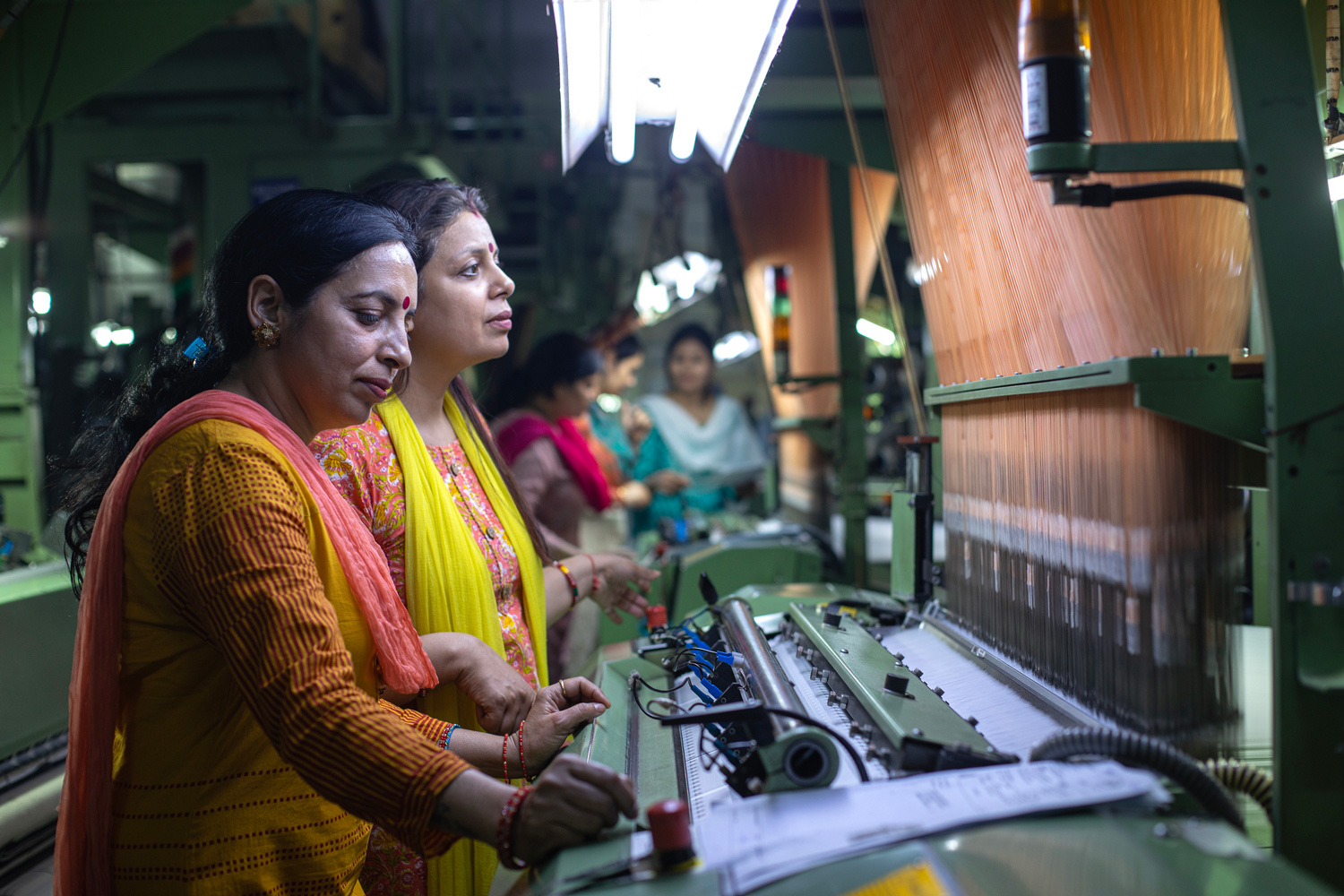
Why do Fewer Women Work in India? Demand Matters
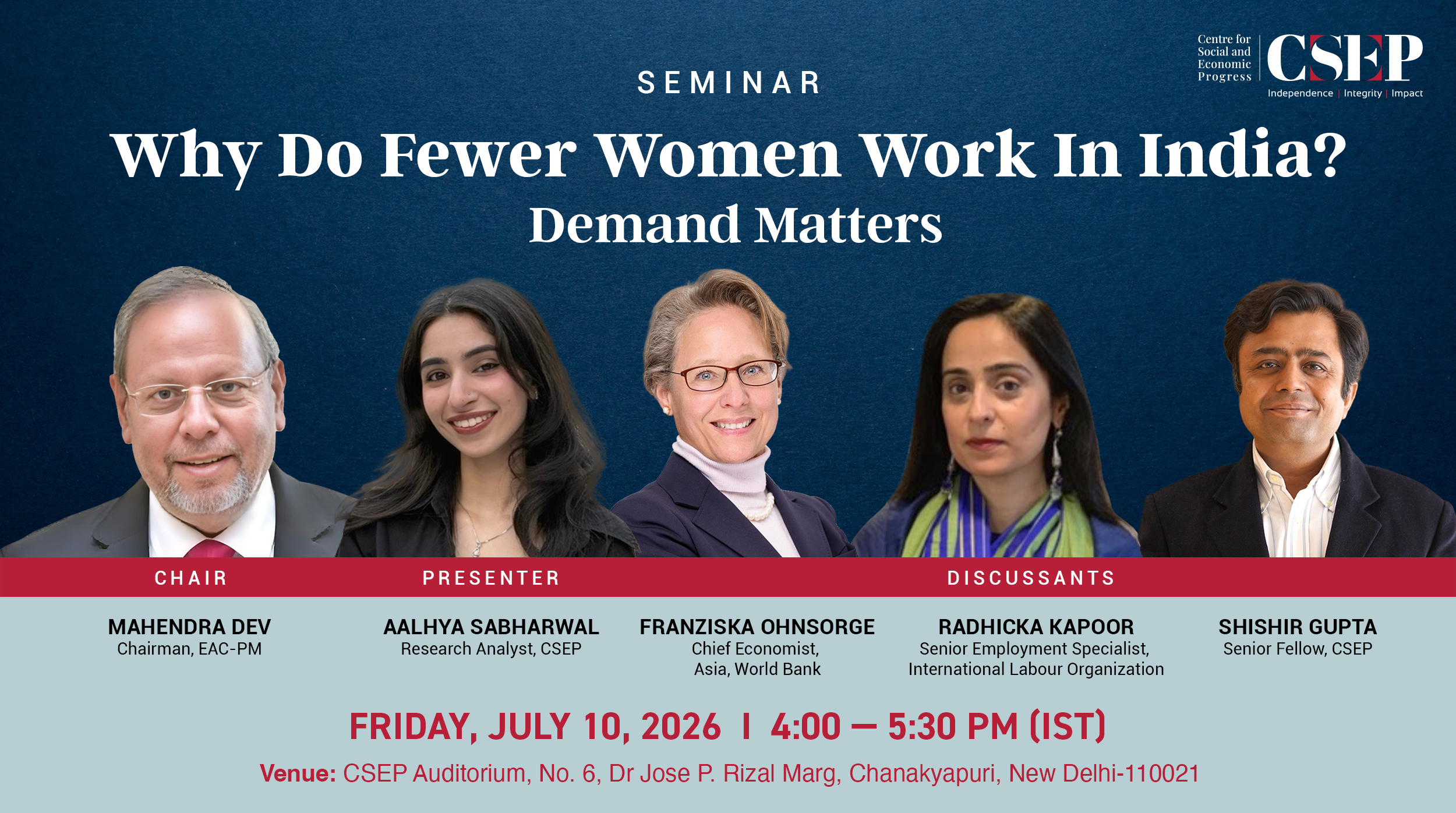
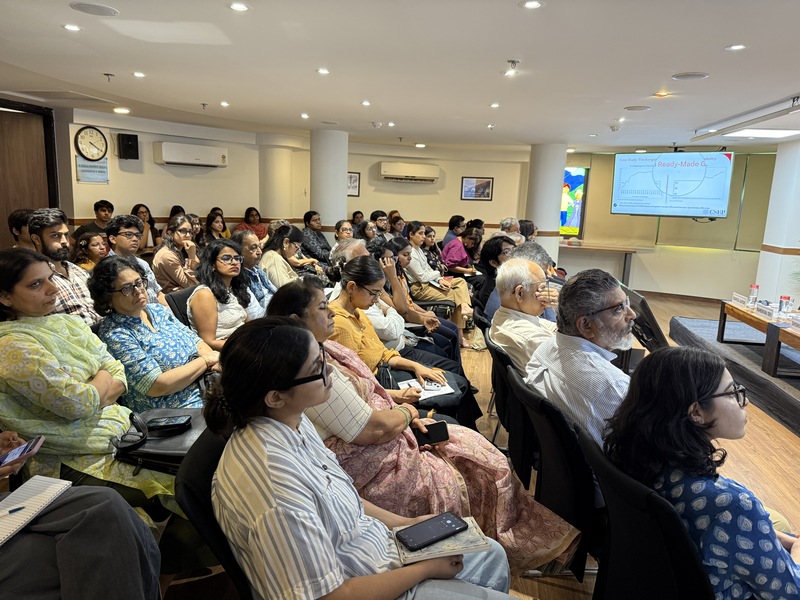
The Centre for Social and Economic Progress is delighted to invite you to a seminar titled “Why do Fewer Women Work in India? Demand Matters” on Friday, July 10, 2026, from 4:00 to 5:30 pm (IST) at the CSEP Auditorium, 6, Dr Jose P Rizal Marg, Chanakyapuri, New Delhi – 110021.
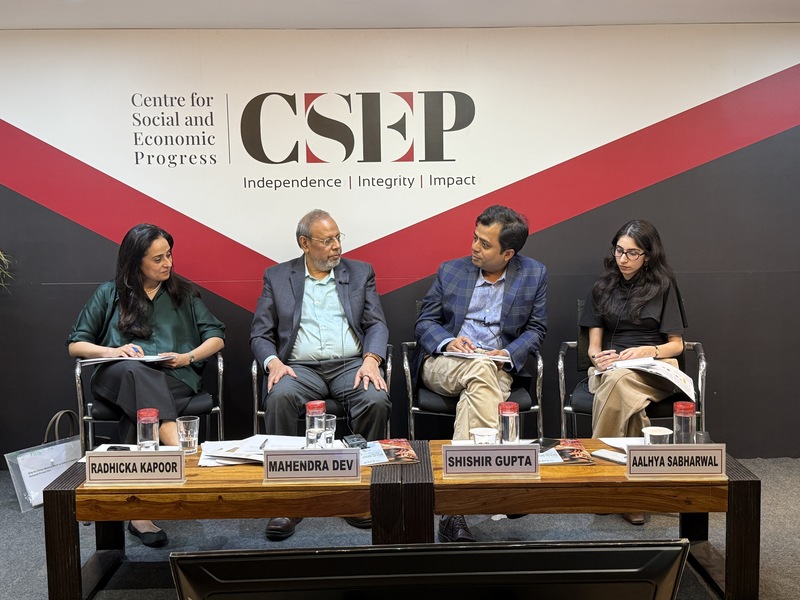
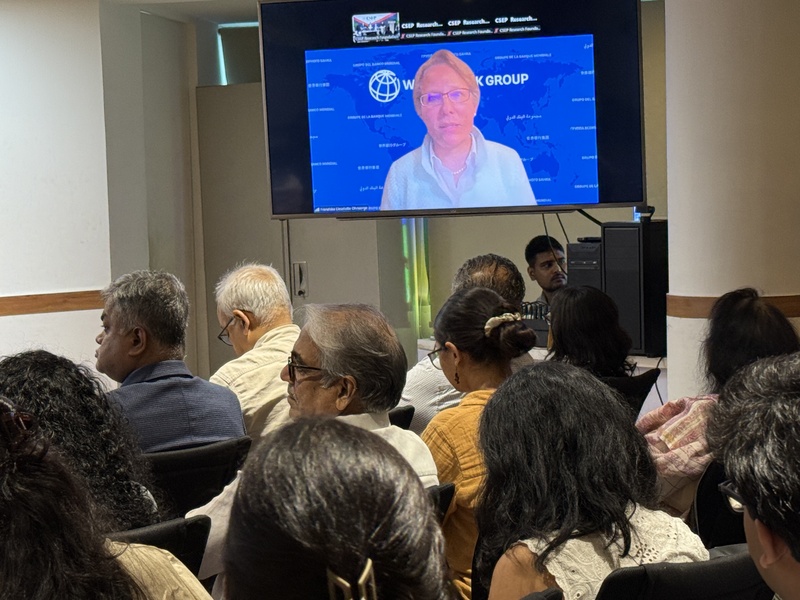
The session will be chaired and moderated by Mahendra Dev, Chairman, Economic Advisory Council to the Prime Minister (EAC-PM). Aalhya Sabharwal, Research Analyst, CSEP, will present the key findings of the paper on the theme, co-authored with Shishir Gupta, Senior Fellow, CSEP. This will be followed by comments from Franziska Ohnsorge, Chief Economist, Asia, World Bank, and Radhicka Kapoor, Senior Employment Specialist, International Labour Organization. The session will then open to a Q&A between the audience and the three discussants.
Please note that this is an in-person event only. If you are in Delhi on the day, we invite you to join us for what promises to be a thought-provoking discussion. The event will be available on the CSEP website and YouTube channel upon completion.
About the event
India’s female labour force participation rate (LFPR) remains among the lowest globally at 34% despite recent improvements. The usual narrative attributes it largely to our restrictive norms that keep women out of the workforce. But if women can close the gap in so many other dimensions, such as education and electoral participation, among others, why is labour force participation proving so challenging? Part of the answer lies in the lack of enough jobs to employ both men and women.
We argue for India to pursue reforms that will generate faster growth and more employment, rather than those only focused on improving women’s share in the workforce. These include making labour laws more flexible, rationalising tariffs to make labour-intensive industries competitive, and improving investment in health and education. Achieving the developed world level of female LFPR would increase our GDP between $ 700 billion and $1.4 trillion. Raising female labour force participation is not only a social imperative—it is a major strategy to achieve the Viksit Bharat aspiration.
Chair & Moderator
S. Mahendra Dev
S. Mahendra Dev is presently Chairman, Economic Advisory Council to the Prime Minister (EAC-PM). He was the Director and Vice Chancellor, Indira Gandhi Institute of Development Research (IGIDR) in Mumbai for 12 years from 2010 to 2022. Prior to this position, he was Chairman of the Commission for Agricultural Costs and Prices, Ministry of Agriculture, from 2008 to 2010. He was Vice Chairman of the Board of Trustees of the International Food Policy Research Institute (IFPRI), Washington, D.C. He was also a member of the Board of IFPRI for seven years from 2013 to 2019. He was member and Acting Chairman of the National Statistical Commission, Government of India. He received the prestigious Malcolm Adisesaiah Award in 2016. He was Director, Centre for Economic and Social Studies, Hyderabad, India, for 9 years from 1999 to 2008. He is member of the executive committee of the International Economic Association. He did a PhD from the Delhi School of Economics and a post-doctoral from Yale University, USA.
He is Chairman of the Institute for Development Studies, Andhra Pradesh and Distinguished Professor at ICFAI Faculty of Social Sciences, Hyderabad. He was independent director in Axis Bank and Kotak Mahindra Bank. He is currently the Association President of the Indian Society of Agricultural Marketing. He was Association President of the Indian Economic Association for three years, from 2018 to 2021. He was the conference President of the Indian Econometric Society (TIES), Indian Society of Agricultural Economics, Indian Society of Labour Economics, and Indian Association of Social Science Institutions (IASSI).
His main areas of interest are development economics, agricultural economics, and Macroeconomics. He has around 150 research publications in national and international journals in the areas of agricultural development, poverty and public policy, inequality, food security, nutrition, employment guarantee schemes, social security, and farm and non-farm employment. He has written or edited 23 books. His well-cited publication is “Inclusive Growth in India: Agriculture, Poverty, and Human Development”, published by Oxford University Press. His book “Perspectives on Equitable Development” was released by the former Prime Minister of India.
He has been a consultant and adviser to many international organizations, such as UNDP, World Bank, International Food Policy Research Institute, UNESCO, ILO, FAO, ESCAP, UNICEF, DFID, and OECD. He has been a member of several government committees in India, including the Prime Minister’s Task Force on Employment, chaired by Mr Montek Ahluwalia, the advisory committee for the National Commission on the Enterprises in the Unorganized sector, member of the Committee on Financial Inclusion, chaired by Dr C. Rangarajan, and member of the Expert Group on Poverty, chaired by Dr C. Rangarajan. He was the Chairman of the Committee on Terms of Trade on Agriculture constituted by the Ministry of Agriculture. He was member of several working groups for the 9th, 10th, 11th and 12th Five-Year Plans in India. He is also member of several committees of NITI Aayog. He has received honours for eminence in public service. He got awards for best teacher in economics and outstanding contribution to education. He received an honorary doctorate (D.Litt) from the Acharya Nagarjuna University, Andhra Pradesh.
Discussants
Franziska Ohnsorge
Franziska Ohnsorge is the World Bank Chief Economist for Asia. In this role, she is responsible for leading the research program on key economic issues in the East Asia and Pacific Region and the South Asia Region to inform the policy debate and World Bank lending. Before starting this position, she was Chief Economist for South Asia, and previously Manager at the Development Economics Vice Presidency, where she spearheaded the flagship Global Economic Prospects report. Prior to joining the World Bank, Franziska Ohnsorge worked in the Office of the Chief Economist of the European Bank for Reconstruction and Development and at the International Monetary Fund. Her research has been featured in peer-reviewed journals as well as policy publications and has covered a wide range of topics in international macroeconomics and finance, including debt and financial crises, inflation and monetary policy, as well as growth and informal labor markets. Her work has been widely cited, including in the Economist, the Wall Street Journal, and the Financial Times. She holds a PhD from the University of Toronto.
Radhicka Kapoor
Radhicka Kapoor is the Senior Employment Specialist at the ILO Decent Work Technical Support Team (DWT) for South Asia at the New Delhi office, India. She offers strategic policy and technical advice on diverse employment issues, aiming to enhance the quality and quantity of jobs in South Asia.
Before joining the ILO, Radhicka served as a Senior Faculty Member at the Indian Council for Research on International Economic Relations (ICRIER). Over the last few years, she has worked extensively on the various facets of India’s labour market, in particular, in the areas of the informal economy, the impact of technological changes on the world of work, structural transformation of the economy, employment data challenges, performance of the MSME sector, women entrepreneurship and the effect of labour regulations on the manufacturing sector.
She holds a Master’s and PhD in Economics from Cambridge University and the London School of Economics, respectively, following her undergraduate degree in Economics from St Stephen’s College, Delhi University.
Shishir Gupta
Shishir Gupta is a Senior Fellow at CSEP in New Delhi. His work focuses on many aspects of the Indian economy, including economic growth, governance and institutions, urbanisation, and sub-national reforms, among others. Before joining CSEP in August 2020, Shishir was a Fellow with the McKinsey Global Institute for 14 years, where he led multi-ethnic teams in India and the US on policy research and client studies across multiple domains. He has written widely on these topics in MGI reports and research papers as well as in popular media. He is an economist by education, with an MA and MPhil from the Delhi School of Economics.
Presenter
Aalhya Sabharwal
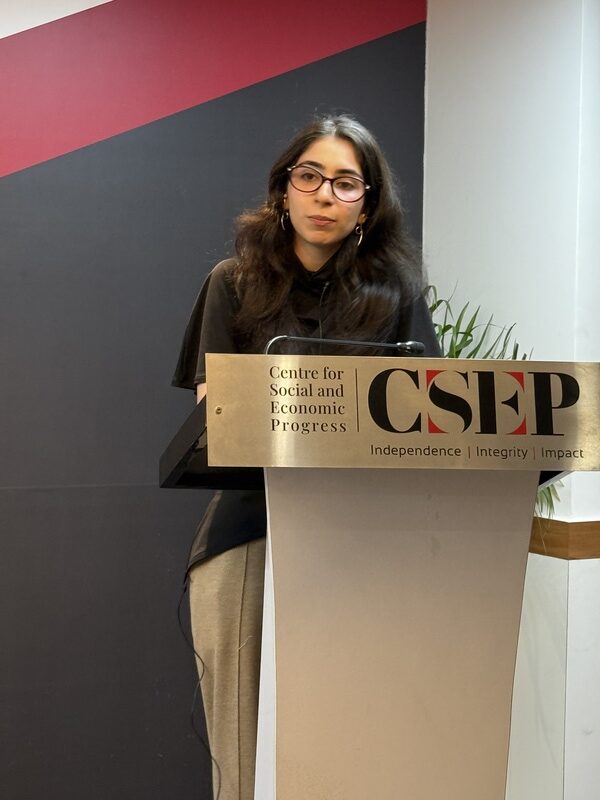
Aalhya Sabharwal is a Research Analyst at CSEP Research Foundation, where she works on issues at the intersection of economic and social policy. She holds a degree in Finance from O.P. Jindal Global University, where her research focused on geo-economics and regional disparities within the Indian economy. She has previously examined US–China trade relations and their implications for India’s economic strategy and global positioning and has published on India’s defence manufacturing sector under Dr Jaimini Bhagwati. Her interests lie in development economics, financial systems, and market dynamics, with a focus on growth, employment, and structural transformation.
All content reflects the individual views of the speakers. The Centre for Social and Economic Progress (CSEP) does not hold an institutional view on any subject.
Please contact Gurmeet Kaur at GKaur@csep.org for general queries and Ayesha Manocha at AManocha@csep.org for media queries.




The Centre for Social and Economic Progress (CSEP) is an independent, public policy think tank with a mandate to conduct research and analysis on critical issues facing India and the world and help shape policies that advance sustainable growth and development.