

This co-benefits approach helps utilise limited resources for multiple paybacks and can become a key component of India’s manufacturing ambitions.
If it was not clear before, it is fairly apparent now. A green economy is a more secure economy. India therefore needs to reorient its economic growth strategy and focus on green energy and green manufacturing.
Much of India’s climate action this decade has followed the co-benefits approach. That is, India has undertaken those environmentally beneficial actions that also have other benefits. For example, the movement towards EVs has helped India limit its fossil fuel bills, while renewable energy has enabled lower-cost energy, and both have helped enhance energy security. This co-benefits approach helps utilise limited resources for multiple paybacks and can become a key component of India’s manufacturing ambitions.
Therefore, green is very much in line with India’s unstated but apparent co-benefits approach, and also in line with India’s stated but less apparent geo-strategic orientation.
In that context, a strategy that focuses on catalysing green manufacturing investments will lead to multiple benefits. We find that an orientation towards green energy and manufacturing will also be more resilient, open up greater opportunities for new investments, including those for small and micro businesses, and have immense geo-political advantages. Therefore, green is very much in line with India’s unstated but apparent co-benefits approach, and also in line with India’s stated but less apparent geo-strategic orientation.
New green technologies have a long way to go, but have already created multiple opportunities in the renewables domain. We find multiple micro, small and large businesses coming up with new business and investment models in renewable energy, including distribution, setting up of installations, associated services, etc. Storage will bring up other opportunities as well, including those related to battery manufacturing, servicing, charging, and exchange. This is very different from the past, when the bulk of the fossil fuel and associated utilities were large-scale entities that needed to either be heavily regulated or be in the public sector. Given India’s recent initiatives for supporting entrepreneurship at the micro and small level, green opens up many new opportunities that did not exist before.
Another aspect of renewable energy is that it provides the most abiding opportunities for regional integration, in turn also supporting India’s geo-political agenda.
Another aspect of renewable energy is that it provides the most abiding opportunities for regional integration, in turn also supporting India’s geo-political agenda. For instance, Nepal, with which India has a huge trade surplus, has over 80,000 MW of hydropower potential. By importing hydropower from its northern neighbour, India can help in Nepal’s industrialisation, create employment opportunities and much-needed export revenues in that country, and at the same time benefit from low-cost, clean energy imports from the neighbourhood. India has had significant experience with its hydroelectric investments in Bhutan, which can help accelerate such partnerships. Creating such economic interdependence is also critical to India’s “Neighbourhood First” policy.
On the same lines, accelerating the movement towards Electric Vehicles (EVs) can help revive stagnant domestic investment. Greater use of EVs will lead to greater investments by automobile firms in new production lines, and also incentivise synergistic investments in batteries, motors, electronics, etc. This will also enable Indian manufacturing to align more effectively with emerging global supply chains. The high levels of protection enjoyed by Indian automobiles have contributed to their inability to be an export powerhouse, unlike the auto components sector, where India enjoys a distinct advantage in global value chains. But with EV markets gradually opening up, India’s large and growing EV market can help set the base for accessing global markets and integrating into global supply chains.
EV transition can anchor a new industrial ecosystem. Electrification of transport is not merely an environmental policy, but also an industrial strategy. EVs create demand for batteries, electronics, charging infrastructure, and advanced manufacturing. For India to scale this ecosystem rapidly, it will require deeper integration with global supply chains and significant foreign investment, including technology-rich partners in the EV and battery sectors. In particular, this will need close partnerships with Chinese firms, the world’s leaders in the EV ecosystem.
But what gets in the way is the fear of dependence on China. This fear is highly misplaced and is harming India’s security. This concern places too much emphasis on China as the origin of these supply chains and too little on the low-cost, high-technology characteristics of the products India can source from it.
A concerted push to domestic renewables, including solar, wind and hydro, can improve energy security and reduce exposure to geopolitical and price shocks.
A concerted push to domestic renewables, including solar, wind and hydro, can improve energy security and reduce exposure to geopolitical and price shocks. Take the current situation. It has become apparent that India’s economic and energy security can be impacted even when fossil fuel imports originate in friendly countries. Contrast that with a hypothetical situation where India is highly dependent on imports of batteries and solar panels from China. A disruption of solar panel and battery supply chains would have a limited impact, because previous imports of capital goods or batteries would have created assets in India. Even if such supply chains get interrupted, cars will continue to run, and solar panels will continue to produce power. If, on the other hand, fossil fuel supply chains get disrupted, cars will stop plying, and many power units will stop producing energy (most new thermal power units are importing coal).
To summarise, there are multiple benefits to going green, and these are not limited to sustainability or economic growth but also extend to other areas, including India’s geo-political agenda. Green energy and its sibling, green manufacturing, are in India’s economic and strategic interest.
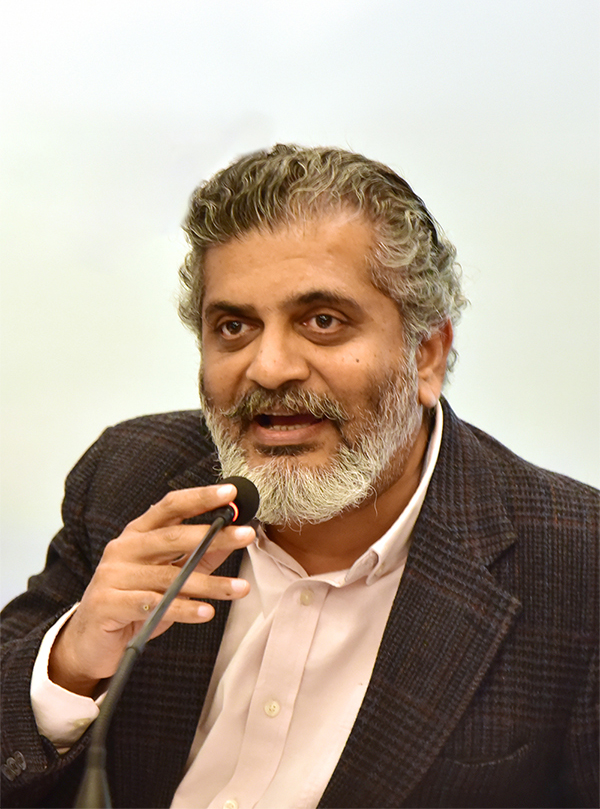
Laveesh Bhandari

Sanjay Kathuria



Find on this page

The Centre for Social and Economic Progress (CSEP) is an independent, public policy think tank with a mandate to conduct research and analysis on critical issues facing India and the world and help shape policies that advance sustainable growth and development.