
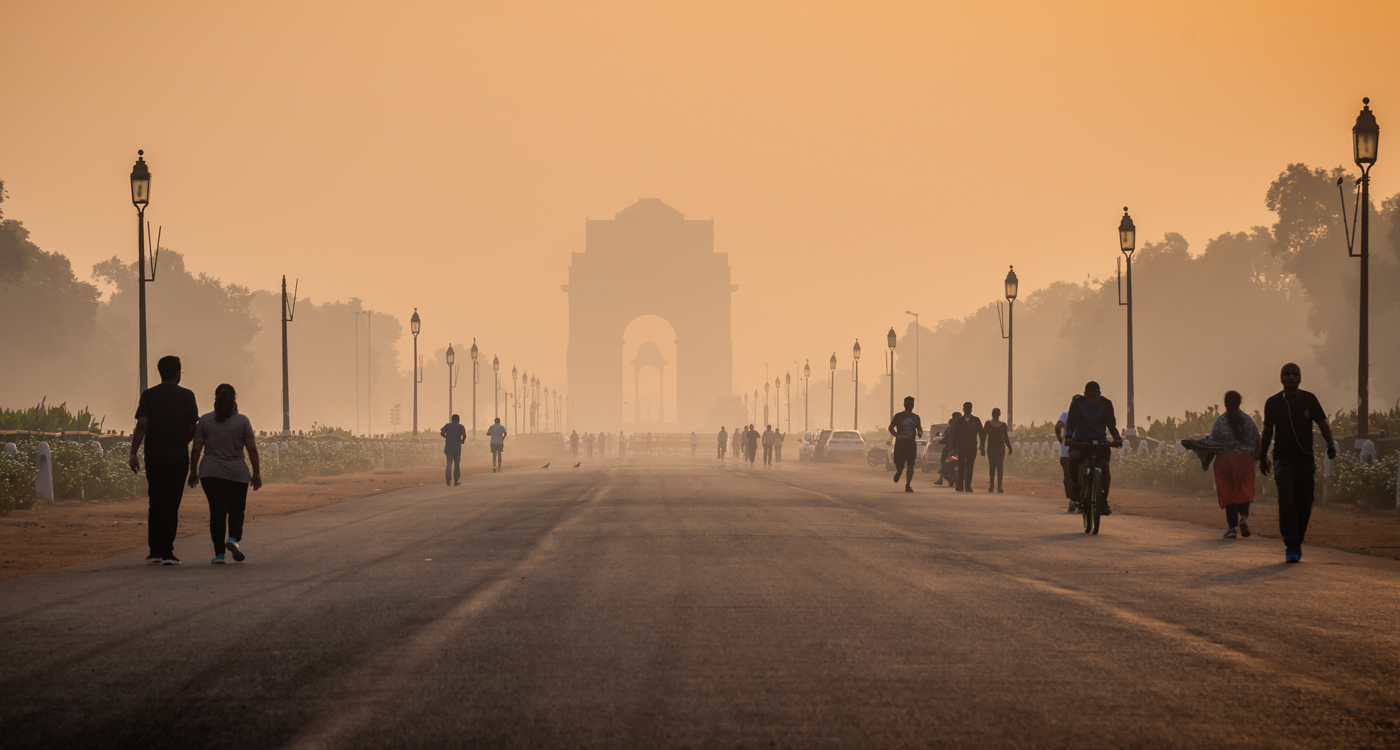
Air Pollution, Heat and Health in India: From Present Burden to Future Risk and Policy Action
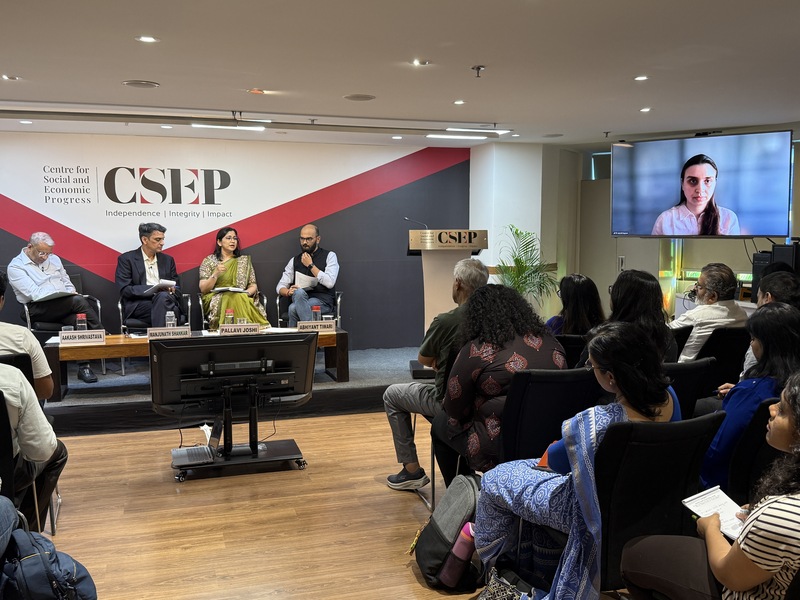
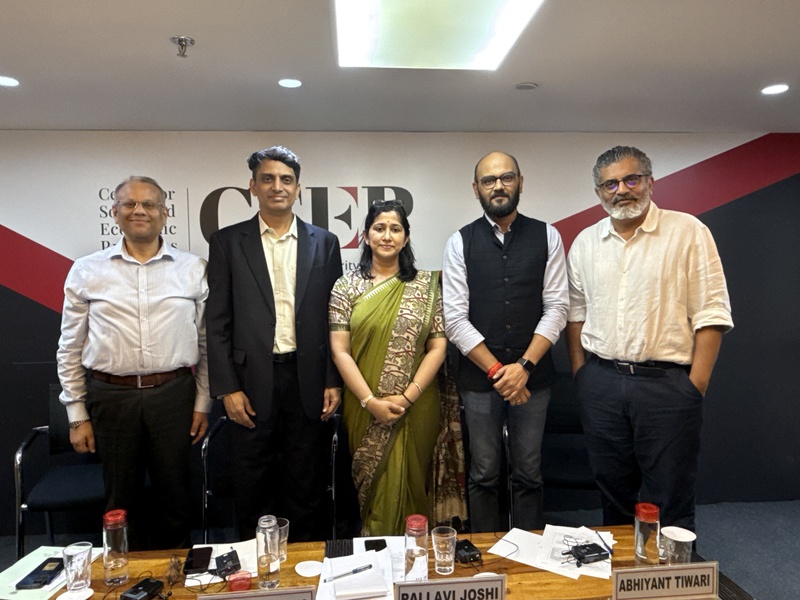
The Centre for Social and Economic Progress (CSEP) hosted a seminar titled “Air Pollution, Heat and Health in India: From Present Burden to Future Risk and Policy Action”, in collaboration with The Energy and Resources Institute (TERI), on Tuesday, September 29, 2026.
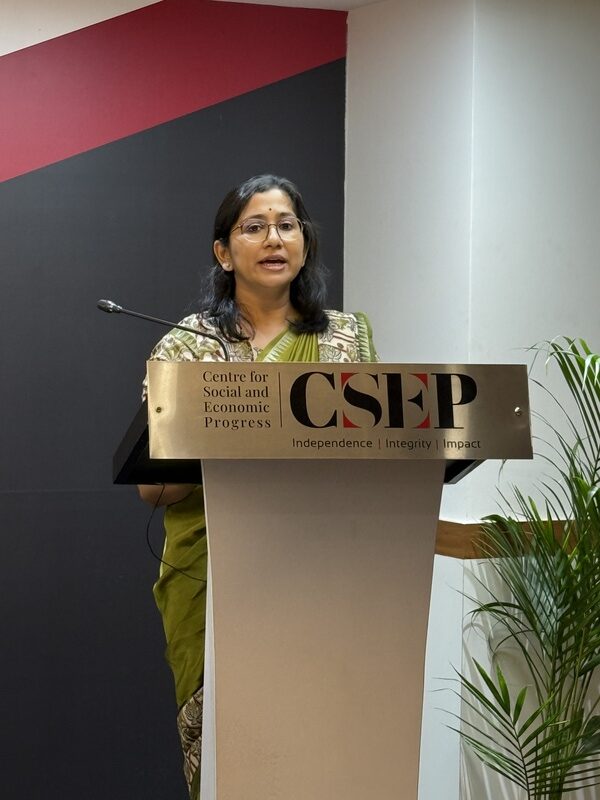
The seminar began with opening remarks by Aakash Shrivastava, Additional Director & Head, Center for Climate Change and Health, NCDC, Ministry of Health and Family Welfare (MoHFW), followed by a presentation by Pallavi Joshi, Associate Fellow & Area Convenor, Environment & Public Health, TERI.
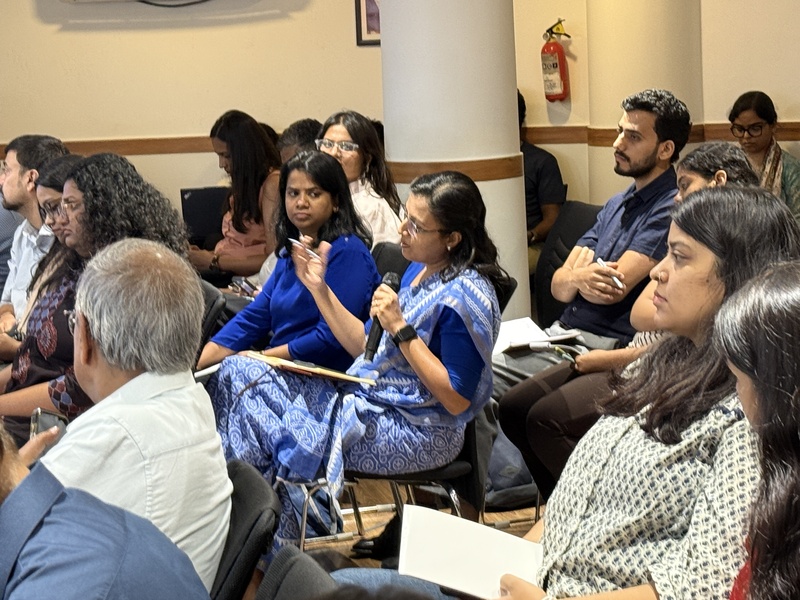
The presentation was followed by a panel discussion with Aakriti Kapoor, India Portfolio Manager, Clean Air Fund and Abhiyant Tiwari, Lead – Health & Climate Resilience, NRDC India. The discussion was moderated by Manjunath Shankar, Senior Policy Advisor, CSEP.
About the event
India faces a substantial and evolving health burden from environmental risks, particularly ambient air pollution and extreme heat. This seminar presented ongoing work examining the current and projected mortality burden associated with PM₂.₅ exposure and heat stroke across selected Indian states and Union Territories, and discussed the implications for environmental and health policy.
The PM₂.₅ analysis estimates mortality attributable to long-term ambient PM₂.₅ exposure among adults aged 25 years and above across 18 states and Union Territories using the Global Exposure Mortality Model (GEMM). Preliminary estimates indicate approximately 1.53 million PM₂.₅-attributable deaths in 2019. Under the population, baseline mortality and exposure assumptions used in the analysis, the absolute attributable burden is projected to reach approximately 3.06 million deaths by 2050. The analysis also highlights important differences in state-level patterns when burden is assessed using absolute deaths versus mortality rates, with implications for how priority regions are identified.
The heat analysis uses reported heat stroke mortality data from 2013–2022 and examines its relationship with average summer maximum temperature, average summer mean temperature and heatwave days. These exposure measures are modelled separately to project heat stroke mortality under SSP2-4.5 and SSP5-8.5 climate scenarios up to 2050. Under SSP5-8.5, the maximum-temperature model projects heat stroke deaths to increase from approximately 1,290 in 2025 to more than 4,400 by 2050 within the study geography, highlighting the potential increase in heat-related health risks under a higher-warming future.
Bringing the two analyses together, the seminar examined how evidence on present and future environmental health burdens can inform mitigation, adaptation, health-system preparedness and longer-term planning. It also explored how burden estimates and projections can support geographically targeted action, identify emerging priorities, and strengthen the translation of environmental health evidence into policy and implementation.
Opening Remarks
Aakash Shrivastava
Aakash Shrivastava is currently the Additional Director and Head of the Centre for Climate Change and Health at the National Centre for Disease Control, Delhi. He is the technical lead for India’s “National Programme on Climate Change and Health”.
He has been involved in a number of national and international meetings on climate change and health and has also represented India’s perspective on related environmental health matters.
After his MD, Dr Shrivastava went to the National University of Ireland to pursue a Master’s in Public Health and a Doctorate in Epidemiology and Public Health.
He has authored several national and international publications and has presented at several conferences and scientific meetings.
Presenter
Pallavi Joshi Lahari
Pallavi Joshi Lahari is an environmental health researcher and Associate Fellow & Area Convenor for Environment & Public Health at The Energy and Resources Institute (TERI), New Delhi. Her work spans environmental epidemiology, climate change and public health, with expertise in air pollution and heat-health risk assessment, exposure assessment, epidemiological modelling, health and economic burden estimation, and translating evidence into policy.
Her research integrates satellite, ground-monitoring and modelled exposure data with mortality and population-health datasets. She has expertise in exposure–response modelling, attributable burden estimation, distributed lag and non-linear models, future health-risk projections, source attribution and economic valuation. Her research has examined crop-residue-burning-related PM₂.₅ in North India, PM₂.₅ constituents and mortality in Delhi, and extreme heat and temperature-related health impacts in India.
At TERI, she leads applied programmes on air quality and health, maternal and newborn health, and One Health. She holds a PhD in Public Health from JNU, completed postdoctoral research at IIT Delhi, and is a GBD Collaborator.
Discussants
Aakriti Kapoor
Aakriti Kapoor is the India Portfolio Manager at Clean Air Fund (CAF), a global philanthropic organisation working with diverse stakeholders to accelerate clean air action. At CAF, she works with governments, researchers and private sector players to support evidence-based policy and systemic action on air pollution. She has over nine years of experience working across philanthropy, policy and development. Prior to joining CAF, Aakriti has worked with the World Bank and NITI Aayog on the areas of Climate Change and Energy. She brings a cross-sector perspective on how philanthropy, policy and partnerships can work together to address complex environmental challenges.
Abhiyant Tiwari
Abhiyant Tiwari is Lead – Health & Climate Resilience at NRDC India, working at the intersection of climate change, disaster risk and public health. He has extensive experience with governments, academia and non-profits in public health research, policy development, programme management and evaluation, with a focus on heat-health, climate resilience and evidence-based adaptation.
He contributed to the development and implementation of South Asia’s first Heat Action Plan in Ahmedabad in 2013 and has since supported the development, implementation and scaling of heat-health adaptation strategies across India and South Asia. In 2019, he led a preliminary study for India’s National Disaster Management Authority to estimate local temperature thresholds for heatwave warning systems across more than 100 cities.
His work also includes the Ahmedabad AIR Plan and a mobile COVID-19 surveillance solution in Gujarat. He serves on expert groups on heatwave adaptation and heat-related illness, and the Management Committee of the Global Heat Health Information Network. He holds an MPH from Harvard T.H. Chan School of Public Health.
Moderator
Manjunath Shankar
Manjunath Shankar is a Senior Policy Advisor in the Health and Human Development team at CSEP. He is a senior public health professional with over two decades of experience across India, South and South-East Asia, Africa, and the United States. His work focuses on health systems strengthening, health economics, primary healthcare, innovative financing, and advancing equity through evidence-informed policymaking.
Most recently, he served as Head of Strategic Initiatives and led the technical team for the SAMRIDH Healthcare Blended Finance Facility, supporting the design and evaluation of innovative financing models to strengthen healthcare delivery in India. His work has included developing and assessing pay-for-performance approaches in tuberculosis care, conducting mixed-methods impact evaluations, and advising on strategies to improve health outcomes and financial protection. He has worked closely with national and state governments, NITI Aayog, the National Health Authority, development partners, and private sector stakeholders.
Earlier, at the US Centers for Disease Control and Prevention (CDC), he worked as a health economist and modeller, contributing to high-level emergency responses, including the West African Ebola outbreak and influenza preparedness efforts. His work informed national preparedness, resource allocation, and health security strategies.
Manjunath holds a PhD in International Health (Health Systems) from the Johns Hopkins Bloomberg School of Public Health, an MHA from TISS, and an MBBS degree. He has authored numerous peer-reviewed publications, white papers, and op-eds on health systems, economic evaluation, and public health policy.
All content reflects the individual views of the speakers. The Centre for Social and Economic Progress (CSEP) does not hold an institutional view on any subject.
Please contact Gurmeet Kaur at GKaur@csep.org for general queries and Ayesha Manocha at AManocha@csep.org for media queries.






The Centre for Social and Economic Progress (CSEP) is an independent, public policy think tank with a mandate to conduct research and analysis on critical issues facing India and the world and help shape policies that advance sustainable growth and development.