
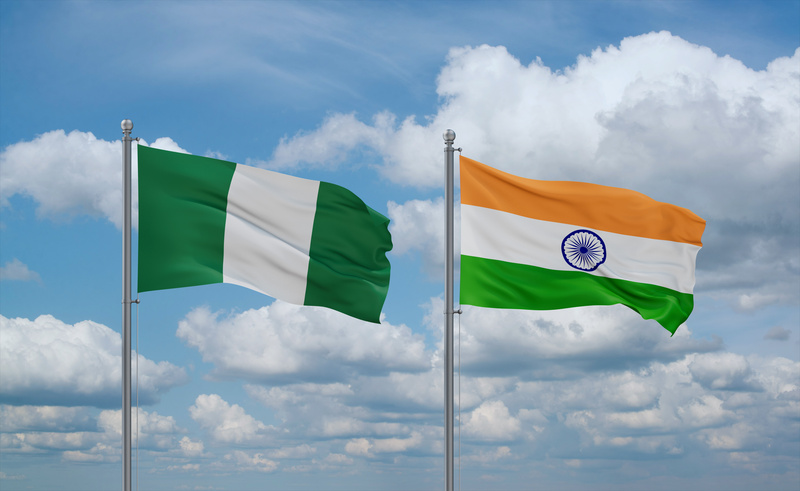
Connecting Care: Digital Public Infrastructure as a Catalyst for India–Nigeria Health Cooperation
Reading Time: 5 minutesAfrica’s DPI Sprint: Identity is just the start
Digital public infrastructure (DPI) has become the new terrain of development ambition and an emerging avenue for co-creation across the Global South, including in Africa, where countries are racing to build the identity, payment, and data-exchange rails. Building on the 2024 Continental AI strategy, the African Union signed a landmark MoU with Google in 2026 to advance AI and digital transformation across the continent. In May 2026, the African Continental Free Trade Area Secretariat picked Kenya, Morocco, and Nigeria as the first countries to pilot ADAPT, its Digital Access and Public Infrastructure for Trade initiative, linking digital identity, payments, and data exchange across borders.
The true strength of DPI lies in interoperability, and healthcare represents perhaps the most socially transformative application of this concept: letting health records and patient information move securely across providers while expanding access in underserved communities. DPI succeeds not when people are registered, but when their lives become easier as a result of its implementation.
Nigeria is at the centre of this DPI push, with its identity programme moving at an unprecedented pace. Enrolment in Nigeria’s National Identification Number (NIN) database has crossed 136 million in July 2026, out of a population of roughly 240 million. However, digital identity alone yields limited social or economic value. The true strength of DPI lies in interoperability, and healthcare represents perhaps the most socially transformative application of this concept: letting health records and patient information move securely across providers while expanding access in underserved communities. DPI succeeds not when people are registered, but when their lives become easier as a result of its implementation.
Nigeria launched its Nigeria Digital Health Initiative (NDHI) in 2024, quickly followed by the Digital Health Services Bill in 2025. However, implementation remains a challenge. Despite rapid NIN enrolment, rural–urban enrolment gaps persist, many hospitals still run entirely on paper, and clinical staff and patients alike face uneven digital literacy. Nigeria’s challenge now lies in ensuring that its NIN infrastructure generates tangible improvements in healthcare delivery to unlock the real potential of investing in DPI.
India’s DPI Journey: Aadhaar and Ayushman Bharat
India began a similar journey seventeen years ago. It launched the Aadhaar identity card in 2009, which reached 93% adult coverage by 2016 and became the foundation for other DPI projects like the Unified Payments Interface (UPI), digital document verification (DigiLocker), and, in health, the Ayushman Bharat Digital Mission (ABDM). ABDM established health accounts in 2021, giving citizens portable digital health identities linked to electronic health records. By mid-2026, over 93 crore ABHA accounts had been created, making it one of the largest digital health infrastructures globally. Additionally, India’s successful deployment of the CoWIN vaccination platform during COVID-19 demonstrated the scalability of DPI in managing health crises and proved how a robust identity database can enable DPI across other areas of governance.
India’s experience is also a catalogue of challenges Nigeria is now confronting: unreliable rural connectivity, low digital literacy among older and low-income populations, and hospitals reluctant to abandon paper records.
India’s experience is also a catalogue of challenges Nigeria is now confronting: unreliable rural connectivity, low digital literacy among older and low-income populations, and hospitals reluctant to abandon paper records. A 2026 community study in an Uttarakhand village found that awareness of the health mission was lowest among rural senior citizens. Progress has also been uneven across India’s own states. Uttar Pradesh accounts for over 15 crore linked health records through its state eKavach platform (~61% of its total population), while Tamil Nadu lags with only 2.5 crore accounts created (~34% of its population). For India, DPI does not spread evenly across states just because the technology exists nationally. Nigeria also faces similar unevenness in coordinating reforms across federal, state, and local governments.
India–Nigeria: Turning diplomacy into digital cooperation
The case for an India–Nigeria digital health partnership builds on one of India’s longest and most substantive relationships in West Africa. Nigeria is India’s largest trading partner in Africa, with bilateral trade standing at roughly USD 8,596 million in 2025. There is also a structural similarity here almost no other pairing offers: two countries serving enormous, linguistically and economically diverse populations through a single federal digital identity layer. India is the world’s most populous democracy, and Nigeria houses Africa’s largest population; both must design DPI at a scale and diversity smaller nations simply never have to confront.
The groundwork for digital cooperation is also gaining momentum. India’s Ministry of Electronics and Information Technology and Nigeria’s Ministry of Communications have signed an MoU to share expertise in e-governance and digital innovation. Knowledge transfer has already been facilitated through the Indian Technical and Economic Cooperation (ITEC) programme and Indian Council for Cultural Relations (ICCR) scholarships. The next step is to translate these mechanisms into a dedicated health-specific DPI/tech partnership.
What can India and Nigeria learn from each other?
While India is considered to be one of DPI’s pioneers in the Global South, Nigeria has earned its reputation as a digital powerhouse in Africa. For Nigeria, India’s experience of building healthcare infrastructure onto existing DPI is most valuable. Nigeria could leverage its NIN as the foundational layer while introducing a consent-based health data structure, similar to India’s Data Empowerment and Protection Architecture, allowing healthcare providers to exchange information securely while patients retain control over their data. India’s biggest offering here is the architecture of DPI itself, expanding beyond identity at scale.
But this does not mean India is only a didactic source for DPI development. Nigeria has taken registration directly into communities, reducing barriers to government services through enrolment campaigns and local outreach. This approach could be adapted to improve Ayushman Bharat registration among elderly, rural, and other marginalised populations. Nigeria’s emphasis on extending digital services through telecommunications infrastructure also offers useful strategies for India’s last-mile connectivity challenges, where citizens with digital accounts still struggle to access healthcare facilities.
The greatest opportunity here is operationalising these lessons, a possibility encouraged by Dr Bosun Tijani, Nigeria’s Minister of Communication, Innovation and Digital Economy, who had signed an MoU with India on EdTech, saying, “Nigeria and India have a shared passion for a better tomorrow, driven by the power of digital transformation.” India and Nigeria could establish a permanent Digital Health Working Group under their broader strategic partnership, facilitating regular exchanges between policymakers, technology experts, and public health institutions. India’s ITEC programmes could expand to include courses on digital health governance, health data regulation, and digital infrastructure management for Nigerian policymakers and healthcare administrators. With India already extending USD 395.44 million Line of Credit to Nigeria for energy and infrastructure, ring-fencing a portion for DPI could turn this financial relationship into a trackable digital health goal.
If they can show that digital identity can translate into better healthcare, India and Nigeria will demonstrate that the Global South is not simply adopting digital systems: it is defining how they should work, and how they can achieve it together.
A new digital health model for South–South cooperation
If successful, an India–Nigeria partnership would be one of the first major demonstrations that digital partnerships need not follow traditional North–South patterns of technology transfer. Instead, they can be built on mutual learning, shared experiences, and co-creation between Global South countries facing similar development trajectories. It would also test whether India’s global DPI stack can travel into healthcare for other countries.
The next collaborative model for digital public infrastructure could emerge from New Delhi and Abuja. If they can show that digital identity can translate into better healthcare, India and Nigeria will demonstrate that the Global South is not simply adopting digital systems: it is defining how they should work, and how they can achieve it together.





Find on this page

The Centre for Social and Economic Progress (CSEP) is an independent, public policy think tank with a mandate to conduct research and analysis on critical issues facing India and the world and help shape policies that advance sustainable growth and development.