

India–Bhutan Trade Corridors: The Rise of Assam’s Border Gateways
Reading Time: 5 minutesAs Jaigaon’s decades-old dominance strains under rising trade volumes, new customs points, rail links, and Bhutan’s Gelephu Mindfulness City are turning Assam into a second gateway on the India–Bhutan border.
For decades, India–Bhutan overland trade has been concentrated at Jaigaon in West Bengal. That remains true today. Yet, as bilateral trade expands, Assam is emerging as a complementary gateway. With new customs points, road links, and Bhutan’s growing focus on its southern regions, the India–Bhutan border is gradually moving from a single dominant crossing to a more diversified network.
The volume of trade this single border point must absorb is rising rapidly: bilateral India–Bhutan trade crossed USD 1.9 billion in FY 2024–25, growing by more than 46% over the previous year.
Why India–Bhutan Trade Route Needs Diversification
The proposed conversion of Jaigaon Land Customs Station (LCS) into an Integrated Check Post (ICP) remains incomplete despite being under consideration for years, with authorities only preparing a Detailed Project Report and identifying 122 acres of land for development so far. Local reporting has also documented queues stretching nearly a kilometre from the Bhutan gate during peak travel periods, attributable to slow manual document verification and limited security personnel on duty. Meanwhile, the volume of trade this single border point must absorb is rising rapidly: bilateral India–Bhutan trade crossed USD 1.9 billion in FY 2024–25, growing by more than 46% over the previous year. An infrastructurally constrained single gateway is unlikely to handle growth of this magnitude indefinitely. This strengthens the case for building additional capacity along the border.
Assam’s Expanding Network of Land Ports
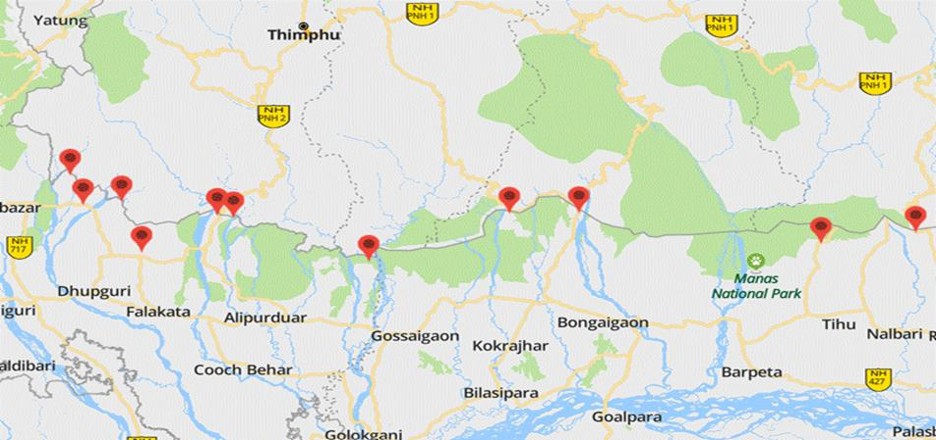
Map 1: Border infrastructure on the Indo-Bhutan border, West Bengal and Assam
Disclaimer: This map is for illustrative purposes and does not imply the expression of any opinion on the part of CSEP concerning the legal status of any country or territory or concerning the delimitation of frontiers or boundaries. The authors or CSEP do not vouch for the accuracy and correctness of the map.
Source: Sambandh Database, CSEP (portal yet to go live).
Currently, there are ten notified land ports along the India–Bhutan border, distributed across West Bengal (six) and Assam (four), with the number continuing to increase. In December 2025, Assam’s Chief Secretary met Bhutan’s Consul General to review progress on a new LCS at Samrang in Udalguri district, and by May 2026, the border point was formally notified as an LCS, bringing Assam’s connectivity point count to five (Darranga, Hatisar, Kamardwisa, Ultapani, and Samrang), against West Bengal’s six.
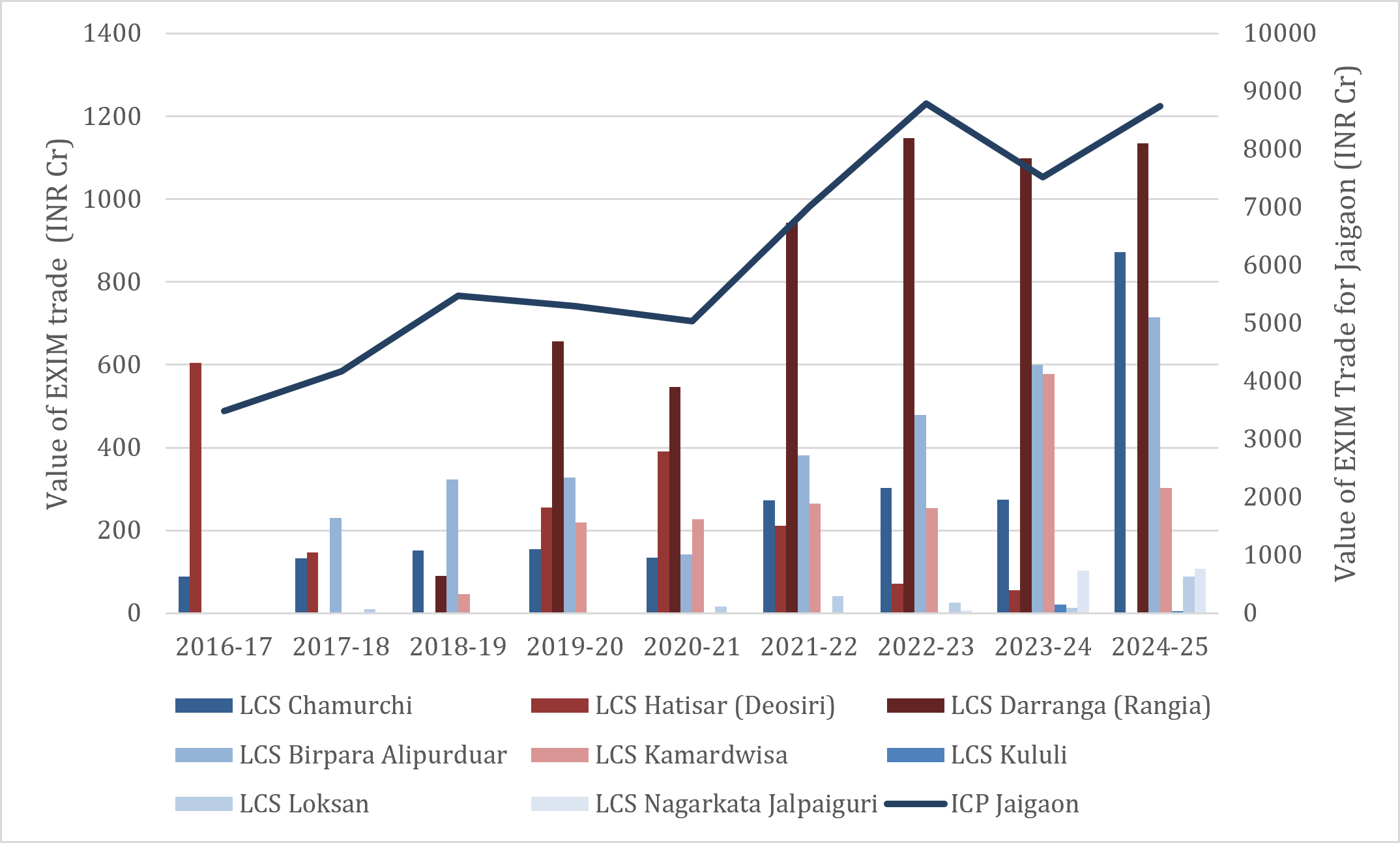
Figure 1: Increase in India–Bhutan Trade (Assam and West Bengal)
Source: Directorate General of Commercial Intelligence and Statistics.
Note: ICP Jaigaon (line chart) is on the secondary axis, and all others (bar chart) are on the primary axis; West Bengal is in shades of blue, and Assam is in shades of red.
A growing number of these LCSs are now being operationalised. Parallel to the rise in Jaigaon’s share between 2016–17 and 2024–25, trade through the remaining ports has also increased. In 2016–17, only Chamurchi and Hatisar recorded substantial trade; by 2019–20, Birpara, Kamardwisa, and Darranga also demonstrated quantifiable trade flows, with Darranga recording some of the strongest growth.
Darranga’s Rise: From Marginal Crossing to Trade Corridor
Among the emerging gateways, Darranga best illustrates how a previously marginal crossing can develop into a functioning trade corridor. Assam’s Industries & Commerce Department had, for years, documented that Darranga’s infrastructure was too poor on both sides of the border to sustain trade. In 2021, nearly 75% of all India–Bhutan trade moved through Jaigaon, while Darranga and Hatisar together accounted for only 16%. However, in 2024, Hatisar and Darranga were added to the approved ports list for Bhutan’s 17,000-tonne areca nut quota, previously a Jaigaon/Chamurchi monopoly, dropping the Minimum Import Price restriction. Days later, at the Commerce Secretary Level Meeting in Thimphu, both governments agreed to designate Darranga as an additional entry point for food imports and deploy Phyto Quarantine Inspection staff, addressing the very infrastructure gap Assam had earlier flagged.
The Darranga ICP was inaugurated on 14.5 acres, about 700 metres from the Bhutan border, and built to leverage NH-27 and Bhutan’s own upgraded customs post at Mottanga. This proximity gives Darranga a direct transit corridor to eastern Bhutan’s primary manufacturing hub, the Motanga Industrial Estate in Samdrup Jongkhar district, cutting transport costs for raw materials, coal, and heavy machinery moving into Bhutan.
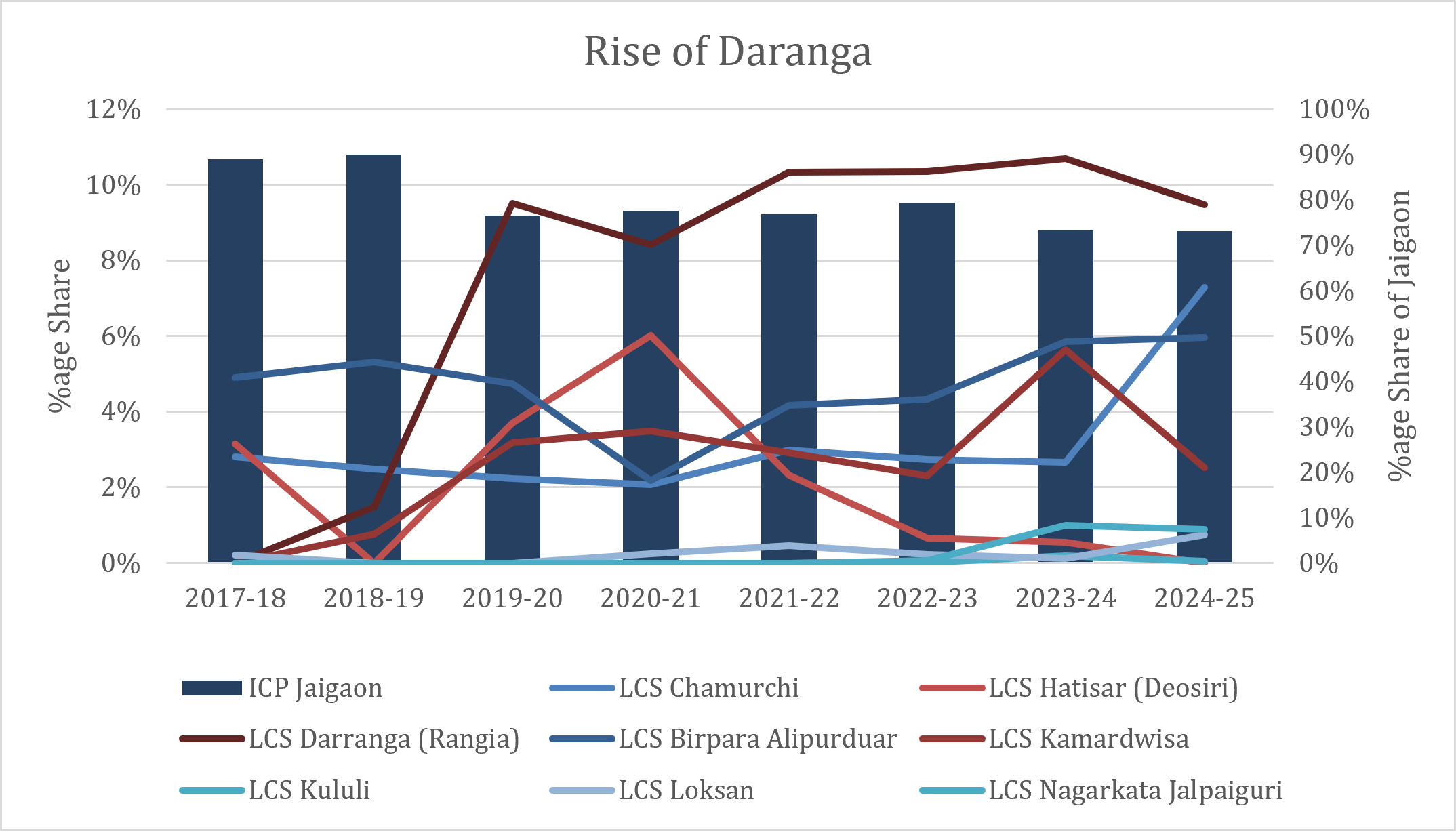
Figure 2: Port-Wise Share of Trade Volume: Indo-Bhutan Border
Source: Directorate General of Commercial Intelligence and Statistics.
Note: ICP Jaigaon (bar chart) is on the secondary axis, and all others (line graphs) are on the primary axis. West Bengal is in shades of blue and Assam is in shades of red.
Central to this shift is Gelephu, the site of Bhutan’s flagship Gelephu Mindfulness City, a Special Administrative Region initiated by the King of Bhutan. Gelephu lies directly on Assam’s border, positioning Assam’s LCSand ICPs as natural gateways to Bhutan’s most ambitious economic project.
Over the period shown (Figure 2), Jaigaon’s share of total trade has declined from more than 83% in 2017–18 to approximately 73% by 2024–25; still dominant, but no longer a near-monopoly. Still more telling is Darranga’s share, which rose from near zero before 2019–20 to about 9.5% that year, a sharp rise synchronous with the 2020 Bodo Peace Accord, suggesting improved local stability, alongside infrastructure and policy changes, aided Darranga’s emergence. After 2021, Darranga’s growth plateaus, indicating that the initial surge has settled into a more stable trend. Meanwhile, Birpara, Kamardwisa, and Chamurchi all show upward movement, easing concentration at Jaigaon.
Gelephu Mindfulness City
Central to this shift is Gelephu, the site of Bhutan’s flagship Gelephu Mindfulness City, a Special Administrative Region initiated by the King of Bhutan. Gelephu lies directly on Assam’s border, positioning Assam’s LCS and ICPs as natural gateways to Bhutan’s most ambitious economic project. A planned Kokrajhar–Gelephu railway link, agreed under a September 2025 Inter-Governmental MoU alongside a Banarhat–Samtse line in West Bengal, reinforces this positioning, although the road and customs relationship preceded it.
Assam’s Infrastructure Push Toward Bhutan
Assam’s own connectivity initiatives, particularly Asom Mala and Asom Mala 2.0, have identified the Kokrajhar–Gelephu corridor as a priority route, with the state currently constructing about 1,000 km of roads across over 27 districts under the programme. During his visit to Bhutan in December 2024, Chief Minister Himanta Biswa Sarma discussed with Bhutanese leadership the strengthening of border trade infrastructure and the formalisation of Assam’s seven trade routes, alongside connectivity initiatives such as the Kokrajhar–Gelephu road. This visit illustrates Assam’s growing role in facilitating cross-border economic connectivity with Bhutan at the sub-national level.
For Assam, proximity to projects such as Gelephu Mindfulness City enhances its importance within India’s Act East and Neighbourhood First policies.
Importantly, route diversification is not solely being driven by India. Bhutan itself has sought additional corridors: its Ministry of Industry, Commerce and Employment formally requested four new areca nut export routes, three of them in Assam: Hatisar–Gelephu, Darranga–Samdrup–Jongkhar, and Kamardwisa–Nganglam.
What This Means for India–Bhutan Trade
None of these developments displaces West Bengal, and Jaigaon is likely to remain India’s principal gateway to Bhutan for the foreseeable future. Assam, however, is steadily gaining ground within a system that West Bengal continues to dominate. This shift matters because additional functioning corridors reduce dependence on a single crossing point, improve logistics resilience, and support broader sub-regional connectivity through customs, road, and rail infrastructure.
For Bhutan, they provide more direct access between its southern economic priorities and India’s Northeast. For Assam, proximity to projects such as Gelephu Mindfulness City enhances its importance within India’s Act East and Neighbourhood First policies. The key question ahead is whether these infrastructure upgrades, customs reforms, and connectivity initiatives will translate into sustained trade flows over the long term.


Abhishek Agarwal



Find on this page

The Centre for Social and Economic Progress (CSEP) is an independent, public policy think tank with a mandate to conduct research and analysis on critical issues facing India and the world and help shape policies that advance sustainable growth and development.