
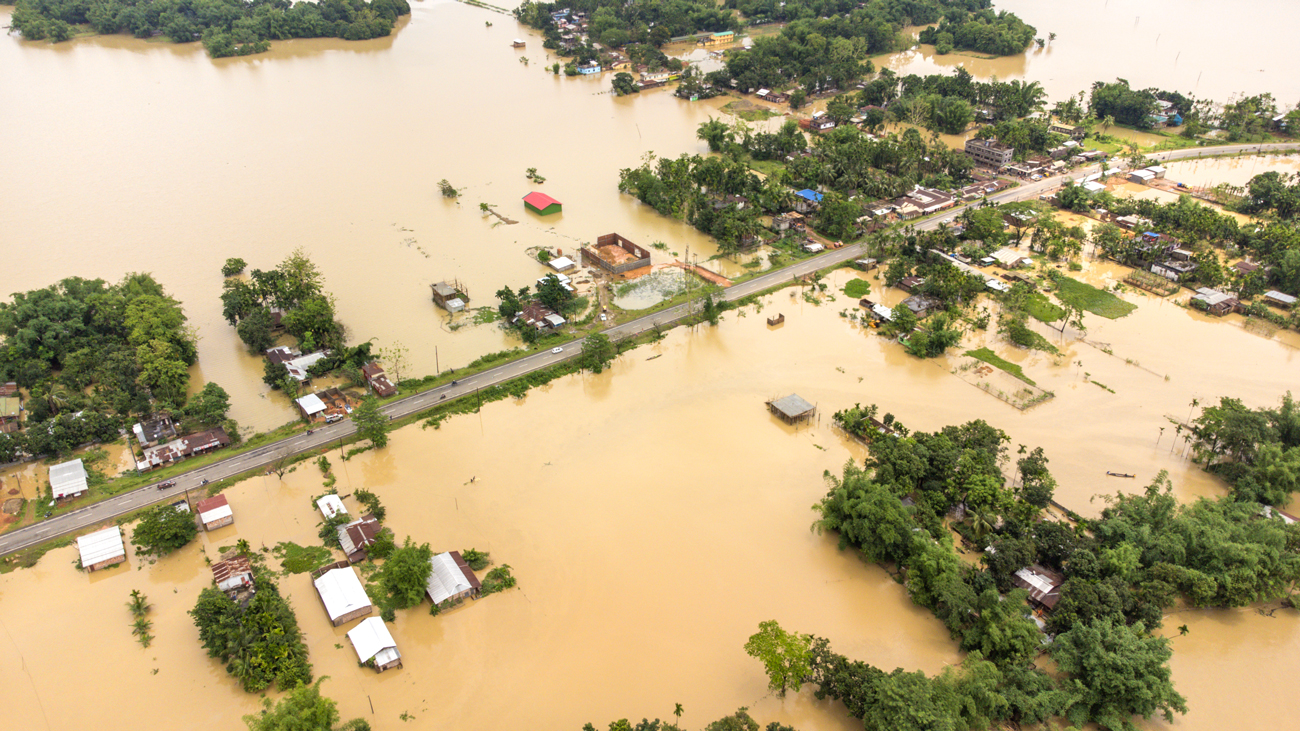
Global Evidence on Urban Resilience and Adaptation to Flood Risk
New global research shows that floods reduce urban economic activity by 4.5% on average, with losses 3.5 times higher in low-income countries. While cities are becoming more resilient over time, the benefits of adaptation remain uneven, highlighting a critical adaptation gap.
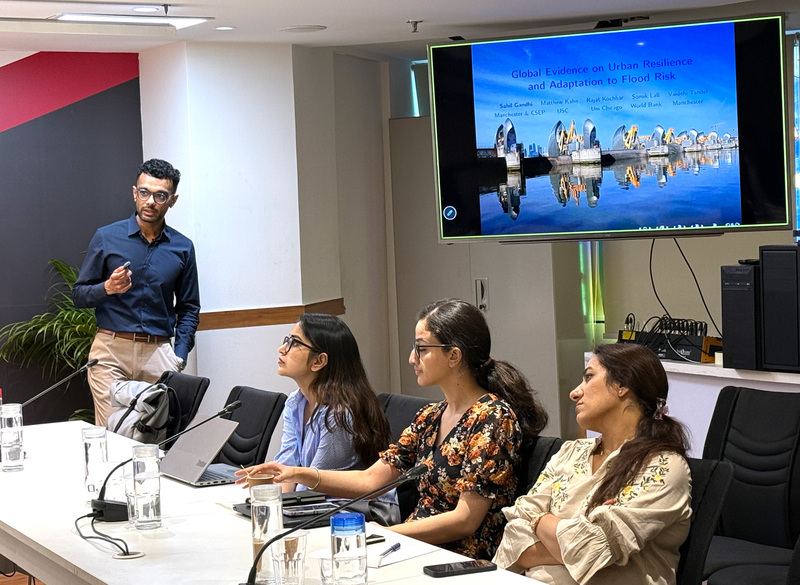
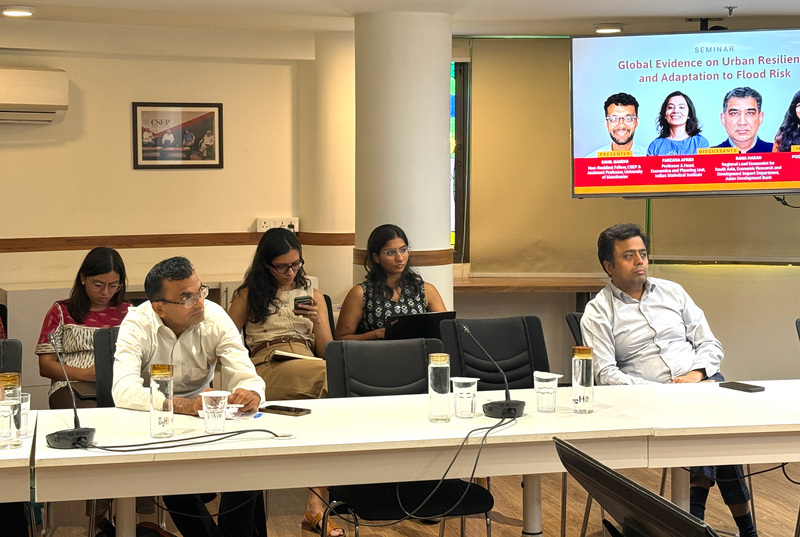
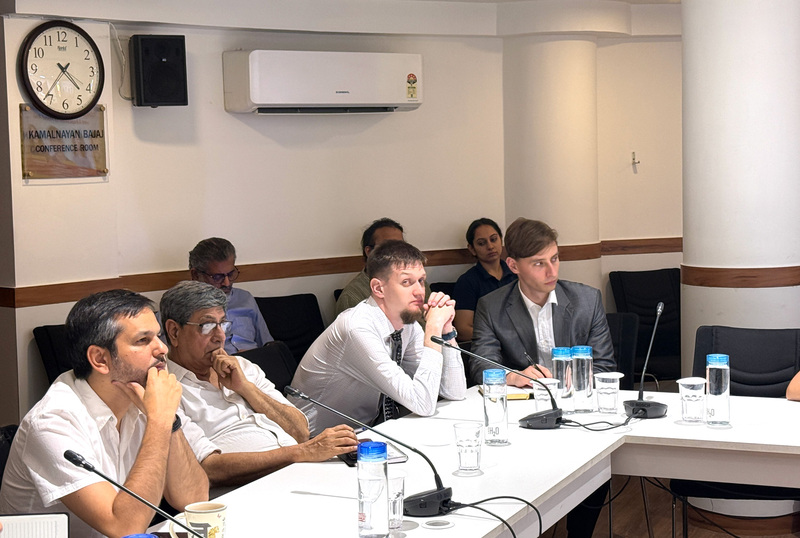
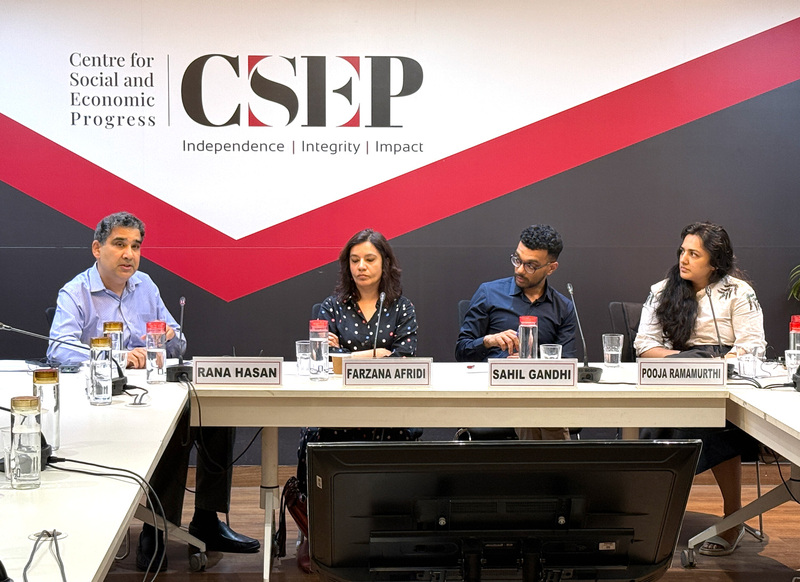
In this context, the Centre for Social and Economic Progress (CSEP) hosted a seminar titled “Global Evidence on Urban Resilience and Adaptation to Flood Risk” on Monday, April 20, 2026.
The seminar featured a presentation by Sahil Gandhi, Non-Resident Fellow, CSEP & Assistant Professor, University of Manchester. This was followed by a discussion with Farzana Afridi, Professor and Head, Economics and Planning Unit, Indian Statistical Institute (Delhi) and Rana Hasan, Regional Lead Economist for South Asia, Economic Research and Development Impact Department, Asian Development Bank. The session was moderated by Pooja Ramamurthi, Fellow, CSEP.
About the event
We study how flood impacts, resilience, and adaptation differ across cities worldwide. Combining 3,931 major floods (2000–2023) with data on 9,468 cities in 175 countries, we show: (i) floods reduce urban economic activity by 4.5 percent on average, with losses 3.5 times larger in low-income countries; (ii) cities are becoming more resilient, as sensitivity of economic activity and mortality to floods declines over time, driven by experience-based learning; and (iii) adaptation mechanisms vary by income — dams mitigate losses globally, while migration and critical infrastructure enhance resilience only in high-income cities. The disproportionate flood impacts and limited adaptation effectiveness in developing nations highlight an adaptation gap.
Presenter
Sahil Gandhi
Sahil Gandhi is an Assistant Professor at the University of Manchester and has previously held positions at the Urban Policy and Governance programme at TISS and at the Brookings Institution India. He is an urban economist whose research focuses on land and real estate market frictions that affect housing market outcomes in Indian cities. Dr Gandhi received the 2025 Edwin S. Mills Best Paper Award, a leading urban economics award, from the American Real Estate and Urban Economics Association.
His research is published in the Journal of Public Economics, Journal of Urban Economics, Journal of Development Economics, Journal of Economic Geography, among other leading peer-reviewed journals. His research is also cited by the Financial Times, The Economist, the BBC and others.
Dr Gandhi’s current research examines adaptation to urban flooding, public housing outcomes, and how relaxing Floor Area Ratio regulations shaped housing supply and affordability in Mumbai.
You can find his website here.
Discussants
Farzana Afridi
Farzana Afridi is Professor and Head of the Economics and Planning Unit at the Indian Statistical Institute (Delhi), Visiting Professor at NCAER, and Research Fellow at IZA. Her research lies at the intersection of development and labour economics, covering the broad themes of gender and social identity, human capital, and governance. Currently, she heads the Digital Platforms and WEE program, funded by the Bill and Melinda Gates Foundation, to analyse and suggest measures that empower women via digital technologies. Afridi has taught economics at the University of Michigan (Ann Arbor), Syracuse University, Delhi School of Economics, Geneva Graduate Institute, National University of Singapore, and the University of Toronto. She is a recipient of the National Mahalanobis Memorial Medal, conferred by The Indian Econometrics Society for contributions to quantitative economics.
Rana Hasan
Rana Hasan is Regional Lead Economist for South Asia in the Asian Development Bank’s Economic Research and Development Impact Department. His research areas and interests include industrial development, labour economics, urban economics, and poverty and inequality. He has previously served as a director in ADB’s research department and as Fellow at the East-West Center (USA). Rana has published in various journals, including the Journal of Comparative Economics, Journal of Development Economics, Review of Economics and Statistics, and World Development. He has co-edited two volumes on trade and labour-related issues. He holds a PhD in Economics from the University of Maryland and a Master’s degree in Economics from the Delhi School of Economics, University of Delhi.
Moderator
Pooja Vijay Ramamurthi
Pooja Vijay Ramamurthi is a Fellow at CSEP. She has a PhD in Science, Technology and Environmental Policy at the School of Public and International Affairs (STEP) at Princeton University. She studies climate and energy transition policy, particularly focusing on the role that India can play in accelerating domestic and international action towards decarbonisation.
Her work has always been multidisciplinary, where she looks at techno-economic, social and political dimensions of sustainability. She has worked at premier think tanks in India, including the Energy Policy Institute at the University of Chicago and the Center for Study of Science, Technology and Policy. She has also worked on projects in Ghana and Cambodia. Her work has resulted in her being invited to international-level conferences and publications in peer-reviewed journals and leading newspapers.
She is a recipient of the Prize Fellowship for Social Sciences at Princeton University. She has also received her double Master’s degree in Sustainable Energy from the Royal Institute of Technology, Sweden and Instituto Superior Tecnico, Portugal, via the Innoenergy scholarship granted by the European Union.
All content reflects the individual views of the speakers. The Centre for Social and Economic Progress (CSEP) does not hold an institutional view on any subject.
Please contact Gurmeet Kaur at GKaur@csep.org for general queries and Ayesha Manocha at AManocha@csep.org for media queries.





The Centre for Social and Economic Progress (CSEP) is an independent, public policy think tank with a mandate to conduct research and analysis on critical issues facing India and the world and help shape policies that advance sustainable growth and development.