

What Next for India’s China Climate Engagement?
The Centre for Social and Economic Progress (CSEP) hosted a seminar titled “What Next for India’s China Climate Engagement?” on Wednesday, May 20, 2026.
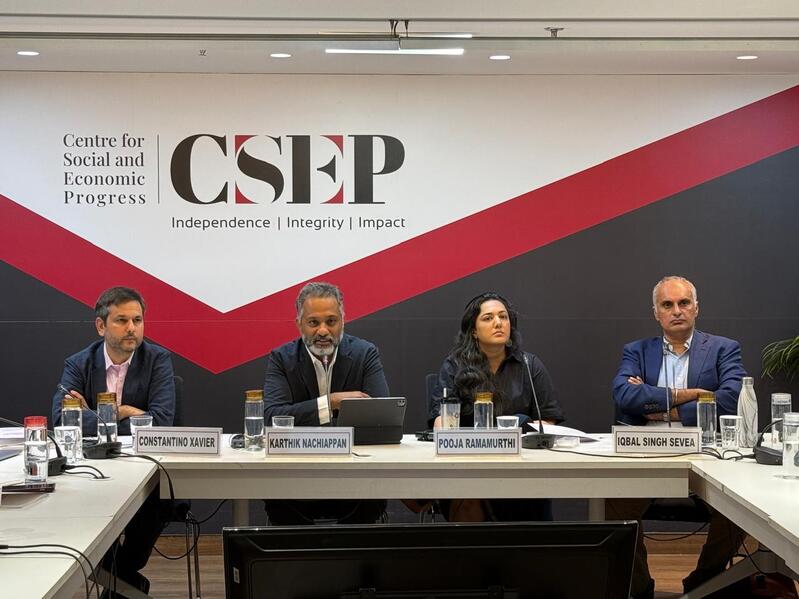
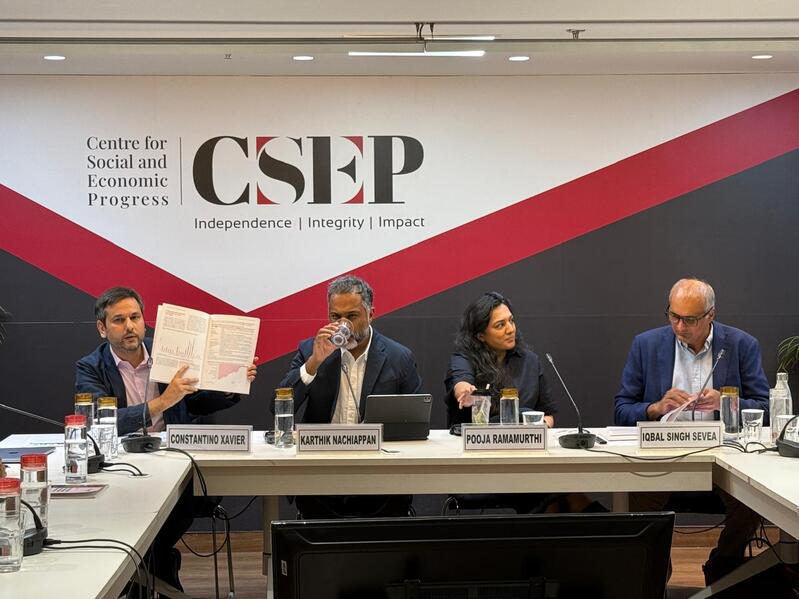
The seminar began with welcome remarks by Constantino Xavier, Senior Fellow, CSEP, followed by a keynote address by Iqbal Singh Sevea, Director, Institute of South Asian Studies (ISAS), National University of Singapore (NUS).
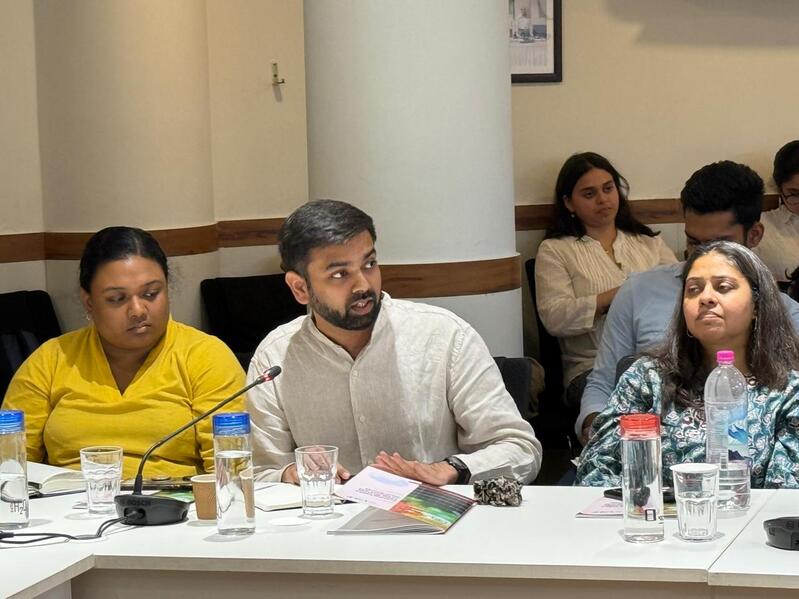
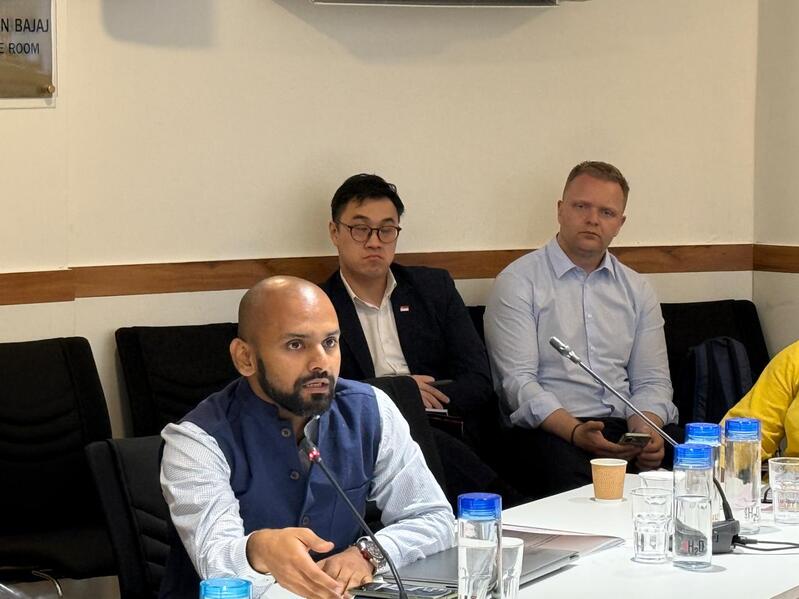
The event featured a presentation by Pooja Ramamurthi, Fellow, CSEP and Karthik Nachiappan, Research Fellow, ISAS-NUS. This was followed by a panel discussion with Sharon Seah, Principal Fellow and Coordinator, Climate Change in Southeast Asia Program, Institute of Southeast Asian Studies (ISEAS)-Yusof Ishak Institute, Shruti Jargad, Non-Resident Research Associate, CSEP and Karthik Nachiappan. The discussion was moderated by Pooja Ramamurthi.
About the event
The climate and clean energy policies that India and China adopt will be critical in shaping their domestic mitigation and adaptation pathways, as well as have implications for global energy transitions. Although both countries remain central to global climate efforts, bilateral engagement has been limited and fitful in recent years.
This seminar launched research papers that explore the potential for pragmatic and strategic cooperation between India and China in the climate and clean energy domains. It aimed to offer specific, evidence-based insights to inform Indian, Chinese and other international policymakers on how the two countries might navigate their relationship while advancing shared climate mitigation and adaptation objectives.
The discussion built on an on-going joint project between the Centre for Social and Economic Progress (CSEP) and Institute of South Asian Studies (ISAS) at the National University of Singapore (NUS). The research papers reflect findings from secondary data analysis, primary interviews and workshops which featured presentations and deliberations by Indian and Chinese experts.
Discussions focused on three key questions:
- How have India and China engaged on climate and clean energy in the past? What have been the key areas and institutional channels for engagement? How has the engagement fared?
- In the current context, what does the future of India and China climate cooperation look like? What issues should both countries coordinate, cooperate, or collaborate on climate and clean energy? What institutional channels can enable engagement?
- What guardrails are needed to mitigate concerns and enable cooperation in key sectors? To what extent can India and China strategically navigate trade, technology and capacity bottlenecks? What are the leverage points for engagement?
Welcome Remarks
Constantino Xavier
Constantino Xavier is a Senior Fellow at the Centre for Social and Economic Progress (CSEP), New Delhi, where he directs the program in Foreign Policy and Security Studies. He is also a non-resident fellow in the Foreign Policy program at the Brookings Institution, in Washington DC, and visiting professor at Ashoka University’s Department of International Relations.
Keynote Address
Iqbal Singh Sevea
Iqbal Singh Sevea is Director of the Institute of South Asian Studies (ISAS) at the National University of Singapore (NUS). He is an internationally recognised scholar of contemporary and modern South Asia whose core research focuses on South Asian politics, social and political thought, governance and Islamic thought. He holds a DPhil in History from the University of Oxford. He graduated with a bachelor’s degree in history from NUS and a master’s degree from the School of Oriental and African Studies, University of London.
Presenters
Pooja Vijay Ramamurthi
Pooja Vijay Ramamurthi is a Fellow at CSEP. She has a PhD in Science, Technology and Environmental Policy at the School of Public and international Affairs (STEP) at Princeton University. She studies climate and energy transition policy, particularly focusing on the role that India can play in accelerating domestic and international action towards decarbonisation.
Karthik Nachiappan
Karthik Nachiappan is a Research Fellow at the Institute of South Asian Studies, National University of Singapore. His research focuses on India’s Geoeconomics, how issues like trade, technology, and climate change affect Indian foreign policy. He is the author of Does India Negotiate? (Oxford University Press, 2020).
Panellists
Sharon Seah
Sharon Seah is Principal Fellow and Coordinator of the Climate Change in Southeast Asia Programme at the ISEAS – Yusof Ishak Institute, Singapore. She is currently pursuing her PhD at the Crawford School of Public Policy, Australian National University. Prior to academia, Ms Seah spent fifteen years in the Ministry of Foreign Affairs including as a diplomat in the Singapore Embassy in Thailand (2003 – 2006) and in the National Environment Agency of Singapore. She was Associate Director at the Centre for International Law of the National University of Singapore prior to joining ISEAS. Ms Seah graduated with a Master in Public and International Law from the University of Melbourne in 2018. Her research interests are in ASEAN, multilateralism, rule of law, and climate change. She is co-editor of Energy and Decarbonization in Southeast Asia (ISEAS Publishing: 2025), Cities and the Climate Challenges in Southeast Asia (ISEAS Publishing: 2023), 50 Years of ASEAN and Singapore (World Scientific: 2017) and editor of Building a New Legal Order for the Oceans (NUS Press: 2019). She is the lead author of The State of Southeast Asia Survey Report (2021 – 2025) and the Southeast Asia Climate Outlook Survey (2020-2024).
Shruti Jargad
Shruti Jargad is a Non-Resident Research Associate in the Foreign Policy Vertical. She has a double masters in China Studies and Political Science from Peking University and Jawaharlal Nehru University respectively. She has undergone Mandarin language training at National Taiwan Normal University as a recipient of the Mandarin Language fellowship from Ashoka University. She has previously worked at Institute of Chinese Studies, New Delhi and Ashoka University, Sonipat. Her research interests lie in the party-state system, China’s domestic politics and its relations in the neighbourhood.
All content reflects the individual views of the speakers. The Centre for Social and Economic Progress (CSEP) does not hold an institutional view on any subject.
Please contact Gurmeet Kaur at GKaur@csep.org for general queries and Ayesha Manocha at AManocha@csep.org for media queries.



The Centre for Social and Economic Progress (CSEP) is an independent, public policy think tank with a mandate to conduct research and analysis on critical issues facing India and the world and help shape policies that advance sustainable growth and development.